
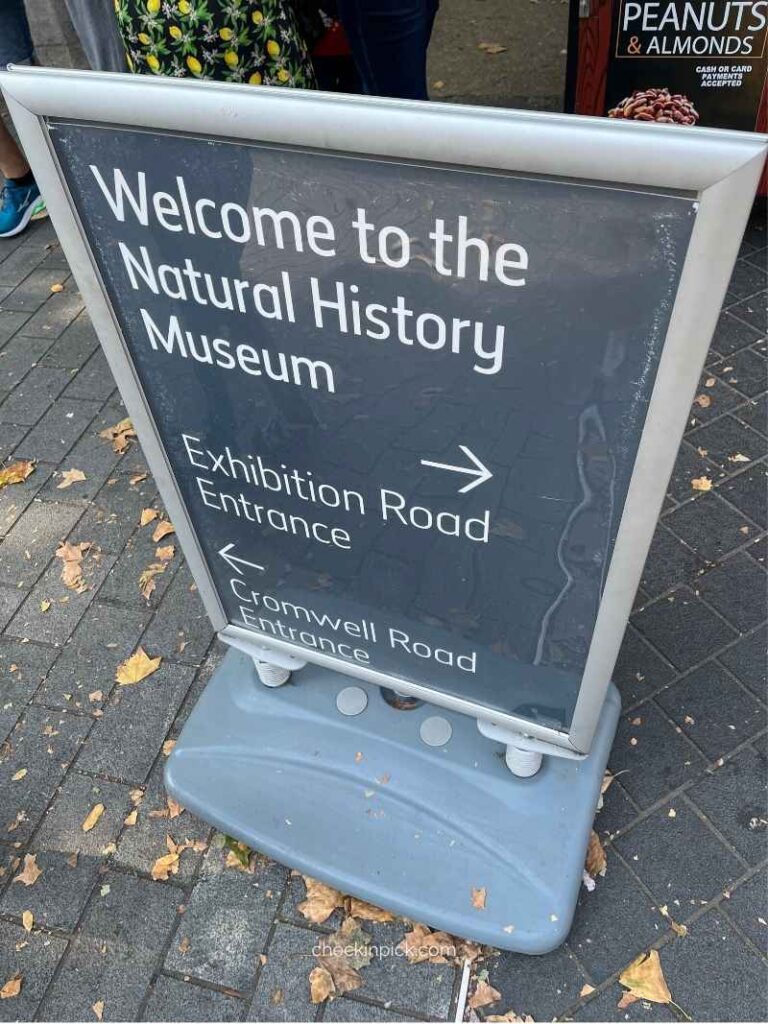
Some Museums Stay With You
London has more museums than you could realistically fit into one trip, and one of the best things about the city is that many of them are completely free.
For me, a really good museum can become much more than a stop on an itinerary. I have found that when I visit one museum that truly stays with me, it can almost become a photograph of the whole trip in my memory. Years later, I might not remember every street I walked down or every restaurant I ate at, but I remember the light in that museum, the people I was with, and how the city felt that day. Somehow, that one place can make the city itself feel more distinct.
I remember this happening at the Victoria and Albert Museum. At one point, my friend and I sat by the fountain with a cup of tea and simply talked for a while. Nothing particularly remarkable happened. We were not rushing to the next room or trying to see everything. We just sat there, talked, and watched the day unfold around us. Yet that small pause ended up changing the feeling of the entire trip for me. When I think back on that time in London, I remember that afternoon almost as clearly as the city itself.
That is the way I think about London’s museums. What matters to me is which places might give you a moment you will still remember when the trip is long over. You may arrive for the dinosaurs and end up lingering somewhere you never expected, or go in for one famous room and come out remembering something completely different.
This guide looks at London’s major free museums alongside a few paid ones, but the aim is not simply to rank them. I want to look at what makes each place worth your time, what you can comfortably skip, and which museums have that rare quality that makes you want to go back.
A Few Places I’d Pick
| Museum | Entry | Best For |
|---|---|---|
| British Museum | Free | Ancient history, iconic objects, and the kind of visit that can easily stretch into an afternoon |
| Natural History Museum | Free | Dinosaurs, grand interiors, and a good first museum for families |
| Victoria and Albert Museum | Free | Art, fashion, design, and a slower afternoon when you want to wander without a plan |
| Science Museum | Free | Hands on exhibits and anyone who likes to see how things actually work |
| Tate Modern | Free | Modern art, the Turbine Hall, and a good excuse to walk along the South Bank |
| Tate Britain | Free | British art, quieter galleries, and a break from the busier parts of central London |
| Tower of London | Paid | The Crown Jewels, royal history, and one of the few museum visits where the setting is part of the experience |
| Madame Tussauds | Paid | Celebrity figures, photo opportunities, and a lighter visit with friends |
The Free Museums I’d Start With
Before my first trip to London, I honestly expected the free museums to feel a little limited. I thought I would probably see a few interesting rooms, then move on to the attractions I had actually paid for. I was wrong about that.
British Museum
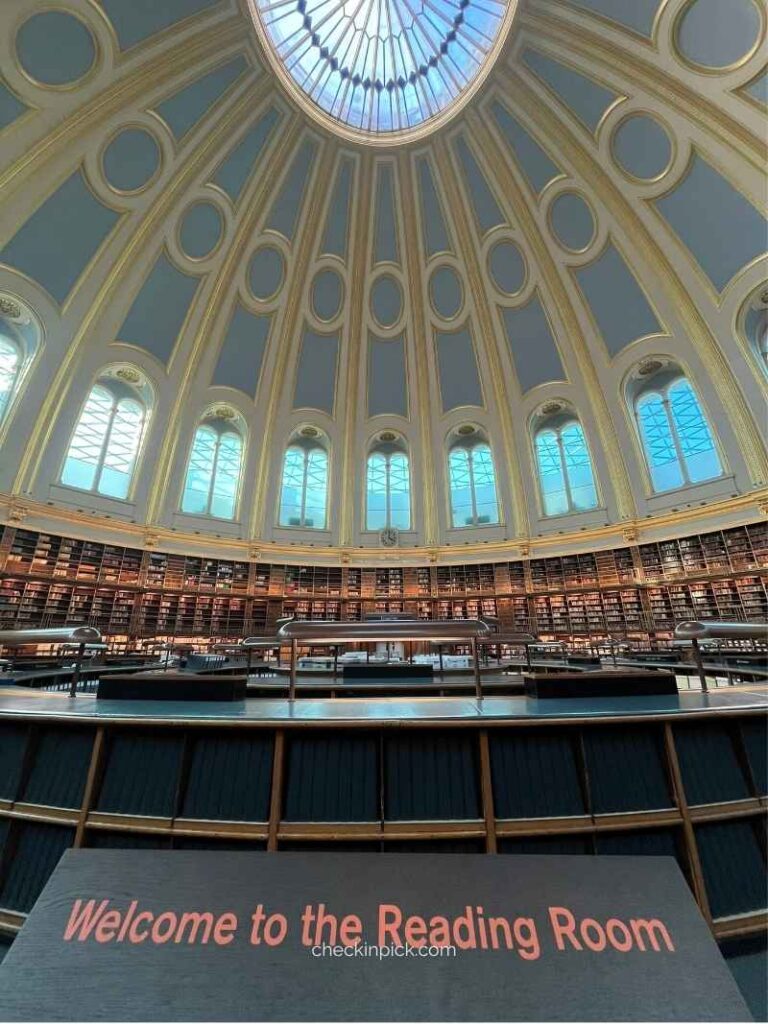
The British Museum is one of those places where you can keep going back and still find something you somehow missed. I have been there dozens of times, and it took me more than ten visits to even realise that there was a reading room.
I still remember the first time I walked in. The room was almost completely silent, which felt surprisingly different from the busier galleries outside. Then I looked around and saw just how many books were kept there. After visiting the museum so many times, I found it strangely fascinating that there was still a whole space I had somehow managed to overlook.
Of course, the big names are here too. The Rosetta Stone, Egyptian mummies, the Parthenon Sculptures, and the Assyrian Lion Hunt reliefs are all worth seeing, especially on a first visit. But that reading room is one of the reasons I keep coming back. It reminded me that the British Museum is not really a place you finish seeing. There is always another room, another object, or some small detail you were never looking for in the first place.
Natural History Museum
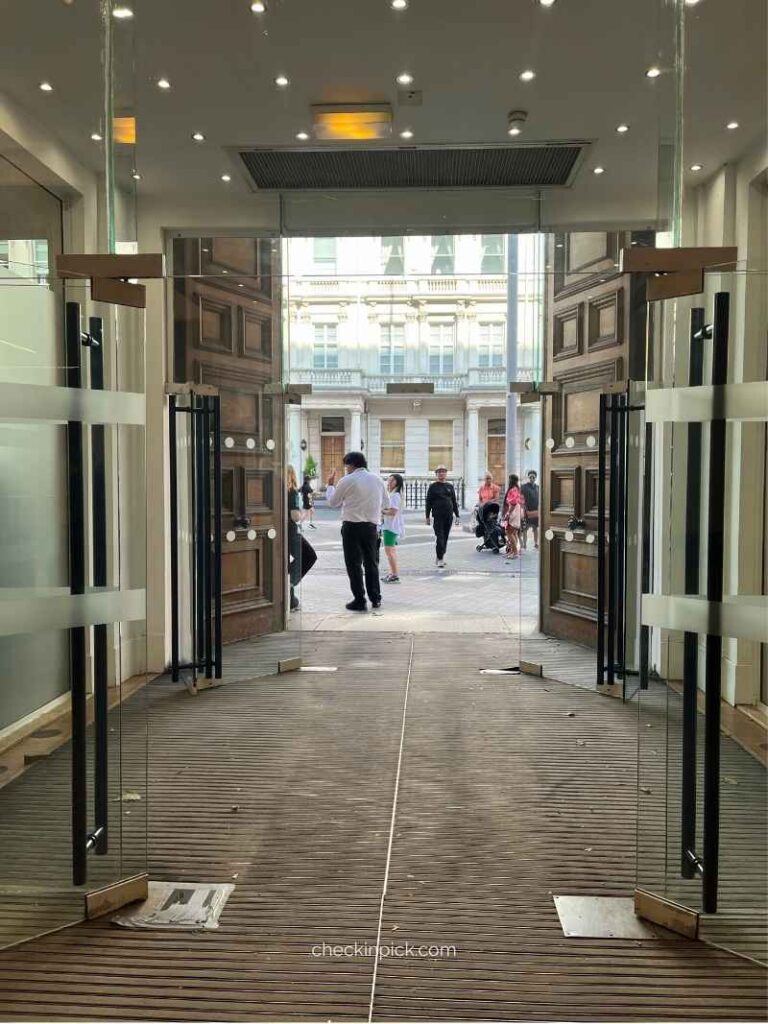
The Natural History Museum is impressive before you even see a single dinosaur. The building alone is enough to make you slow down for a moment, with its enormous Victorian halls and all the little details carved into the walls and ceilings.
Inside, the blue whale hanging above the main hall is one of those things that looks even bigger in person. Then there are the dinosaurs, the earthquake simulator, and the volcano exhibits, which give the museum a very different energy from the quieter art museums nearby. It is a particularly easy place to enjoy with children, although I would not say it is only for families. There is something about seeing a huge skeleton or standing beneath that whale that still makes you feel like a child for a minute.
The dinosaur gallery is where things can get hectic. I have been there at busy times when it felt like half of London had the same idea, but visiting just after opening made a huge difference. I was able to spend time looking at the exhibits before the school groups arrived and the rooms started to fill up. If you care about actually seeing the dinosaurs rather than simply making your way through the crowd, an early start is well worth it.
Victoria and Albert Museum
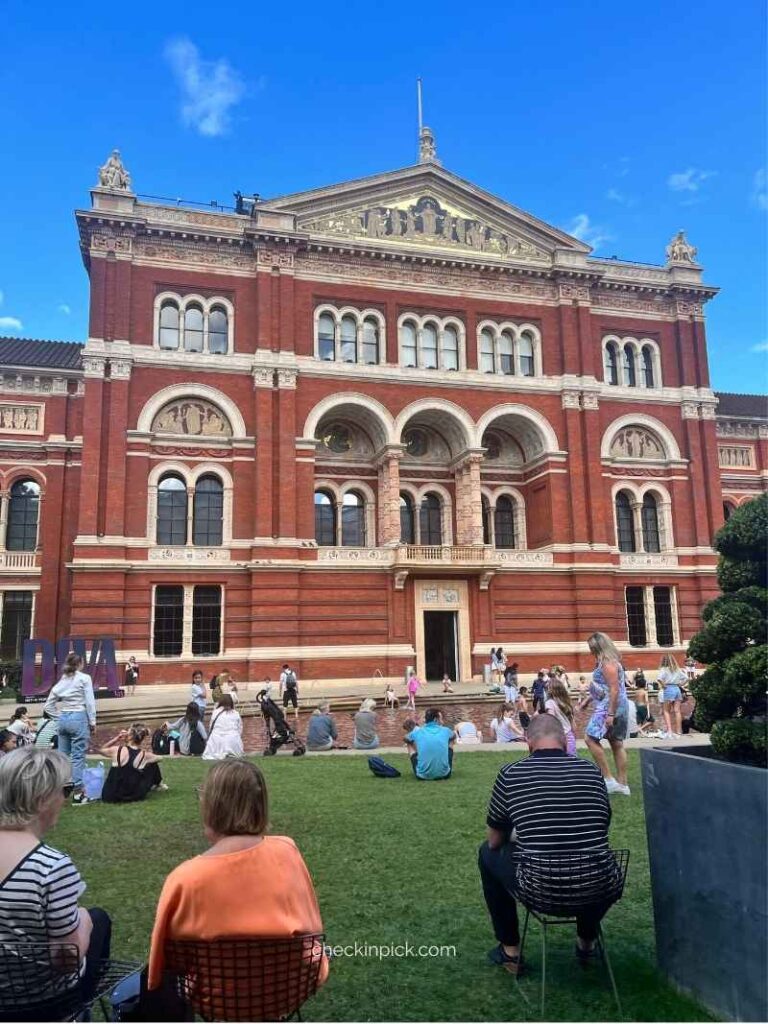
The Victoria and Albert Museum is the kind of place I would visit even without having a particular exhibition in mind. It is one of those museums where the building, the collection, and the little spaces in between all become part of the experience.
Of course, there is plenty to see inside. The fashion galleries are a natural starting point, but you can just as easily get drawn into the furniture, jewellery, ceramics, photography, sculpture, or collections from across Asia. I have never felt that I needed to follow a set route here. Wandering is part of the fun.
What I remember most, though, is not a particular object. It is the courtyard. On one visit, a friend and I sat by the fountain with a cup of tea and talked for a while. We had no real reason to rush anywhere, and that quiet pause ended up becoming one of the memories I associate most strongly with that trip to London. It was such a simple moment, but somehow it changed the pace of the whole afternoon.
What keeps bringing me back to the V&A is that the things I remember are rarely the ones I came looking for. I might go in thinking about fashion and end up spending more time with a piece of furniture, a room, or some tiny detail I would normally have walked straight past. There is always something slightly off the original plan, and I have come to like that about the place.
Science Museum
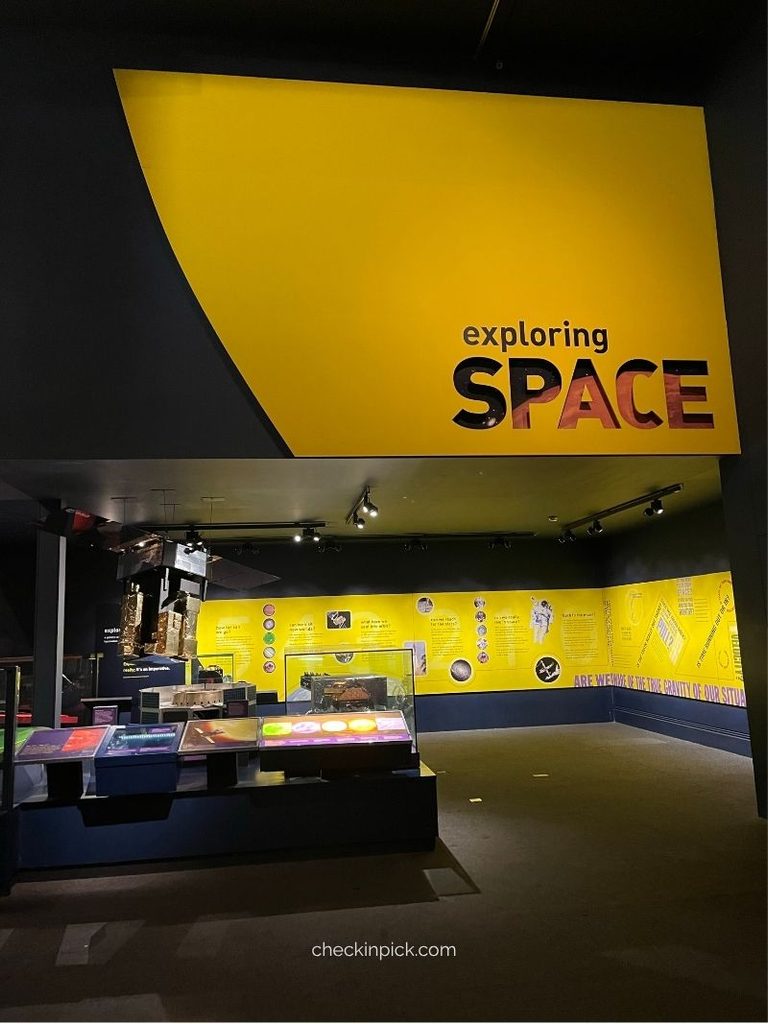
The Science Museum feels very different from the other museums in South Kensington. Instead of quietly looking at things behind glass, you are constantly being invited to press something, turn something, test something, or stop for a moment and work out how it actually works.
The space and flight galleries are a natural place to start, especially if you have ever wondered how we went from the first attempts at flying to putting people in space. The medicine galleries take you in a completely different direction, while the computing displays are a good reminder of just how quickly technology has changed within a surprisingly short stretch of time.
What I like about this museum is how easily it pulls you out of passive sightseeing. You stop reading labels and start playing with things. A machine that looks unremarkable from a distance can suddenly become the thing you spend ten minutes trying to understand. That makes the visit feel less like looking at the past and more like figuring out how the world around us came to work the way it does.
It is an obvious choice for families, but adults can have just as much fun here. In fact, some of the exhibits are probably even more interesting once you are old enough to understand how strange and clever the technology really is.
Tate Modern
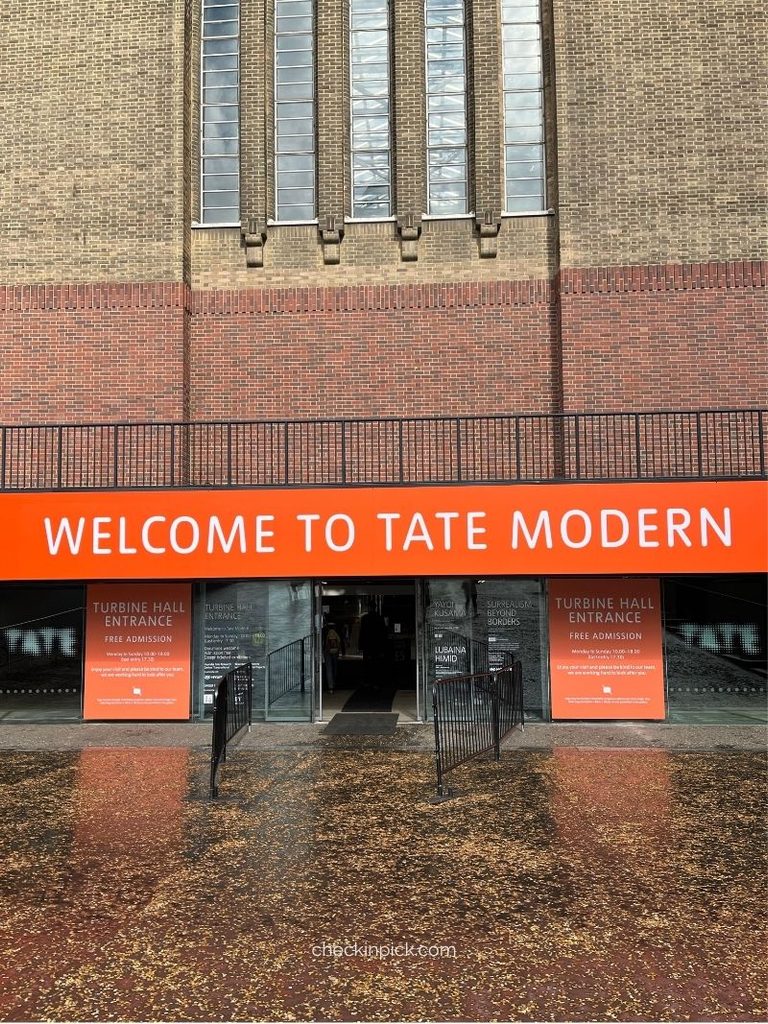
Tate Modern does not really feel like a museum that happens to be in London. It feels woven into the city. Housed in the old Bankside Power Station, it still has that vast industrial character, and the contrast with the art inside is part of what makes the place work so well.
The Turbine Hall is usually the first thing people notice. It is enormous, a little intimidating, and often the first reminder that contemporary art does not always need to sit quietly on a wall. Large scale installations can completely change the way the space feels, and even when there is nothing happening that day, the hall has a kind of energy of its own. I like that you can stand there for a while and watch people react to the same piece in completely different ways.
Upstairs, the collection moves through modern and contemporary art, but I find the building just as interesting as the galleries. Brick walls, exposed structure, long views across the city, and sudden glimpses of the Thames make it feel less like moving from room to room and more like moving through London itself.
One of my favourite ways to think about Tate Modern is not as a stop you cross off before going somewhere else, but as part of a South Bank day. Walk along the river, go inside the museum, come back out and look at the Thames again, and the city can feel slightly different on the other side. That connection is what makes Tate Modern stand out for me. The art matters, of course, but so does the fact that you are experiencing it inside a building with a completely different past.
And that is probably the best reason to include it on a London itinerary. Even if a particular exhibition does not speak to you, there is a good chance you will still remember the building, the river outside, or the strange feeling of standing in the Turbine Hall surrounded by people all looking at the same thing and seeing something different.
As someone who loves modern art, Tate Modern has become a place I come back to almost like a favourite playground. There are also paid exhibitions alongside the free collection, so whenever an artist I really like is showing, I usually check the exhibition schedule on the official website before heading over. It is one of those places where knowing what is on can make the visit feel completely different.
Once I have had enough of the galleries, I usually head back outside and follow the Thames for a walk. Sometimes a friend and I keep going all the way towards London Bridge, stopping at Borough Market for a good doughnut along the way. On other days, we end up near London Bridge, find a spot by the river, and just sit there with a beer for a while. That whole stretch of the day is part of why I keep coming back to Tate Modern. The museum is only the beginning, and somehow the art, the river, the walk, the food, and an unplanned drink with a friend all become part of the same London memory.
Tate Britain
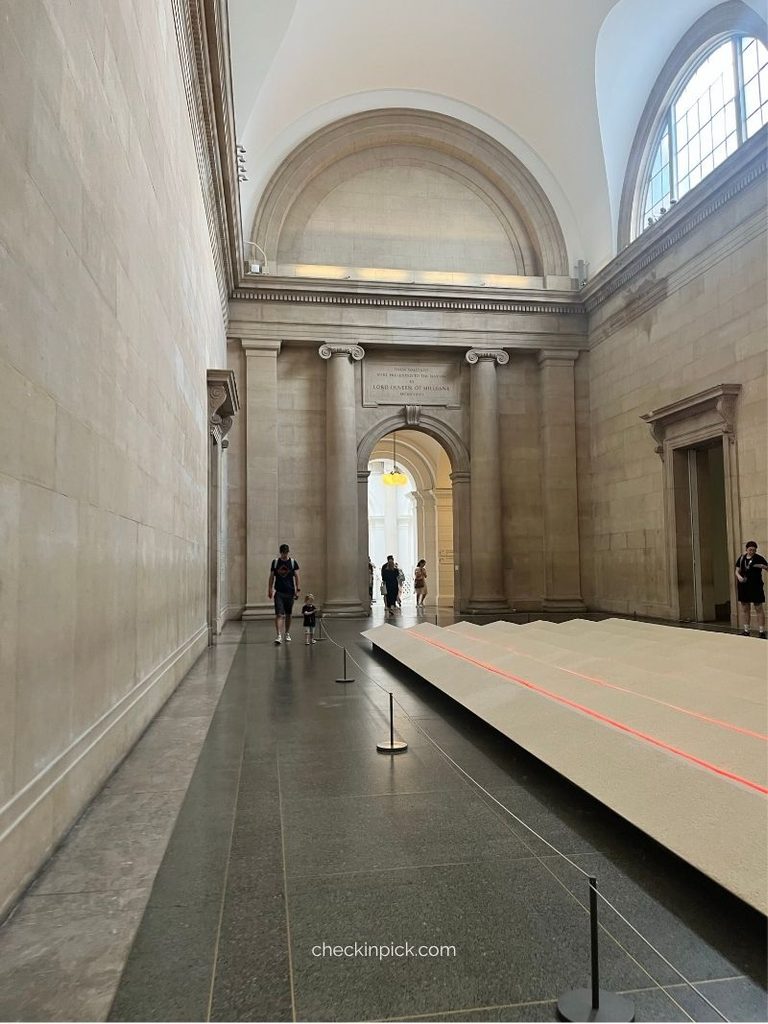
Tate Britain feels more like a place to spend time with British art than a museum you rush through to see a few famous paintings. The collection covers centuries of British art, from Turner and Constable to the Pre Raphaelite painters and artists from much more recent generations, and I enjoy seeing how much the country changes as you move through the different periods.
What I find especially interesting is how differently London appears in these paintings. You see the river, the suburbs, quiet rooms, busy streets, and people simply getting on with their lives. After a few galleries, you start to realise that you are not only looking at art history. You are also looking at how Britain itself has changed. Clothes, interiors, the shape of the city, ideas about beauty, and even everyday life all shift from one generation to the next.
I have always found Tate Britain calmer than Tate Modern, and I like it for that very reason. There is something reassuring about being able to stand in front of a beautiful painting without feeling that you need to hurry on to the next thing. The building has a quieter rhythm, and for me that makes it easier to settle into the space rather than simply pass through it.
Strangely enough, I enjoy this museum most when I visit alone on a weekday morning or early afternoon. It has become one of the places I think of when I have had a particularly stressful week and just want to look at beautiful things in a beautiful space and let my mind go quiet for a while. This is only my own impression, but Tate Britain often feels less crowded to me than some of London’s other major museums, especially at those quieter times.
That is probably the most personal reason it has stayed on my list. I do not always leave Tate Britain feeling that I have seen something spectacular. Sometimes I simply leave feeling a little lighter than when I walked in, and that is more than enough reason for me to keep coming back.
Paid Museums in London: When They Are Worth the Entry Fee
Tower of London
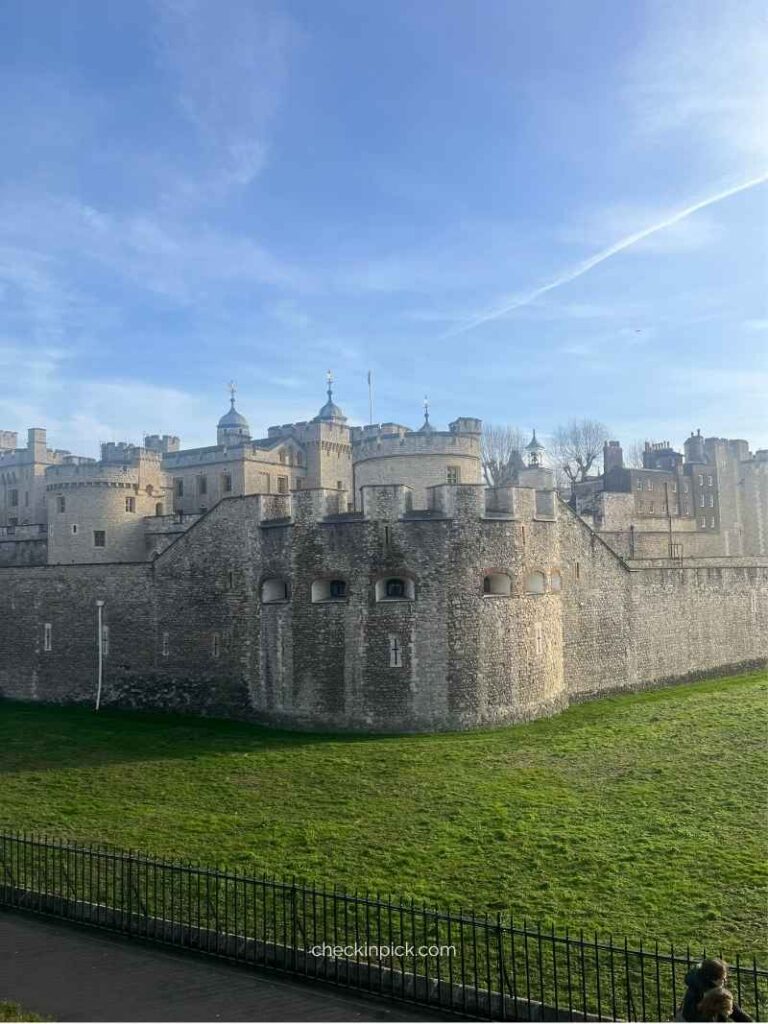
The Tower of London feels very different from the museums I have mentioned so far. You are not simply walking through galleries looking at things from a safe distance. You are standing inside the place where many of those stories actually happened, and that changes the way the history lands.
The Crown Jewels are the obvious draw, and seeing them in person is impressive, but they are only one part of the experience. I find the White Tower more memorable in a different way. Its thick stone walls, old armour, narrow stairways, and sheer sense of age make it surprisingly easy to imagine the people who once lived here, were imprisoned here, or passed through these rooms centuries ago.
That is what makes the admission fee easier for me to justify. You are paying for more than a collection of objects. You are paying to walk through a piece of London that has been standing here through royal ceremonies, political intrigue, imprisonment, and some fairly grim chapters of British history.
I remember leaving the Tower and looking back at the walls from outside. For a place that sits in such a busy part of London, it felt strangely separate from the city around it. The traffic, the river, the crowds, and modern London were all there, but the fortress seemed to belong to another time.
The Crown Jewels can get busy, so the order in which you explore the grounds can make a difference. I usually prefer seeing more of the Tower itself before heading to the Jewels rather than treating the visit as a quick stop for one famous attraction. That way, the history has a chance to build around you, and the jewels become part of the story rather than the whole reason you came.
I should also mention that my experience was a little different because I had a Historic Royal Palaces membership. It starts at £65 a year and gives members unlimited free admission to the Tower of London, along with several other historic sites. The standard adult ticket for the Tower currently starts at £37, so for someone planning to visit more than once, the membership can make a lot of sense.
For me, the biggest advantage was simply being able to come back whenever I wanted. I did not have to think about paying for another ticket each time, so the Tower stopped feeling like a one time attraction and became somewhere I could drop into whenever I felt like it. On most regular visit days, members can simply show their membership card for free entry, although some special event days may require advance booking.
Madame Tussauds
Madame Tussauds is probably the least serious museum on this list, and that is exactly why I like having it in the mix. You are not there to learn your way through centuries of history. You are there to see famous faces up close, take slightly ridiculous photos, and spend a couple of hours doing something that feels more like hanging out than sightseeing.
The Royal Family, Marvel characters, Star Wars figures, musicians, actors, and all sorts of famous faces are packed into the galleries. Some of the figures are surprisingly convincing, while others have that slightly strange quality that makes you stare for a second and wonder what is different about them. I actually think that is part of the fun. You stop worrying about whether something is serious enough to be called a museum and just enjoy how odd the whole experience can be.
I went with a friend once, and we ended up spending far more time taking photos than we had expected. Some were genuinely good. Others were completely ridiculous and still make me laugh when they turn up in my camera roll years later. That is something I do not get from most museums, and it gives Madame Tussauds its own place in a London trip.
I would choose this one based on who I am travelling with rather than what I want to see. With the right company, it can be one of the most entertaining stops of the trip. On my own, I would probably spend that time somewhere else. It is less about the figures themselves and more about what you do with the experience once you are standing in front of them.
Free or Paid: What Is Actually Worth Paying For?
The question I ask instead is what the ticket is buying me. With the Tower of London, it is the chance to walk through a place where so much of the history actually happened. With the Churchill War Rooms, it is the feeling of going underground into a space that was built for a very specific moment in British history. Those experiences are harder to replace with a free alternative.
The Crown Jewels are certainly part of it, but I think the stronger reason is the setting itself. You can read about royal prisoners, medieval power, and the people who lived and died here, but standing inside the fortress makes those stories feel much less distant.
How I’d Spend a Museum Day in London
I find museum days work much better when the museum is only part of the plan. In London, the neighbourhood outside the doors can be just as much a part of the experience as what you have spent the morning looking at.
For a first day, I like starting around the British Museum and then letting the afternoon drift towards Covent Garden and Seven Dials. After a morning surrounded by ancient objects and long corridors, stepping back into busy streets, little shops, cafés, and the general noise of central London feels like a welcome change. It is also an easy area to wander without having to plan every stop. When I am already nearby, I sometimes make a detour to Fortnum & Mason for tea, biscuits, or a few gifts to take home. It feels much nicer to pick up souvenirs as part of the day rather than making a separate shopping trip.
South Kensington makes a particularly easy museum pairing because everything is close enough to move between without turning the day into a transportation exercise. I have found that the Natural History Museum and Science Museum work especially well together for families. One gives you dinosaurs, animals, and the scale of the natural world, while the other shifts into machines, medicine, space, and technology. The change in subject keeps the day feeling fresh, even though you have stayed in the same part of London.
For a very different kind of day, I like the idea of putting the Tower of London and Churchill War Rooms together. They come from completely different moments in British history, and that contrast is what makes the route interesting. You can go from medieval power, royal intrigue, and fortress walls to the cramped underground rooms where Britain planned and lived through the Second World War. It gives the day a sense of historical movement that you do not get from staying inside one museum.
The Little Things I Wish I’d Known
A little planning makes a bigger difference in London than you might expect. I have learned that the hard way, usually after already being inside the museum.
For the larger museums, I now check the entry rules before I go. Some allow you to walk straight in, while others use timed slots even though admission itself is free. During British school holidays, those details matter much more because the queues can change the whole feel of a visit. If a timed slot is available, I would book one rather than leave it to chance.
It is also worth checking what is actually included before you arrive. A museum can be free and still have exhibitions inside that require a separate ticket. I have seen people realise this only after getting to the museum, which is not ideal if you have planned your day around a particular show.
Another small thing that makes a difference is luggage. A surprisingly heavy bag becomes much more annoying after walking through several galleries, so I use the cloakroom or lockers whenever they are available. It is one less thing to think about, and you can actually look at the exhibits instead of constantly shifting a backpack from one shoulder to the other.
I also try not to treat transport as an afterthought. Museums are spread across very different parts of London, and a journey that looks short on a map can eat into the day once you factor in walking and changing lines. If you are planning to visit several museums in different neighbourhoods, it is worth checking your route on the London Underground Guide beforehand.
A Few Things You’ll Probably Want to Know
Do I need to book a free museum in London?
Not necessarily, and this is one of those things that is easy to get wrong because every museum handles entry a little differently. The Natural History Museum, for example, offers free general admission tickets that you can reserve in advance, while some museums allow you to arrive and enter without a booking.
I usually check the official website on the morning of my visit, especially if I am going somewhere popular. It takes a minute and is much easier than discovering at the door that your “free museum” still has an entry system.
Does free entry mean everything inside is free?
No. This catches people out quite often. General admission can be free while a temporary exhibition, special event, or particular experience has its own ticket. Tate currently lists ticketed exhibitions separately from its free collection displays, for example.
So if there is one exhibition you are travelling to London specifically to see, check that exhibition rather than assuming the museum’s free entry covers it.
Is a Tate membership worth considering?
For someone who enjoys contemporary art and expects to visit Tate Modern or Tate Britain more than once, it is worth looking at. Tate Members get unlimited free entry to exhibitions and collection displays, along with access to Members Rooms and other benefits.
I like this kind of membership for a different reason too. It takes away the feeling that every visit has to justify itself. You can go because there is an artist you like showing that week, look around, have a coffee, and leave. I think that suits London particularly well.
What about the Tower of London if I want to visit more than once?
This is where membership can make a real difference. Historic Royal Palaces currently offers membership from £65 a year, with unlimited free admission to the Tower of London and several other historic sites. The standard adult Tower ticket starts at £37.
I have used a membership myself, and being able to come back without buying another ticket completely changed the way I thought about the Tower. It stopped feeling like something I had to see properly in one visit and became somewhere I could return to whenever I happened to be nearby. On ordinary days, members can enter without pre booking, although selected event days have different rules.
What I Remember After the Museums
When I think about my favourite museum days in London, I rarely remember how many galleries I saw. What stays with me are much smaller things. A room I happened to walk into, a painting I was not expecting to like, the light coming through a window, or sitting somewhere with a friend when there was nowhere we needed to be.
That is probably why I do not judge a museum by how much I managed to see. For me, the better question is what I carry out with me when I leave. The V&A stayed with me because of an afternoon by the fountain with a friend. Tate Modern often leads into a walk along the Thames, followed by a doughnut from Borough Market or a beer near London Bridge.
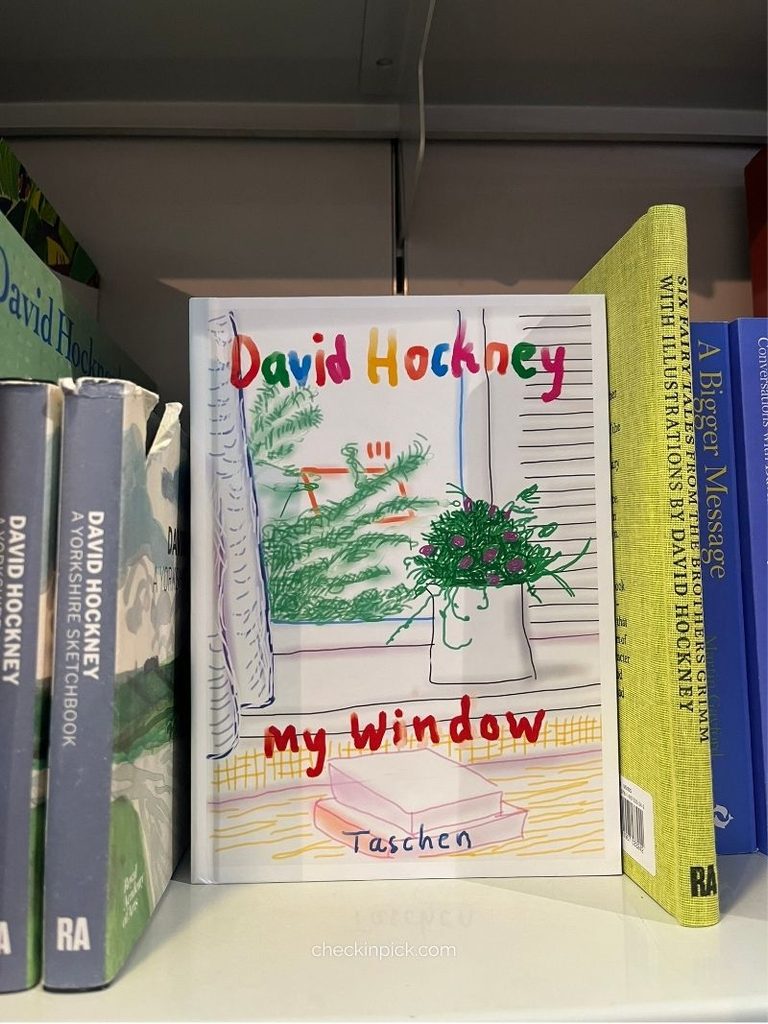
Tate Britain has given me a different kind of memory. I once wandered in without much of a plan and suddenly found myself standing in front of a David Hockney painting. I had been reading Spring Cannot Be Cancelled and looking at his work in the book only the day before, thinking that I would love to see one of his paintings in person someday. Then, almost by accident, I walked into Tate Britain the next day and there it was, right in front of me. It was such a small coincidence, but the moment itself felt almost like something out of a film. I remember just standing there for a while, taking it in. I have a feeling I will remember that moment for the rest of my life.
The British Museum has given me that feeling more than once too. After dozens of visits, discovering the reading room made me realise how easy it is to think you know a place simply because you have been there many times.
For a first trip, the British Museum, Natural History Museum, V&A, Tate Modern, and Tate Britain are the museums I would recommend most readily, not because they are all alike, but because each leaves you with something different. One might give you a glimpse into ancient history, another a sense of the natural world, another a quiet afternoon with art. The point is not to collect them. It is to find the ones that fit the kind of London you want to remember.
Then there are the paid places. I would spend money on these when the setting itself is part of the reason for going, whether that means walking through the Tower of London or standing underground in the Churchill War Rooms. That feels very different from simply paying to see a larger collection.
Maybe that is what I have come to like about museums in London. They do not always have to be the main event. Sometimes they are the place where something unexpected happens, and sometimes they simply give you a room, a view, or an hour that becomes part of the trip without you realising it at the time.
Years later, those are often the details I remember most clearly. Not how many museums I visited, but the particular moments that made London feel like my own. Those are the museums I would go back to.

Welcome to CheckinPick. We create practical travel guides for visitors planning trips to London and other destinations.
Our editorial team focuses on useful, up-to-date information about transportation, accommodation, attractions, fares and travel planning. We research information using official sources and reputable travel resources, and we update our guides when important details change.
Our goal is to make travel information easier to understand and more useful for real-world trip planning.