
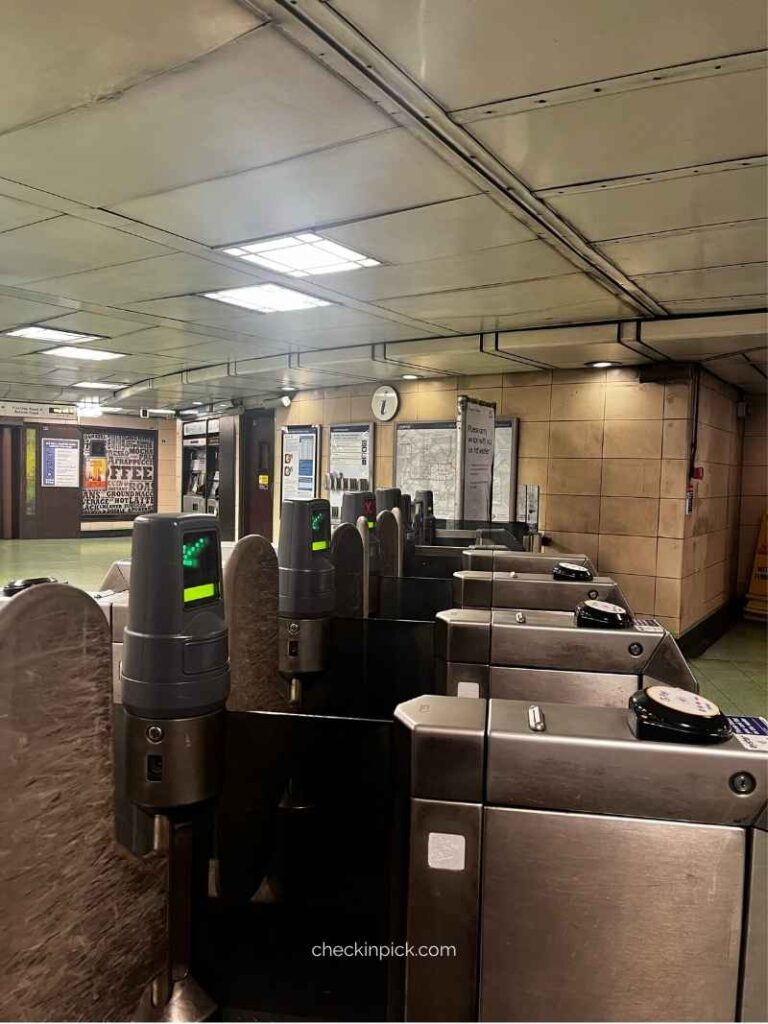
If you’re using contactless payment, have your card or phone ready before reaching the gate. Remember to use the same payment method when touching in and out.
One of the most confusing things I experienced when I first used the London Underground was ending up at the wrong station even though I had boarded a train on the right line!
I remember happily riding the Tube, listening to music and scrolling through my phone, only to look up and realise that I had arrived at a station I had never even heard of. 😅
So, how did I end up there if I was on the right line?
That’s exactly what this guide is here to explain. If you want to avoid making the same mistakes I did and feel more confident using the London Underground, this guide will show you exactly what to look out for before and during your journey. 🙂
The London Underground, commonly called the Tube, is one of the easiest ways to travel around London once you understand the basic system.
At first, the Tube map can look intimidating. There are multiple lines, different directions, interchange stations, fare zones and many station exits.
The good news is that you do not need to memorise the entire London Underground network. For most journeys, focus on your starting station, destination, line, direction and any interchange.
This guide explains how to use the London Underground from the moment you arrive at the station until you reach the correct exit.
London Underground Guide: Understanding the Tube Network – Lines and Zones
The Tube map is a schematic map, which means it is designed to show the Underground network clearly rather than represent London’s geography exactly.
As a result, stations that look close together on the map may not be particularly close in real life. Conversely, some stations that appear separated can be within reasonable walking distance.
You therefore should not use the Tube map as a normal street map.
Instead, use it to identify:
- Your starting station
- Your destination
- The line you need
- The direction you need to travel
- The station where you need to change
TfL provides official Tube maps and a live Tube map through its transport information services.
Each Underground line has a distinctive colour on the Tube map.
Some of the main lines visitors are likely to use include:
| Line | Map colour |
|---|---|
| Central | Red |
| Piccadilly | Dark blue |
| Northern | Black |
| District | Green |
| Circle | Yellow |
| Jubilee | Grey |
| Victoria | Light blue |
| Bakerloo | Brown |
| Metropolitan | Purple |
| Hammersmith & City | Pink |
| Waterloo & City | Turquoise |
The colour is useful for finding a line quickly, but do not rely on the colour alone.
Always check the line name, direction and train destination before boarding.
How to Pay and Enter the Station

For many adult visitors, contactless payment or Oyster pay as you go is a convenient way to pay for London public transport.
TfL currently accepts contactless cards, mobile devices and Oyster cards for pay-as-you-go travel.
If you are using contactless payment, the basic process is:
Touch in → travel → touch out
The important rule is to use the same contactless card or device for the journey.
For example, if you touch in with your phone, use that same phone to touch out. Do not switch to your physical bank card or smartwatch.
Using different cards or devices can result in separate or incomplete journeys and can affect fare capping.
Contactless Card or Phone?
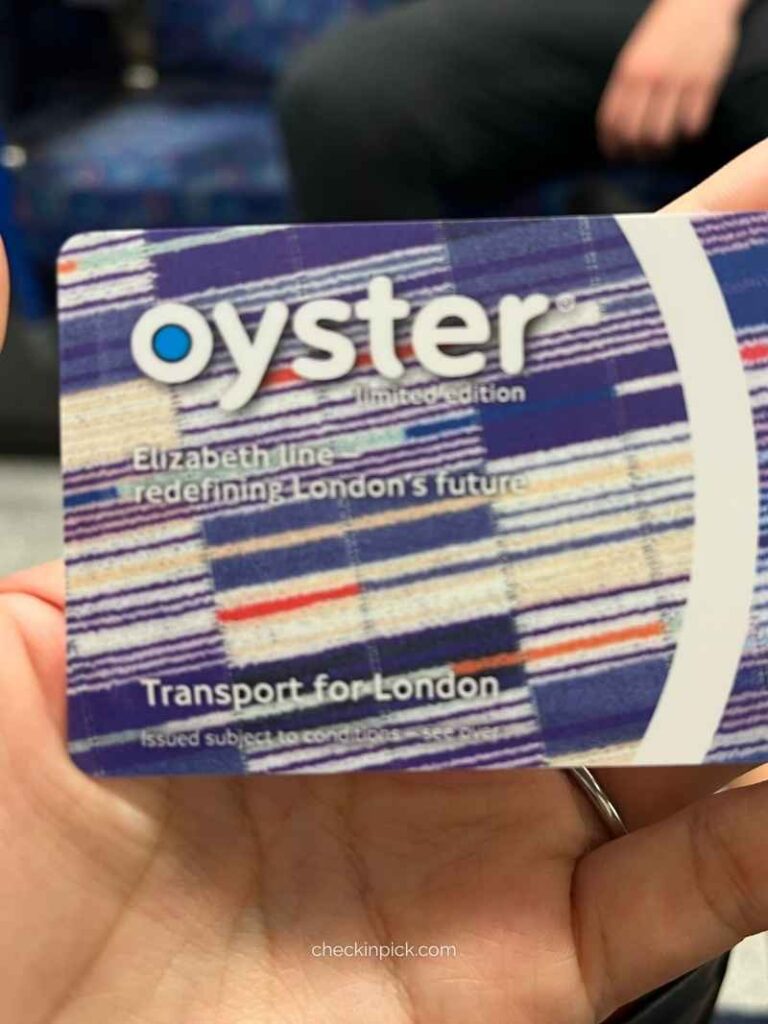
You can use a supported contactless bank card or a supported mobile device.
For example, you might use:
- A contactless bank card
- A smartphone
- A smartwatch
- Another supported contactless payment device
However, the important point is consistency.
One journey should use the same card or device from start to finish.
Avoid Card Clash
If you carry several contactless cards in your wallet, do not place the whole wallet against the yellow reader.
Instead, take out the card or device you want to use.
Multiple cards or devices can cause the wrong payment method to be read.
Don’t Forget to Tap In on the Overground
London also has the London Overground, which is separate from the Underground.
If you use contactless or Oyster pay as you go, follow the applicable touch-in and touch-out rules for your journey.
Finding the Right Platform
London Underground stations can have multiple lines, platforms, and passageways, so finding the correct platform can sometimes feel like a maze. The key is to follow the signs for your specific Tube line rather than simply looking for the name of your destination.
Once you enter the station, look for the line name and its distinctive colour on the signs. Follow these signs until you reach the platform for that line. At larger interchange stations, you may need to walk through several corridors or use escalators before reaching the correct platform.
If you are unsure, check the platform information shown in your journey-planning app, such as Google Maps, and then match it with the signs inside the station. This is especially useful at large stations where different lines may have separate entrances or platforms.
A useful rule:
Find the line first → follow the signs → confirm the platform.
This makes navigating even the busiest Underground stations much easier.
Choosing the Correct Direction and Train
The line name alone does not always tell you whether the train is suitable.
Before boarding, check:
Line + direction + destination
If you are uncertain, compare the stations shown on the platform information with the route you planned.
If you are still unsure, ask a TfL staff member.
You can simply say:
“Is this the train for Westminster?”
There is no need to understand the entire Tube network before asking for help.
As mentioned earlier, even if you’re on the platform heading toward Westminster, the train you’re about to board may not actually be going all the way to Westminster. Make sure to check the train’s final destination on the display board before getting on. This will help you avoid accidentally taking the wrong train or route.
When the Train Arrives
When your train arrives, stand to the side of the doors.
Allow passengers to leave before you board.
Then enter when there is sufficient space.
Avoid standing directly in front of the doors while passengers are trying to get off.
This is particularly important at busy central London stations.
Stay behind the yellow safety line and keep away from the platform edge.
When the train arrives:
- Wait behind the yellow line.
- Allow passengers to leave.
- Check the train destination.
- Board when there is sufficient space.
Mind the Gap
You will often hear the familiar London Underground warning:
“Mind the gap.”
The distance between the train and platform varies between stations.
Pay attention when boarding and leaving the train, especially if you have:
- A large suitcase
- A pushchair
- Children
- Mobility equipment
Take your time rather than trying to board or leave quickly.
During the Journey
Once you are on the train, you can use the route map, station announcements and onboard displays to follow your journey.
If you are worried about missing your stop, check the station sequence before travelling.
For example:
Start → Station 1 → Station 2 → Station 3 → Destination
As you approach your destination, listen for the announcement and check the station display where available.
You do not need to memorise every stop.
Changing Tube Lines
Many London journeys require a change between Tube lines.
For example:
Central line → interchange station → Jubilee line → destination
When changing lines, follow the signs for the connecting line.
You normally do not need to exit the Underground simply because you are changing lines.
Large stations may have:
- Long corridors
- Escalators
- Stairs
- Multiple levels
- Several different lines
Some interchanges take longer than they look on the Tube map, so do not worry if you find yourself walking through a long corridor or using several escalators.
What to Do If Something Goes Wrong
Even with Google Maps and the Tube map open in front of you, there will be moments when you think, “Wait… am I going the right way?” Don’t worry. Getting confused on the Underground is part of the London experience, especially at first.
If you realise you have taken the wrong train, don’t try to fix the mistake while the train is moving. Simply get off at the next suitable station, take a moment to check your route again, and continue from there. In most cases, going one or two stops in the wrong direction is much easier to fix than rushing onto another train while confused.
For delays or unexpected changes, pay attention to the live information screens at the station. They can show cancellations, delays, and changes to the service. You can also check TfL’s journey information before deciding whether it is better to wait, change lines, or take another route.
And if you are completely lost, ask a member of TfL staff. You do not need to know the exact name of the platform or understand the entire Tube network before asking for help. Simply showing your destination on your phone and saying, “How do I get here?” is often enough.
Don’t panic, don’t rush, and don’t keep going just because you’re already on the train.
If you make a mistake, get off at a suitable station, check your route, and continue from there.
Finding the Correct Exit
When you arrive at your destination, follow the signs for:
Way Out
Large Underground stations may have multiple exits.
Different exits can lead to different:
- Streets
- Landmarks
- Bus stops
- Shopping areas
- Railway stations
- Tourist attractions
If you are going to a hotel or attraction, check the recommended exit before leaving the station.
This can save unnecessary walking at street level.
Using TfL Go to Plan Your Journey
TfL Go is TfL’s official travel app.
It can help passengers plan journeys and provides information about public transport, including accessibility options.
TfL Go is designed to help passengers plan journeys, check transport information and find suitable routes.
Use it to check:
- Your route
- Where to change
- Current travel information
- Station information
- Accessibility options
- Alternative routes
Check Your Route Twice
A useful habit is to check your journey before leaving your accommodation and again shortly before travelling. Planned works, delays and service changes can affect the route, so do not rely on an old journey plan.
What to Do During a Tube Disruption
Tube services can be affected by delays, planned engineering works, station closures and other operational problems.
If your route is disrupted, check the latest TfL information before continuing. Possible alternatives include another Tube line, London Overground, Elizabeth line, DLR, bus or walking.
Do not rely on a route you checked several hours earlier if the service has changed.
Travelling With Luggage
Travelling on the Tube with luggage is possible, but some routes are easier than others.
A station may include:
- Stairs
- Escalators
- Long passageways
- Multiple levels
- Crowded platforms
- Limited step-free access
If you are travelling with a large suitcase, check accessibility information before choosing your route.
TfL provides accessibility information and step-free journey planning through TfL Go and Journey Planner.
A route with one additional stop can sometimes be easier than a route involving several complicated interchanges.
If you are arriving from Heathrow with a large suitcase, checking the route before entering the station can save you from discovering a long staircase or complicated interchange after you are already underground.
Step-Free Access on the London Underground
Not every Underground station provides the same level of step-free access.
TfL provides information about step-free access between platforms and trains and recommends using its journey-planning tools when planning accessible journeys.
If step-free access is important to you, do not assume that the nearest station is automatically the easiest option.
Check:
- Your starting station
- Your destination station
- Any interchange stations
- Whether the route is step-free for the entire journey
Walking vs Taking the Tube
Sometimes.
The Tube map can make two locations appear farther apart than they really are.
For short journeys, walking may be simpler than:
Walking to the station → going underground → finding the platform → waiting → travelling → leaving the station → walking to your destination
Before making a complicated Tube journey, compare the walking route with the public transport route.
Walking can be particularly attractive when:
- The stations are close together.
- You have luggage.
- You need to make several changes.
- The Tube route involves a long interchange.
TfL also provides walking maps and walking information as part of its transport maps.
A Simple Tube Journey Example
Imagine you need to travel from one central London station to another.
Your journey might look like this:
Plan
Open TfL Go or Journey Planner.
Find Your Starting Station
Enter through the appropriate station entrance.
Pay
Touch in using your contactless card, mobile device or Oyster card.
Find Your Line
Follow the signs for the required Tube line.
Check the Direction
Confirm that the platform is travelling in the correct direction.
Check the Destination
Look at the train’s destination before boarding.
Board
Let passengers off first.
Travel
Listen for station announcements and watch displays.
Change Lines
If required, follow the signs for the connecting line.
Leave the Station
Get off at your destination and follow Way Out signs.
Touch Out
Complete the journey using the same payment card or device when required.
This is the basic process for most Tube journeys.
London Underground Etiquette for Visitors
You do not need to behave like a Londoner to use the Tube comfortably.
A few simple habits are enough:
- Let passengers leave before boarding.
- Stand on the right on escalators.
- Keep luggage close to you.
- Do not block train doors.
- Move away from escalator exits before stopping.
- Stay behind the yellow line.
- Follow staff instructions.
- Avoid blocking corridors while checking your phone.
- Allow other passengers room to move.
These habits are particularly helpful during busy periods.
What First-Time Visitors Often Get Wrong
London’s public transport system is generally easy to use once you understand a few small rules.
Using a Different Card or Device to Touch Out
If you use contactless payment, use the same card or device to touch in and touch out. Pick one payment method for the journey and stick with it from start to finish.
Assuming Every Train on the Same Line Goes to the Same Place
A Tube line can have trains going to different destinations. Always check the train destination before boarding.
Rushing for the First Train
There is usually no need to squeeze onto a train just because its doors are open. Wait for the next train if necessary.
Standing on the Wrong Side of the Escalator
Stand on the right and leave the left side clear.
Forgetting That “Tap In” Is Only Half the Journey
Contactless and Oyster users need to touch in at the beginning and touch out at the end of the journey. Forgetting to touch out can result in an incorrect or maximum fare.
The simplest mindset is touch in → find the right train → travel → touch out.
Frequently Asked Questions
What is the easiest way to pay for the London Underground?
For many adult visitors, contactless pay-as-you-go is convenient. Oyster is another option.
The appropriate choice depends on your circumstances and the transport services you plan to use.
TfL provides current information about fares, contactless payment and Oyster.
Check the current TfL fare information for your specific circumstances.
Can I use my phone instead of a contactless card?
Yes, if the mobile payment method is supported.
How do I know which Tube line to take?
Use TfL Go or Journey Planner.
Then follow the signs for the recommended line and direction.
How do I know which direction the train is going?
Check the platform signs and the destination displayed for the train.
Depending on the line, the direction may be identified by compass direction or a destination station.
Do I have to touch out when changing lines?
Not necessarily.
If the interchange is within the station, follow the signs to the connecting line.
If the route requires you to leave one station and enter another, you may need to touch out and touch in again.
Are all Tube stations accessible?
No.
Step-free access varies between stations and routes. Use TfL’s accessibility information when planning an accessible journey.
What should I do if there is a Tube disruption?
Check current TfL service information and look for an alternative route.
TfL Go and the TfL website provide current journey and service information.
How do I find the correct exit?
Follow signs for Way Out and look for street, landmark or destination information.
At large stations, the correct exit can make a significant difference to your walking distance.
London Underground Beginner Checklist
Before leaving your accommodation:
- Check your route.
- Check the Tube line.
- Check the direction.
- Check where you need to change.
- Check for current disruptions.
- Check accessibility information if necessary.
- Prepare your contactless card, mobile device or Oyster card.
At the station:
- Follow the signs.
- Touch in correctly.
- Find the correct line.
- Check the direction.
- Check the train destination.
On the train:
- Let passengers off before boarding.
- Listen to announcements.
- Watch station displays.
- Keep your belongings close.
At your destination:
- Get off at the correct station.
- Follow Way Out signs.
- Choose the appropriate exit.
Once you have completed one or two journeys, the Tube will usually feel much more familiar. You do not need to memorise the entire network.
Related London Transport Guides
Heathrow to Paddington Train (2026)
Where to Buy an Oyster Card in London (2026)
Oyster Card vs Contactless in London (2026)
London Travel Zones Explained (2026)
How to Use Buses in London (2026)
How to Use the Elizabeth Line in London
Official Sources
- Transport for London (TfL): How to pay the right fare
- Transport for London (TfL): Visiting London Transport Guide
- Transport for London: 2026 Fare Changes

Welcome to CheckinPick. We create practical travel guides for visitors planning trips to London and other destinations.
Our editorial team focuses on useful, up-to-date information about transportation, accommodation, attractions, fares and travel planning. We research information using official sources and reputable travel resources, and we update our guides when important details change.
Our goal is to make travel information easier to understand and more useful for real-world trip planning.