
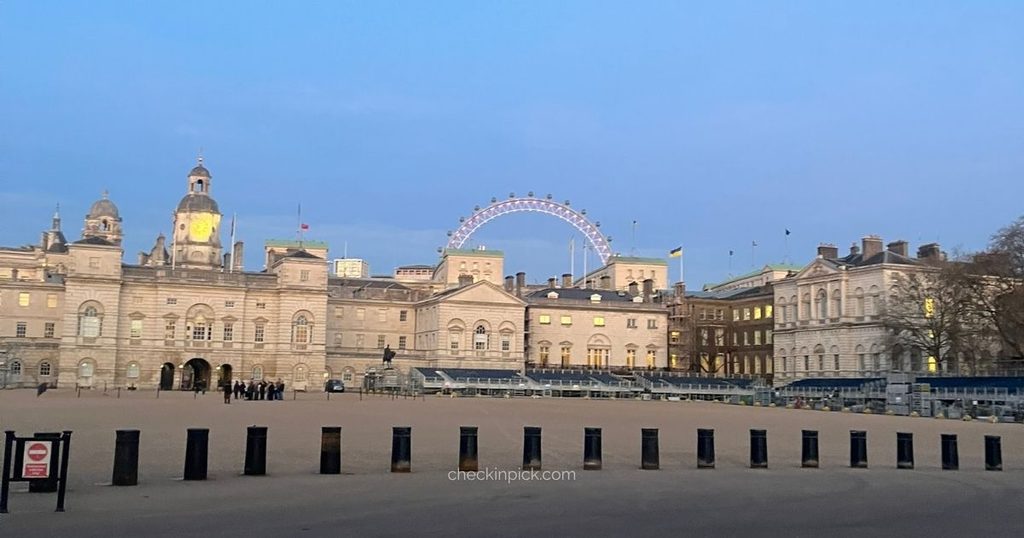
Let’s be honest, London can make you think twice about your travel budget. A West End show here, an afternoon tea there, and suddenly, the money you planned to spend over several days seems to be disappearing much faster than expected. Luckily, if you check out some of the best free things to do in London, you can easily keep costs down and make your trip unforgettable without breaking the bank.
But after spending time in the city, I started noticing something. Some of the places I enjoyed most were the ones that did not ask me to buy a ticket.
A museum on a rainy afternoon. A walk through St James’s Park when you have nowhere you need to be. Standing on Primrose Hill as the light changes over the skyline. Watching the mounted guards on Whitehall while London carries on around them. None of these moments require an expensive booking, yet they can end up being the parts of the trip you remember most clearly.
That is what I like about travelling around London on a smaller budget. You are not necessarily missing out. Sometimes you are simply paying attention to different things.
Whether this is your first visit or you are coming back to London in 2026, this guide brings together the free museums, parks, viewpoints, historic sights and small experiences that are genuinely worth making time for. I have also included the practical details that can make a difference once you are actually here, from when to arrive to where you can save a little on transport and lunch.
You do not need to spend a fortune to have a good day in London. You just need to know where to look.
The Museum Hopping Secret: Three World-Class Giants Within Walking Distance
London has a rare superpower that every budget traveler should know about. While cities like New York or Paris can charge steep fees just to walk through museum doors, London offers something different. One of the easiest ways to spend a full day in the city without spending much is to head to South Kensington. Three major museums sit within a short walk of each other, so you can move from one to the next without wasting much time on transport.
This is especially useful when the weather turns grey, which in London is hardly unusual. Instead of changing your plans because of the rain, you can simply spend more time indoors and decide how long you want to stay at each museum.
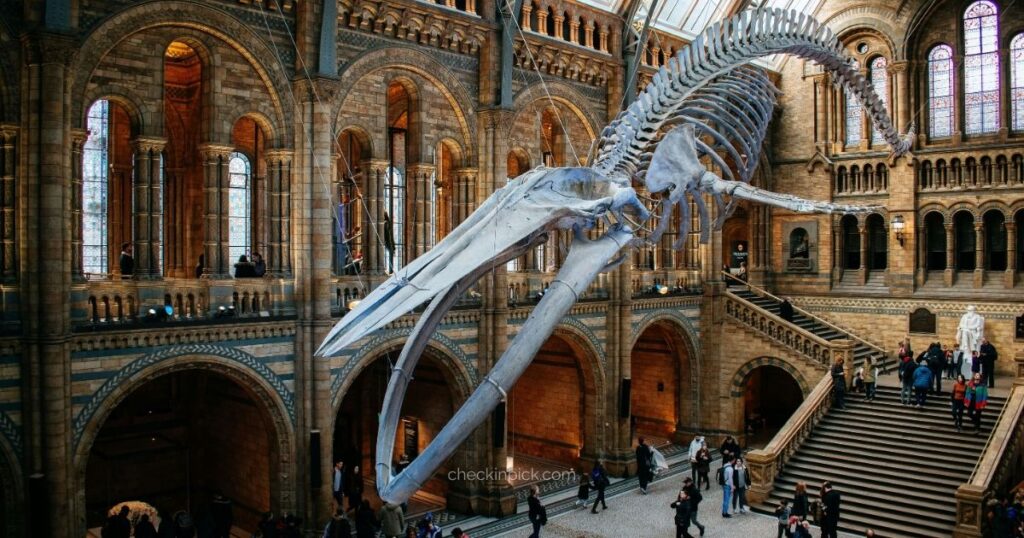
I would start with the Natural History Museum. The building alone is worth seeing, particularly if it is your first visit. The terracotta details on the outside continue inside, and Hintze Hall gives you an immediate sense of how large and detailed the museum is. Most people naturally head towards the dinosaur displays, but I would leave some time for the quieter galleries too.
The Morning Strategy: Get to the Natural History Museum early if you can. Hintze Hall becomes noticeably busier as the day goes on, and arriving near opening time gives you a better chance to look around without constantly moving with the crowd. Free timed entry is also worth arranging in advance during busy periods.
From there, walk over to the Science Museum next door. The atmosphere changes quite quickly. Instead of natural history, you are looking at inventions, engineering, medicine, aviation and space exploration. The aircraft and space galleries are an obvious draw, but some of the older technology exhibits are just as interesting if you take the time to read the stories behind them.
I would not try to see the whole museum either. Pick the areas that genuinely interest you and let the rest wait for another visit. One of the nice things about free museums is that you do not have to feel guilty about leaving before you have seen everything.
Then there is the Victoria and Albert Museum, just a few minutes away on foot. This one feels completely different again. Its collections cover fashion, jewellery, sculpture, furniture, design and decorative arts, so it is the kind of place where you can walk in with one thing in mind and end up spending half an hour looking at something completely unexpected.
If you have already spent the morning walking through the other two museums, the V&A is a good place to slow the pace down. Take a look at the architecture, sit in the courtyard for a while, or choose one collection rather than trying to cover the entire building.
Why This Route Works
The real advantage of South Kensington is not simply that the museums are free. It is how little effort it takes to move between three completely different experiences.
You can start with natural history, move into science and technology, then finish with art, fashion and design. If you are tired after the first museum, stay longer there and skip the next one. If you are still full of energy, keep going.
That flexibility is what makes this one of my favourite free days in London. You are not paying for three separate attractions, and you are not spending half the day travelling between them either.
The South Kensington Museum Trio
Start with the Natural History Museum
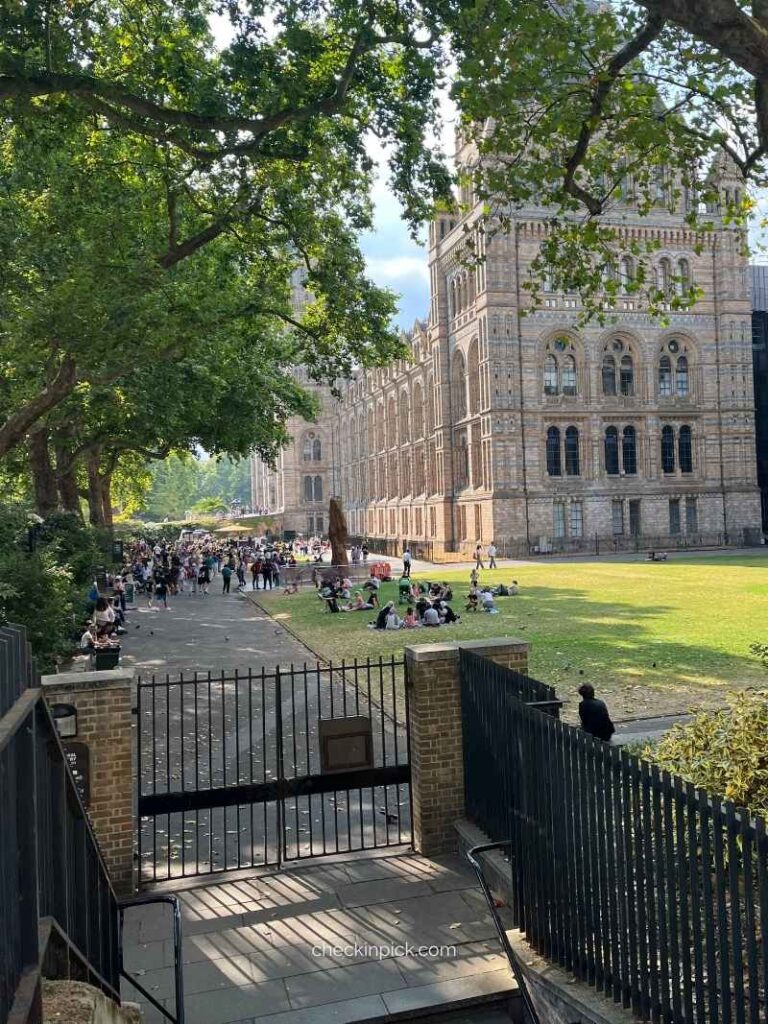
The Natural History Museum is one of those places where the building itself is worth seeing before you even walk through the doors. The first thing I noticed was not the dinosaur displays or the huge main hall, but the terracotta details covering the outside of the building. Look closely and you will find carved plants and animals throughout the architecture, which makes the walk towards the entrance feel like part of the visit.
Inside, the scale changes completely. Hintze Hall is enormous, and it is difficult not to stop for a moment when you first see it. The high ceiling, stone arches and details around the hall make it feel very different from most museums in London. It is easy to understand why so many people take photographs here before they even reach the exhibitions.
Most first time visitors naturally make their way towards the dinosaurs, and they are worth seeing. But I would not rush through the rest of the museum just to get there. Some of the quieter galleries are where I found myself slowing down the most. The mineral and gemstone collections, in particular, have a completely different atmosphere from the busy main areas. Glass cabinets filled with crystals, rocks and meteorites are not as immediately dramatic as a giant dinosaur, but they give you a chance to look closely and take a break from the crowds.
That contrast is part of what makes the museum interesting. One moment you are standing underneath a huge display in Hintze Hall, and a few minutes later you can be looking at something small enough to fit in the palm of your hand. The museum covers such a wide range of natural history that there is no need to see everything in one visit.
The Morning Strategy: If you want to enjoy Hintze Hall before it becomes crowded, arriving close to opening time is a good idea. You will have a better chance of seeing the architecture without constantly having people moving in front of you, and the quieter atmosphere makes it easier to take in the scale of the space.
The Booking Reality: General admission to the Natural History Museum is free, but free timed entry is often the most practical option when the museum is busy. Booking ahead can save you from arriving to a long queue, particularly during school holidays and other peak periods. Check the museum’s official website for the latest entry information before you go.
If you are planning to visit the Science Museum and the V&A as well, the Natural History Museum makes an easy starting point for a South Kensington museum day. You could spend several hours here, but you do not need to. Pick the galleries that genuinely interest you, take your time in Hintze Hall, and leave something for the next museum.
For me, that is the best way to approach it. You do not need to conquer the Natural History Museum in one afternoon. You just need to give yourself enough time to notice what makes you want to stop.
The Science Museum Is More Than Just Space and Planes
The Science Museum feels completely different from the Natural History Museum next door. After spending time among fossils, animals, and huge displays about the natural world, walking into the Science Museum shifts your attention towards what people have built, tested, and sometimes got spectacularly wrong.
The space and aviation galleries are probably where I would head first. Large aircraft hang overhead, and it is difficult not to stop and look up at them. They make the scale of the museum feel very different from the beginning. Then you start noticing the smaller details, the engines, instruments, machines, and objects that explain how these enormous pieces of technology actually worked.
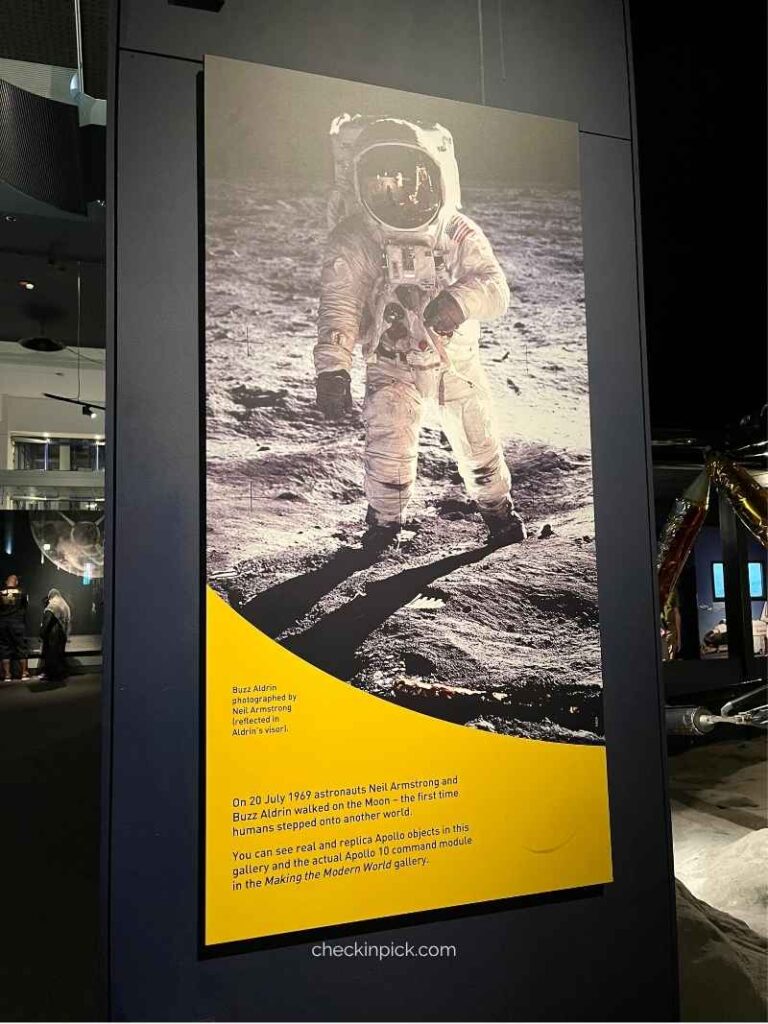
The Apollo displays are another reason I would make time for this museum. Seeing objects connected to the Moon missions in person feels different from seeing photographs of them online. The story becomes less abstract when you are standing in front of something that was part of an actual mission. It also puts the whole history of space exploration into perspective. Going to the Moon sounds almost ordinary now, but the technology and risk involved were anything but.
I would not describe the Science Museum as a place only for families with children either. There are plenty of interactive areas that younger visitors will enjoy, but adults can easily spend a surprising amount of time looking at the older machines, medical developments, computers, and engineering exhibits. The interesting part is seeing how many things we now take for granted began as ideas that once seemed completely impractical.
One thing I like about this museum is that you do not have to understand science to enjoy it. You can walk in because you are interested in space and end up spending twenty minutes looking at an old computer. Or you might come for the aircraft and find yourself reading about an invention you had never heard of before. That sense of wandering is part of the fun.
The Gallery Strategy: If space exploration is the main reason you are visiting, head towards the space and aviation galleries early rather than trying to work through the museum from the entrance onwards. The museum is large, so choosing one or two areas that genuinely interest you will make the visit feel much less tiring.
The Practical Note: General admission to the Science Museum is free, although some temporary exhibitions and special experiences may require a separate ticket. It is worth checking the official website before your visit if there is something specific you want to see.
If you are already visiting the Natural History Museum or the V&A, the Science Museum fits naturally into the same South Kensington day. You could easily spend several hours here, but you do not have to. That is one of the advantages of a free museum. You can stay for the exhibits you actually care about and leave when your attention starts to wander.
And if you have ever looked up at the moon and wondered how anyone actually managed to get there, this is probably one of the better places in London to spend an afternoon thinking about it.
Why I Would Save an Afternoon for the V&A

The Victoria and Albert Museum feels quite different from the other museums around South Kensington. After visiting the Natural History Museum and the Science Museum, I was expecting another place where I would spend an hour or two looking at displays and moving on. Instead, I found myself slowing down and paying attention to things I had not expected to find so interesting.
The V&A is especially good if you enjoy design, fashion, furniture, jewellery, sculpture, or the small details behind the things people have made and worn over the centuries. You might walk past a large marble sculpture and then find yourself stopping in front of a piece of jewellery or an old dress a few minutes later. There is no single subject that you have to follow, which makes wandering around surprisingly enjoyable.
What I liked most was that the museum did not feel like somewhere I needed to understand before visiting. I could simply follow whatever caught my eye. One room might be filled with sculptures, while another takes you into the history of clothing, interiors, or decorative objects. Even if you are not particularly interested in fashion or art, there are enough different collections to find something that holds your attention.
The building itself is also worth taking your time with. The V&A has several beautiful interior spaces and a courtyard garden where you can sit for a while. If you have been walking around London all morning, this makes a difference. You can spend an hour looking at the collections, step outside for some fresh air, and then decide whether you want to continue exploring.
One thing I would not recommend is trying to see the entire museum in one visit. The collection is simply too broad, and rushing from room to room can make everything start to blur together. Pick a section that genuinely interests you, whether that is fashion, sculpture, jewellery, or design, and leave yourself enough time to wander without constantly checking how much you have left to see.
The Design Strategy: Choose one or two collections before you arrive, but leave some room for whatever catches your attention along the way. The V&A is much more enjoyable when you treat it as a place to wander rather than another London attraction to complete.
The Practical Note: General admission to the V&A is free, although some exhibitions and special events require a separate ticket. Check the official website before visiting if there is a particular exhibition you want to see.
If you are already spending the day around South Kensington, the V&A is an easy place to add to your route. And because you do not have to pay for general admission, there is no pressure to see everything. You can stay for twenty minutes, spend half a day, or simply walk in because you needed somewhere quiet for a while. Sometimes that is the best kind of museum visit.
How I Would Spend Two Hours at the British Museum
The British Museum is one of those places where it is very easy to lose track of time. You walk into the Great Court, look at the museum map, and realise there is far more here than you could possibly see in one afternoon.

That is why I would not try.
If you only have around two hours, the best approach is to choose a few things you genuinely want to see and let the rest wait for another visit. The museum is much more enjoyable when you stop worrying about how many rooms you have covered.
I would start with the Rosetta Stone. It is one of the museum’s most recognisable objects, and seeing it in person gives you a sense of why it became so important to the study of ancient Egyptian writing. From there, make your way towards the Egyptian galleries, where the mummies and other objects give you a much closer look at everyday life, beliefs and burial practices in ancient Egypt.
After that, head towards the Parthenon galleries. The surviving sculptures and architectural pieces are impressive, but I found the surrounding context just as interesting. Looking at the fragments while knowing that they once formed part of a much larger building makes you think about how much history can survive even when the original place has changed dramatically.
The important thing is not to rush between these three areas just so you can say you saw them. Give yourself time to stop when something catches your attention. You might spend ten minutes looking at an object that was not even on your original list, and that can easily become one of the things you remember most.
The Great Court is also worth leaving a little time for. Even if you are not particularly interested in architecture, the glass roof and open space make it a natural place to pause between galleries. It is also a useful reference point when you start to feel slightly lost, which can happen surprisingly quickly in a museum this large.
The Two Hour Strategy: Pick three main stops before you arrive, then treat everything else as a bonus. I would allow roughly 30 to 40 minutes for the Egyptian galleries, around 20 minutes for the Rosetta Stone and nearby displays, and another 30 to 40 minutes for the Parthenon galleries. Keep the remaining time flexible for the Great Court, finding your way around, or stopping at something unexpected.
You do not need to see the British Museum from beginning to end for the visit to feel worthwhile. In fact, trying to do so can take some of the enjoyment out of it.
The Practical Note: General admission to the British Museum is free, although some exhibitions require a separate ticket. Check the official website before visiting for current opening hours and any booking requirements.
If this is your first visit, I would rather leave knowing I properly looked at a handful of remarkable objects than walk out remembering nothing except how many galleries I managed to squeeze into two hours.
Trafalgar Square’s National Gallery: A Quiet Hour with Great Art

One of the things I like about London is that you can walk into a major museum without having to think about the price of admission. The National Gallery is a good example. Right on Trafalgar Square, it gives you an easy way to spend a few hours with some of the most well known works of European art without turning it into an expensive part of your day.
The first time you walk in, it can be slightly overwhelming. There are paintings in almost every direction, and it is tempting to start looking at everything simply because you can. I found it much better to slow down and choose a few works that I actually wanted to see.
The Van Gogh Sunflowers is an obvious one, especially if you have seen it reproduced countless times before. Seeing the original is a different experience. The colour, brushwork and small details are much easier to appreciate when you are standing in front of the painting rather than looking at it on a screen.
Leonardo da Vinci, Rembrandt and other familiar names are also represented in the collection, but I would not make the visit entirely about famous paintings. Some of the works I enjoyed most were the ones I had never heard of before. That is one of the reasons I prefer wandering through the galleries rather than following a strict checklist.
There is also a nice contrast between the gallery and Trafalgar Square outside. The square can be noisy and busy, with people taking photographs, meeting friends and passing through the centre of London. Inside, the atmosphere changes almost immediately. After walking around the city, having somewhere quiet to sit and look at art for a while can be a welcome break.
How I Would Plan the Visit
Because general admission is free, it is worth checking the National Gallery’s current visitor information before you go, particularly if you are visiting at a busy time or want to see a specific exhibition. Some exhibitions require a separate ticket, while the permanent collection is free to visit.
I would also avoid giving yourself a long list of paintings to find. Choose two or three things you definitely want to see, then leave the rest of your visit open. You might find yourself spending more time than expected in one room, and there is no real reason to rush when the museum itself is free.
If you are already around Trafalgar Square, this is an easy place to fit into your day. You can visit for an hour, stay longer if something catches your attention, and then walk straight back out into central London.
And when your feet eventually start complaining, Trafalgar Square is right outside. Find somewhere to sit, grab a coffee nearby and watch the city for a few minutes before moving on.
For me, that is what makes the National Gallery work so well in a London itinerary. You can come here for the famous paintings, but you do not have to leave with a checklist completed. Sometimes an hour spent looking at one painting properly is enough.
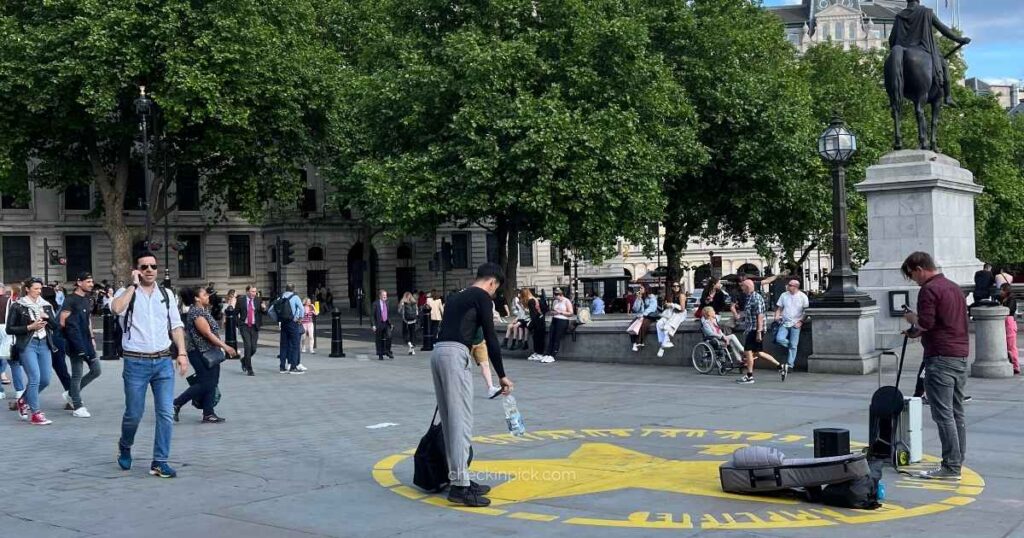
Whenever I meet friends in central London, Trafalgar Square is one of those places where we often end up stopping for a while. There is something easy about sitting near the fountains after dinner or after a long walk, with the noise of the city happening all around you.
Depending on the day, you might come across a performance, a public event or simply a crowd gathering in the square. I like that you never quite know what the atmosphere will be when you arrive. Sometimes it is busy and lively, while on other days it is surprisingly easy to find a quiet spot and just sit for a few minutes.
If you have been walking around London all afternoon, this is a good place to pause rather than immediately moving on to the next attraction. Grab a coffee, sit by the square and watch people coming and going. The fountains, Nelson’s Column and the surrounding buildings give you plenty to look at without needing to do anything in particular.
I would especially save it for late afternoon. When the light starts to soften, the square feels a little different from the busy streets around it. You might have arrived simply because it was on your route, but it is surprisingly easy to stay longer than planned.
A Small Tip: Trafalgar Square also hosts free public events throughout the year, so it is worth checking what is happening on the day of your visit.
For me, that is the appeal of Trafalgar Square. It does not require much planning. You can come here after visiting the National Gallery, sit down for ten minutes, and decide what you want to do next. Sometimes that unplanned pause becomes one of the nicer parts of the day.
Sky Garden: A Free View of London Worth Planning Ahead For
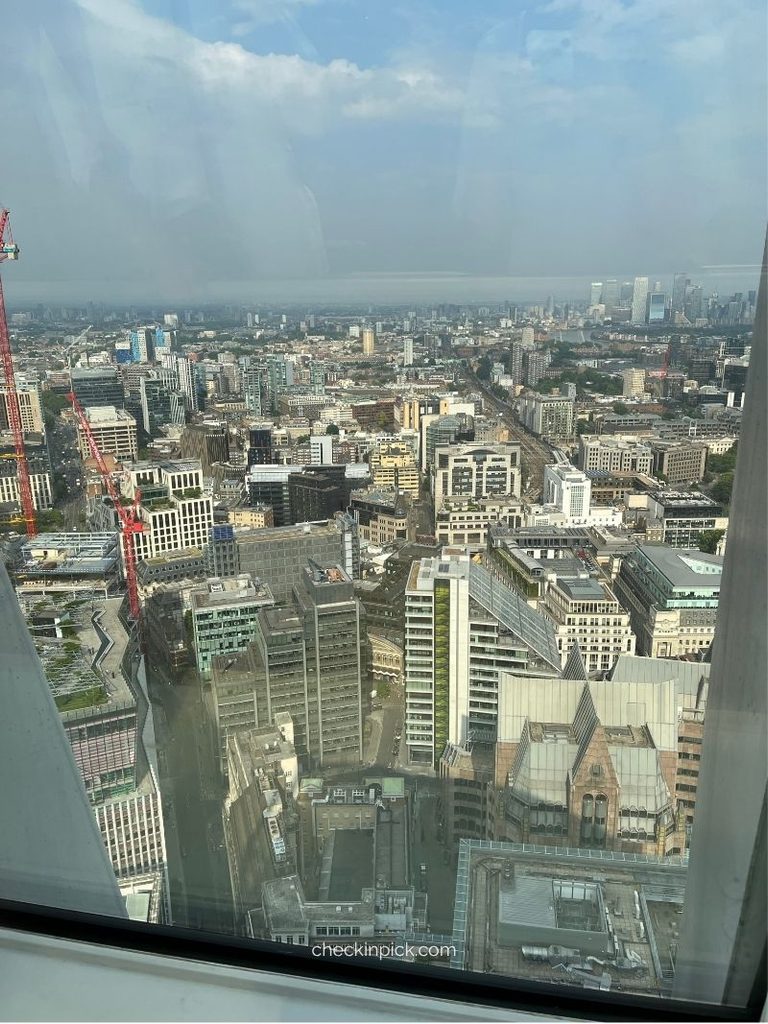
A good view of London can get expensive surprisingly quickly. Sky Garden is one of the places that makes you realise it does not always have to.
Located at the top of 20 Fenchurch Street, Sky Garden gives visitors a chance to look across central London from above without paying for general admission. The space is very different from a traditional observation deck. There are plants, seating areas and large windows surrounding the main viewing areas, so you can take your time rather than simply walking up, taking a photograph and leaving.
The view is the main reason to come. From inside, you can look towards the River Thames, Tower Bridge and St Paul’s Cathedral, with the buildings of the City filling the space between them. On a clear day, the view stretches much further across London.
I would not make the mistake of thinking that free means you can simply turn up whenever you like. Sky Garden uses free timed tickets, and popular slots can go quickly. If this is somewhere you definitely want to visit, check the official website and book your slot as soon as tickets for your preferred date become available.
When I Would Go
The best time depends on what you want from the visit.
If you prefer a quieter atmosphere and mainly want to see the city in daylight, an earlier slot can make sense. If you want to see London change from afternoon into evening, look for a later slot around sunset when available. Watching the buildings gradually light up while the sky becomes darker is a very different experience from visiting in the middle of the day.
There is also no need to rush once you are inside. Find a place near the windows, look around before reaching for your phone, and give yourself a little time to take in how different London looks from this height.
The Booking Tip: Do not build your London itinerary around the assumption that you can decide on Sky Garden at the last minute. Check the official booking calendar before your trip, especially if you are travelling at a busy time.
Sky Garden works particularly well on a day when you are already exploring the City of London. You can combine it with a walk towards St Paul’s Cathedral, the River Thames or Tower Bridge, turning one free booking into part of a much longer walk through some of London’s most recognisable areas.
For me, that is the real appeal. You are not paying simply for the privilege of seeing London from above. You are getting a quiet place to stop, look out over the city and remember how much of London can actually be experienced without spending anything.
When London Feels Better on Foot: A Walk Through the Royal Parks
London can feel surprisingly tiring when you spend the whole day moving from one attraction to another. After a few Tube journeys and crowded streets, I often find that the best thing to do is simply slow down and walk through one of the city’s parks.
The Royal Parks are some of the easiest places to add to a London itinerary without spending anything. You can sit by the water in St James’s Park, walk through Green Park on the way to Buckingham Palace, or continue towards Hyde Park when you want a little more space.
What makes these parks particularly useful for travellers is their location. They are not places you necessarily need to make a separate trip to see. You can build them into the journey between major sights and turn what would have been a Tube ride into part of the day itself.
For example, walking from Buckingham Palace through St James’s Park towards Westminster gives you a very different view of central London than travelling underground. You get to slow down, take photographs when something catches your eye, and occasionally find yourself stopping for longer than planned.
I also like using the parks as a reset between busy attractions. Instead of finding another café every time you need a break, pick up a drink or something simple to eat and sit outside for a while. On a dry day, even a supermarket lunch can feel like a proper break when you eat it somewhere with trees, water and people passing by.
You do not need a detailed plan either. Choose one park that fits naturally into your route and see where the walk takes you. Some of the nicest parts of London are found in the space between the places you originally came to see.
The Walking Strategy: Before taking the Tube between two nearby attractions, check the walking route first. A journey that looks inconvenient on the map can sometimes take you through a park or past a landmark you would otherwise miss.
That is one of the simplest ways to experience more of London without spending more. The park is free, the walk is free, and you get to see a little more of the city along the way.
St James’s Park
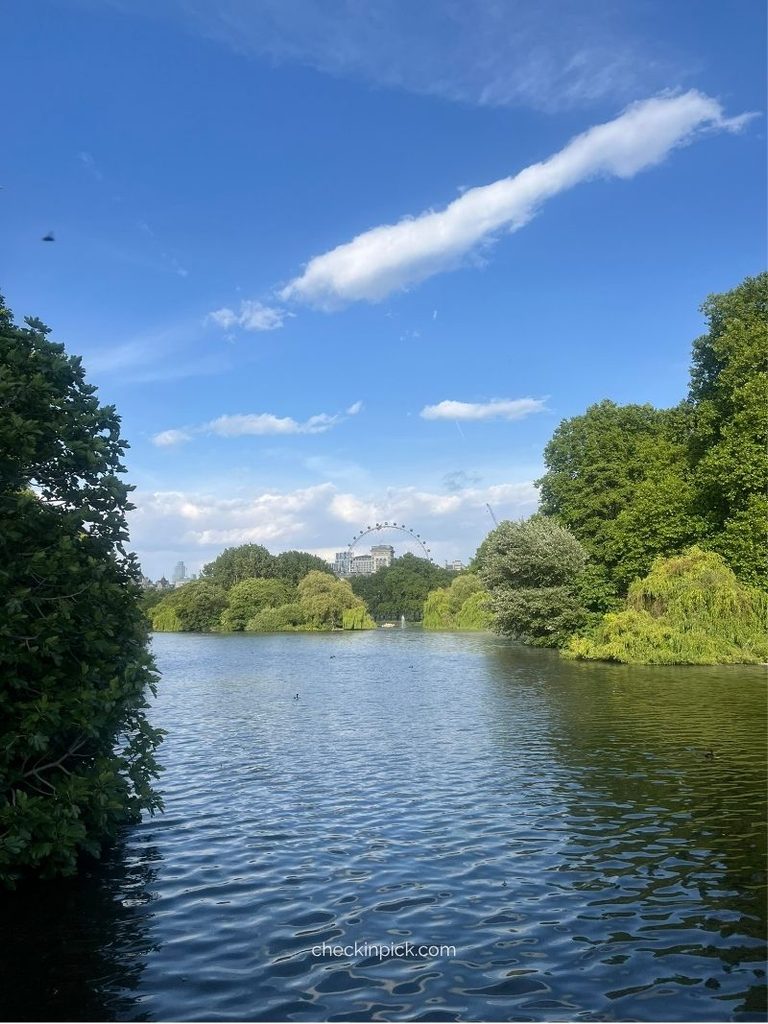
There’s something about standing on this bridge and looking toward Buckingham Palace or the London Eye that makes everything feel a little quieter. On a calm day, the stillness of the park feels like a little escape from the city. · Photo: CheckinPick
St James’s Park is one of those places I would not rush through. It sits between some of London’s busiest sights, but once you get closer to the lake, the pace changes. People are still walking through, cameras are still out, and the city is right there around you, but somehow it feels easier to slow down.
The Blue Bridge is one of my favourite places to stop. From here, you can look across the lake towards Buckingham Palace in one direction and see the London Eye in the distance in the other. It is a simple view, but it gives you a strange sense of how close some of London’s major landmarks actually are.
If you are walking between Buckingham Palace and Westminster, resist the temptation to treat the park as just a route between two places. Give yourself twenty minutes. Sit by the lake, watch the birds, or find a bench and let the crowds pass by. You do not need an attraction or an activity to justify staying here.
The park is also a useful place to take a break during a busy sightseeing day. Rather than stopping at another indoor café, you can pick up a drink nearby and find somewhere to sit outside when the weather is good. It is a small change, but after several hours of walking around central London, it can make the rest of the afternoon feel much easier.
The Walking Tip: If you are coming from Buckingham Palace, walk through the park rather than going around it. Take your time around the lake and cross the Blue Bridge before continuing towards Westminster. The route is only a small detour, but it gives you one of the nicest changes of pace in this part of London.
What I like most about St James’s Park is that nothing much is required of you here. You can arrive with a packed sightseeing schedule and still find a quiet corner for a few minutes.
Sometimes that is exactly what you need.
Primrose Hill
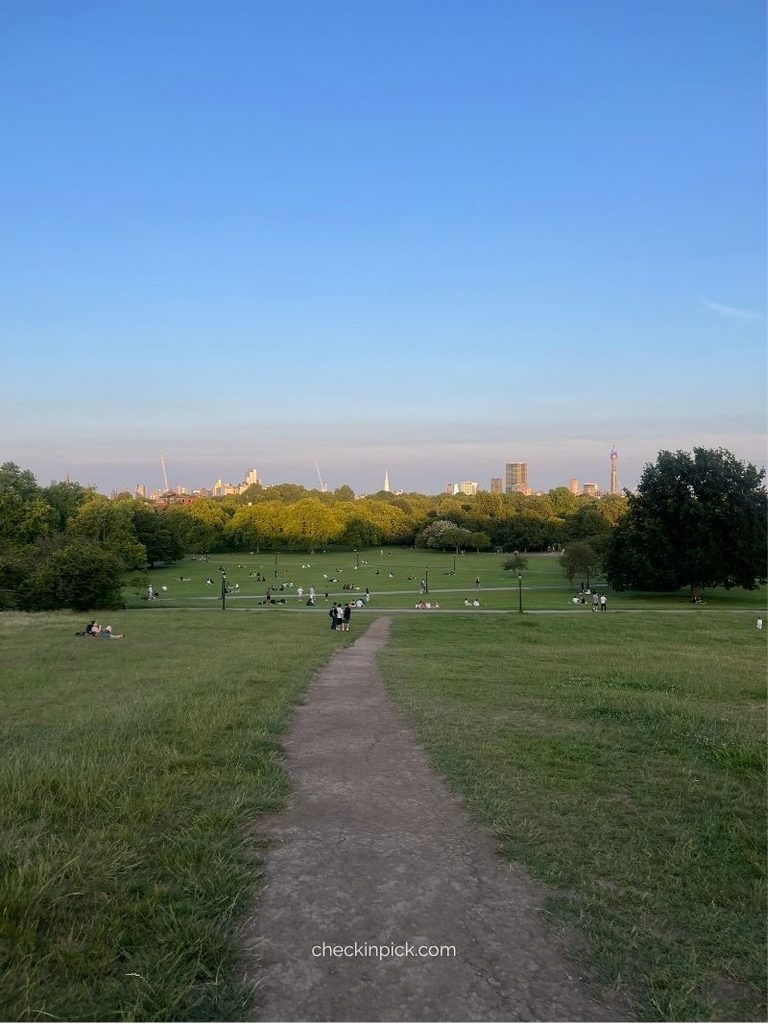
Primrose Hill is one of those places where I usually end up staying longer than planned. I first really noticed its charm on a clear evening, when the light was beginning to fade and people were settling onto the grass with a coffee, a drink, or something they had picked up nearby. There was no particular reason for everyone to stay, but nobody seemed in much of a hurry to leave either.
The walk to the top is not particularly long, but the view makes the effort feel worthwhile. From the summit, London opens out in front of you, and the buildings that felt so close and busy earlier in the day suddenly look much quieter. On a clear evening, you can spend a surprising amount of time just looking across the skyline.
Sunset is an obvious time to visit, but I would get there a little earlier. The half hour before sunset is often the part I enjoy most. The light is still warm, people are finding a place on the grass, and you get to watch the view change rather than arriving just as the sun disappears.
Bring a small snack or something to drink if you like. There is no need to turn it into a picnic. Even sitting on the grass for twenty minutes can feel like enough after a day of walking around London.
One practical thing to remember is that the top of the hill is quite exposed. If the weather is windy, it can feel much colder than it does on the streets below, so an extra layer is useful even on a mild evening. The atmosphere can also change quite a bit depending on when you visit. A quiet weekday evening feels very different from a sunny weekend when the grass is filled with people.
If you have already spent the day seeing London’s famous landmarks, Primrose Hill gives you a chance to do something much simpler. Find a spot, watch the light change, and stay until you feel ready to leave.
Watch the Changing of the Guard at Buckingham Palace
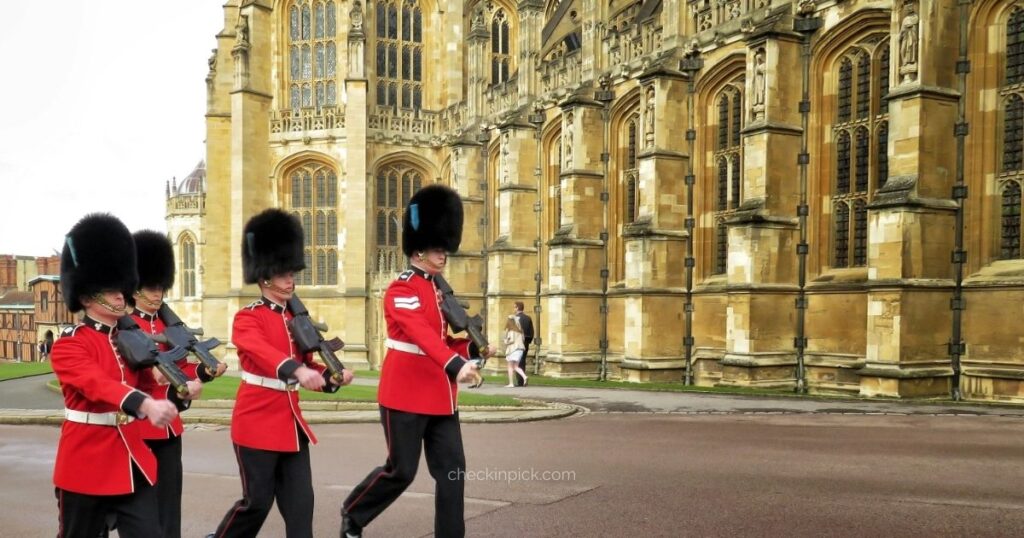
There is something slightly strange about seeing the Changing of the Guard in person. You know exactly what is coming, you have probably seen the red uniforms and bearskin hats in photographs before, and yet the moment the band appears and the guards begin moving down the Mall, the whole scene feels different.
The ceremony takes place at Buckingham Palace, where the Old Guard and New Guard formally exchange duties. It is a tradition that goes far beyond the photo opportunity. The Household Troops have been guarding the Sovereign and royal palaces for centuries, and the ceremony itself is the visible part of a much larger military routine.
What I found more interesting than simply standing in front of the palace gates was watching the movement around the ceremony. The guards do not just appear at the palace at 11am. Before the main handover, the Old Guard forms at St James’s Palace and makes its way towards Buckingham Palace, while the New Guard prepares at Wellington Barracks. The main ceremony begins at around 11am, with the handover continuing afterwards.
That is also why I would not treat this as a quick stop between sightseeing spots. Arriving early gives you time to find a position without spending the entire ceremony trying to see over someone’s head. If you want to watch from close to the palace gates, arriving around 45 minutes early is a sensible starting point, especially on busy days.
And listen to the music. It is easy to focus so much on the uniforms that you miss one of the best parts of the experience. The military bands do not only play traditional marches. Their programmes can include music from shows and familiar popular songs, which gives the ceremony a surprisingly human touch.
One practical detail matters more than most guides mention: the Changing of the Guard does not happen every day at Buckingham Palace. The current official schedule lists King’s Guard changes there on selected days, with the exact dates subject to change. So before building your morning around it, check the official calendar rather than relying on an old itinerary or a screenshot saved from someone else’s trip.
If this is your first time in London, I would pair the ceremony with a walk through St James’s Park afterwards. The contrast is part of the charm. One moment you are standing among crowds watching a centuries old military ritual, and a few minutes later you can be beside the lake, away from the noise, wondering where everyone disappeared to.
Best Tip: Do not arrive at Buckingham Palace just before 11am and expect to see everything. Come early, check the day’s schedule, and pay attention to where the guards are moving rather than staring only at the palace gates. You may end up seeing more of the ceremony, and understanding what is happening, by following the movement than by simply waiting for the famous photo moment.
The schedule can change, so always check the latest information from the Household Division’s official Changing the Guard calendar before you go.
Can’t Make the Changing of the Guard? Meet London’s Mounted Guards on Whitehall
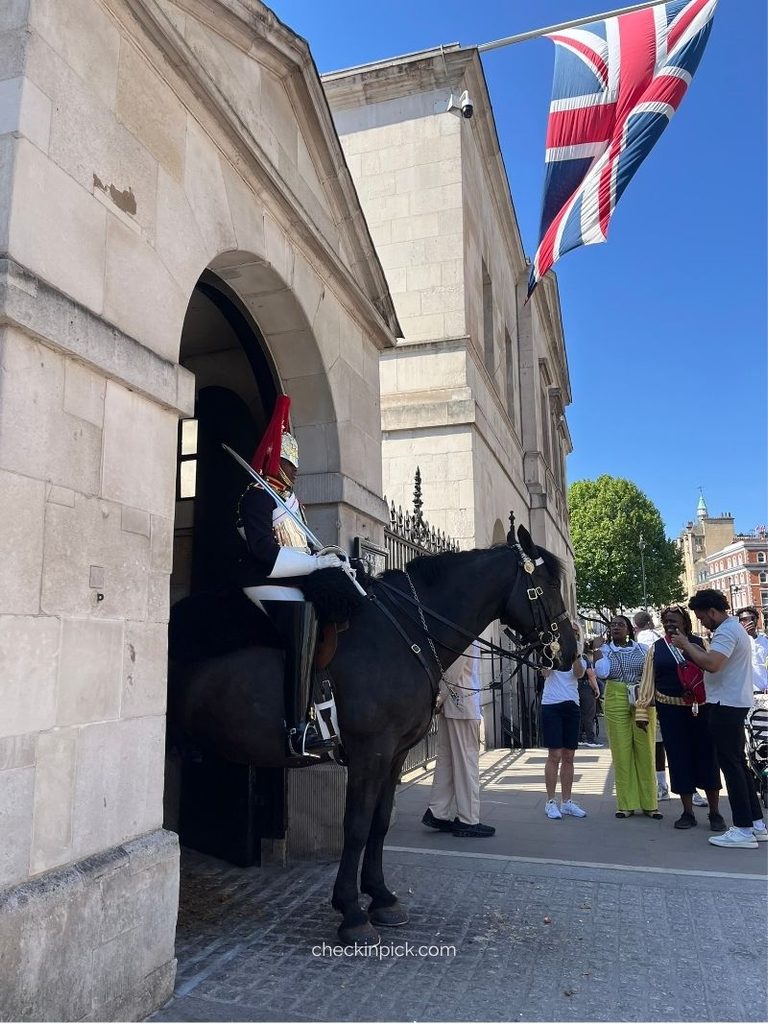
If Buckingham Palace’s Changing of the Guard doesn’t fit your itinerary, there’s still a good reason to walk over to Whitehall. Horse Guards offers a quieter, more spontaneous way to see London’s royal tradition, and you do not have to rearrange your whole morning around it.
There are moments in London when you stop because something feels slightly out of place. This was one of them. I was walking along Whitehall when a black horse appeared in front of an old stone building, with a mounted guard sitting perfectly still on its back. There were tourists taking photos, people passing by, and the usual London traffic around us, yet the scene felt oddly removed from the city for a moment.
This is Horse Guards, one of those places that is easy to walk past if you are more focused on getting from Westminster to Trafalgar Square. The mounted guards are part of the Household Cavalry, and unlike many historic sights in London, this is not simply a piece of royal history put behind glass. The horses and guards are still part of the daily routine here.
What I liked most was how ordinary the moment felt despite how unusual it looked. The guard was not performing for anyone. He was simply doing his job while visitors stood nearby trying to capture the perfect photograph. That small detail made the scene feel much more interesting to me than a polished royal postcard.
If you are already visiting Buckingham Palace or walking through St James’s Park, Horse Guards is an easy addition to the route. You do not need a ticket to stand outside and see the mounted sentries, and you do not necessarily need to plan your entire morning around a ceremony either. Sometimes it is enough to arrive, watch for a few minutes, and let London carry on around you.
There is also something worth noticing in the background. The grand buildings, Union Jack, black horses and impeccably dressed guards can make the scene feel almost theatrical, but then you notice someone checking their phone or a bus moving through the street behind them. That mixture of ceremony and everyday life is what makes the place feel distinctly London to me.
If you want a photograph, take a moment before reaching for your phone. Watch the horse first. Look at the way the guard sits, the quiet movement of the crowd, and the contrast between the old building and the busy street. The photo usually turns out better when you have actually looked at the scene before trying to capture it.
A useful tip: Horse Guards works particularly well as a stop between St James’s Park, Westminster and Trafalgar Square. Visit during the daytime when the mounted sentries are on duty. One thing I would keep in mind is that these are working military horses, not photo props. Give them plenty of space, avoid sudden movements, and follow any instructions from the guards.
How to See More of London Without Spending More
London has a funny way of making small expenses disappear. A coffee here, a Tube journey there, a quick lunch because you are too tired to look for somewhere else. None of it feels particularly expensive at the time, but by the end of a few days, those little decisions can add up surprisingly quickly.
The good news is that you do not need to make your trip feel cheap to spend less. Some of the easiest savings come from doing what makes sense locally, especially when it comes to transport and lunch.
Use Contactless Payment Instead of Buying Tube Tickets
If you are visiting London for a few days, I would keep things simple and use a contactless bank card or mobile payment wherever possible. There is something wonderfully uncomplicated about tapping in, getting on the Tube, and carrying on with your day without stopping to think about tickets every time.
London’s transport system calculates fares across your journeys and applies the relevant daily cap, so once you reach the applicable limit, you will not keep paying for additional journeys within that cap period.
The important part is consistency. Use the same physical card or the same mobile device throughout your journeys. Switching between your bank card, Apple Pay and another contactless card can make them count as separate payment methods, which means your journeys may not be grouped together for fare capping.
That is one of those tiny London travel details that is easy to overlook until you realise you have been paying more than necessary.
For a first trip, I would also avoid obsessing over transport zones before you arrive. Work out your route as you go, tap in and out correctly, and let the system calculate the fare. If you are planning a lot of sightseeing, walking between nearby areas can be even better. Some of my favourite London moments have happened on streets I would never have seen from inside a Tube carriage.
For a deeper look at zones, fares and how the Underground actually works, see our complete London Underground Guide.
Make Supermarket Meal Deals Part of Your London Routine

Food is where a perfectly sensible London budget can quietly fall apart.
You leave your hotel hungry, find yourself near a famous attraction, and suddenly a fairly ordinary sandwich costs much more than you expected. Do that every day and the difference becomes noticeable.
One of my favourite ways around this is the humble supermarket Meal Deal. Tesco, Sainsbury’s and Marks & Spencer are particularly useful when you want something quick without committing to a restaurant.
A typical deal combines a main item with a snack and a drink, and prices vary by supermarket and offer, so it is worth checking the current deal rather than assuming every store charges the same amount.
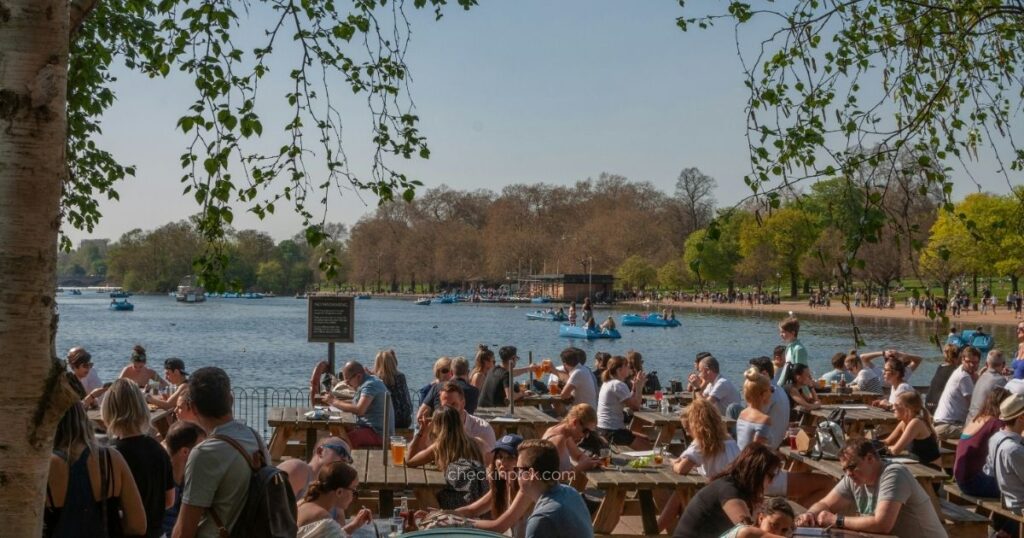
The trick is not simply to buy the cheapest food you can find. Use the location to your advantage. Pick up lunch near a supermarket, then walk five or ten minutes to a nearby green space. St James’s Park, Hyde Park or one of London’s smaller public gardens can turn an inexpensive supermarket lunch into a genuinely pleasant break.
It also gives you a different kind of London experience. Instead of spending an hour indoors at a restaurant in a crowded tourist area, you can sit outside, watch people pass by and get back on the road when you are ready.
And honestly, there are days when a sandwich eaten on a park bench feels far more memorable than another meal squeezed into a busy restaurant.
The Real Trick Is Knowing What Not to Pay For
London does not have to be an expensive city if you stop treating every famous place as something you need to pay to experience.
The skyline can be enjoyed from a hill. Royal history appears on ordinary streets. Parks give you somewhere to eat lunch without buying a table. Museums offer hours of shelter and culture without an entrance fee, and many of the city’s most enjoyable walks cost absolutely nothing.
That is the approach I would take with London in 2026. Spend money when it genuinely improves the experience, but do not pay simply because you are standing somewhere tourists are expected to spend.
The best budget days in London rarely feel like budget days at all.
Some of My Favourite London Moments Cost Nothing
London can be expensive, but that does not mean every memorable part of the city comes with a price tag.
After spending time here, I found that some of the moments I remember most clearly were the ones I never paid for. Sitting by the lake in St James’s Park with nowhere else to be. Standing among a crowd outside Buckingham Palace and waiting for the guards to appear. Looking across London from Primrose Hill as the light slowly disappeared. Even picking up a supermarket Meal Deal and eating it somewhere outside can become part of the experience when you stop treating it as simply a way to save money.
That is probably the biggest thing I would take away from planning a budget trip to London. Do not build your itinerary around what is cheapest. Build it around what is worth your time, then look for the places where you do not need to spend anything.
A free museum can easily fill an afternoon. A royal park can become your lunch spot. A good viewpoint can replace an expensive attraction when all you really wanted was to see London from above. And if your plans do involve something that needs a reservation, check the details before you go rather than assuming every free attraction works on a walk in basis.
For a London trip in 2026, I would leave a little room in the itinerary too. Not every good moment needs to be scheduled. Some of the best parts of the city happen in the gaps between places, when you decide to walk instead of taking the Tube, sit down for ten minutes instead of rushing to the next attraction, or turn down a street simply because it looks interesting.
That is where London can start to feel less like a list of sights and more like a city you are actually spending time in.
So yes, plan ahead. Check opening times, book free attractions when reservations are required, use contactless payment wisely, and know where you can pick up an inexpensive lunch. But do not make saving money the whole point of the trip.
The real trick is knowing where your money adds something, and where it does not.
You can spend very little in London and still come home feeling like you saw a lot. In fact, once you know where to look, some of the city’s best experiences are the ones that never asked you to open your wallet.

Welcome to CheckinPick. We create practical travel guides for visitors planning trips to London and other destinations.
Our editorial team focuses on useful, up-to-date information about transportation, accommodation, attractions, fares and travel planning. We research information using official sources and reputable travel resources, and we update our guides when important details change.
Our goal is to make travel information easier to understand and more useful for real-world trip planning.