
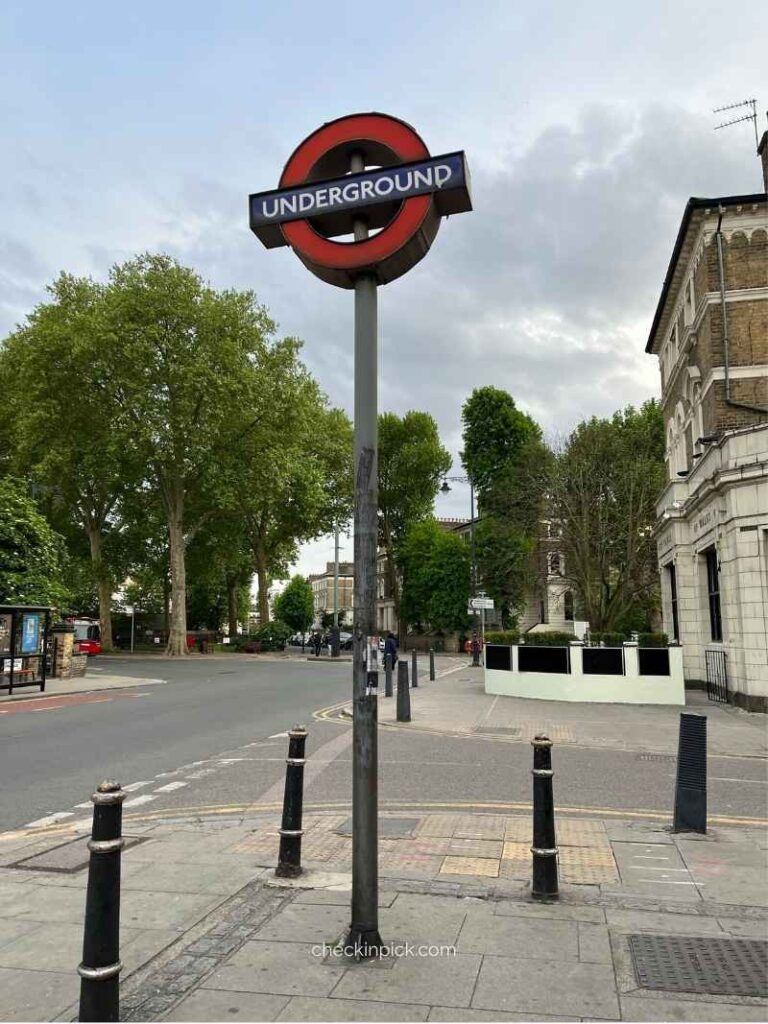
London changes quite a bit once you stop looking at it like a visitor.
On a short trip, a neighborhood can be little more than the place where you sleep between sightseeing days. Stay for a few weeks or a month, though, and the small details start to matter. Where do you buy groceries? Is there a decent café when you need to work for an hour? What does the street feel like after 9pm? Can you get home without making three train changes when you are carrying shopping bags and running on low energy?
That is why choosing where to stay in London for a longer period is less about finding the most famous neighborhood and more about finding somewhere that works with your everyday habits.
Central London is convenient, but it is not automatically the smartest choice. Some areas that look perfect on a map can feel surprisingly tiring when you use them every day. A slightly less central neighborhood with a good Tube or Elizabeth Line connection can sometimes give you a better balance of space, food, local life, and transport.
The Elizabeth Line has made this even more interesting. Places that once felt inconvenient for visitors can now be surprisingly practical, especially if you expect to move between Central London, East London, and the airport more than once. A good transport connection is not just about shaving a few minutes off a journey. It can change which parts of the city you actually bother to visit.
There is another thing I would pay attention to before signing a long stay. Look beyond the station itself.
Two apartments can both be described as “five minutes from the Tube,” yet one might involve a pleasant walk past cafés and small shops while the other means crossing a noisy road and walking beside traffic. That difference becomes very noticeable when you repeat the same journey several times a day.
The same goes for Tube lines. Being near a station is useful, but knowing where that line takes you is much more valuable. If most of your plans revolve around Soho, Covent Garden, museums, and the West End, one set of connections may make sense. If you expect regular trips to Canary Wharf, Shoreditch, Stratford, or Heathrow, another part of the network may fit your routine much better.
Then there is the question of London zones. Rent is only one part of the monthly cost. If you are constantly traveling into Central London, transport expenses and travel time can quietly add up. On the other hand, paying a premium simply to live in Zone 1 does not make sense for everyone. If you are staying somewhere with a fast direct connection, being outside the centre can give you more living space without making the city feel far away.
For a long stay, I would also look at the neighborhood at three different times: weekday morning, early evening, and later at night. London has streets that feel completely different depending on the hour. A busy commercial area can be incredibly convenient during the day but oddly quiet after the shops close. A residential street might look unremarkable at noon and become one of the nicest places to come home to in the evening.
And this is where London’s neighborhoods become much more personal.
Some people want to step outside and immediately be surrounded by restaurants, pubs, galleries, and noise. Others discover after a week that they would happily trade a famous postcode for a good supermarket, a local bakery, a quiet bedroom, and a park nearby.
Neither is the “right” London experience.
For a longer stay, the best area is usually the one that makes ordinary days feel easy. You will still visit the big attractions, but you will also have laundry to do, groceries to carry, rainy evenings when you do not feel like going anywhere, and mornings when the idea of crossing the entire city for breakfast sounds ridiculous.
That is the part of London that a neighborhood guide should really help with.
Rather than simply grouping areas by popularity, this guide looks at what staying in each part of London actually feels like. Some neighborhoods are better suited to first time visitors who want easy access to the major sights. Others make more sense for families, remote workers, food lovers, nightlife seekers, or travelers who expect to use Heathrow regularly.
The interesting part is that the answer can change completely depending on how you plan to spend an ordinary Tuesday.
That is the question I would start with before choosing an address. Choosing the right neighborhood will shape your entire London experience.
Which London Neighborhood Is Right for Your Long Stay?
There is no single best neighborhood in London for a long stay. The better question is what you want your London life to look like when you are not sightseeing.
That distinction matters more than it sounds. A neighborhood that feels exciting for three nights can become exhausting after three weeks. Somewhere that seems a little too quiet on your first afternoon might turn out to be exactly what you want when you have groceries in one hand, a coffee in the other, and absolutely no interest in getting back on the Tube.
I would choose your area by looking at the shape of your days rather than the number of attractions nearby.
If this is your first extended stay and you want museums, royal landmarks, good restaurants, and straightforward transport without feeling completely surrounded by tourists, South Kensington is an easy place to settle into. The big advantage is not just the museums. It has the kind of everyday infrastructure that makes a longer visit less complicated, with supermarkets, cafés, restaurants, and residential streets mixed together.
For a more polished version of London, Mayfair puts you in a very different setting. This is the choice for travelers who care about beautiful streets, high end hotels, serious shopping, and being close to some of London’s most expensive real estate. It is central and exceptionally convenient, although the atmosphere can feel more formal and less residential than other areas.
Families often appreciate South Kensington for another reason. Several major museums are close together, and the surrounding streets have plenty of places to stop for food or a break between visits. With children, that ability to change plans without turning every small decision into another cross city journey can be surprisingly valuable.
If you want London to feel more like a place where people actually live rather than a permanent sightseeing zone, look at Islington. The appeal here is the rhythm of the neighborhood. Independent shops, restaurants, pubs, and residential streets sit close together, so you can have a genuinely local evening without needing to make a special trip somewhere “interesting.” It is particularly appealing if you expect to mix sightseeing with quieter days spent working, reading, or simply wandering around your own neighborhood.
For travelers watching their accommodation budget while still wanting strong transport connections, Paddington deserves a closer look. Its location makes it especially useful for anyone who expects to use Heathrow or travel around London frequently. The area itself is more mixed than some of the postcard neighborhoods, which is precisely why it can work well for a longer stay. You are paying for connectivity rather than trying to recreate a boutique London fantasy outside your front door.
Then there is Soho, which is almost the opposite proposition. If restaurants, bars, theatres, late dinners, and the energy of central London are part of the reason you came, being in the middle of it can be genuinely fun. You also have to be comfortable with the downside of that convenience. Noise, crowds, deliveries, and late night activity are part of the package. For a long stay, that is worth thinking about before falling in love with an apartment during a quiet weekday viewing.
And if your ideal London evening involves a garden, a riverside walk, and considerably less traffic, Richmond offers a completely different version of the city. It is farther from the centre, but that distance is also the point. You get more of a town atmosphere, access to green space, and a slower pace while remaining connected to London.
So rather than treating the table below as a ranking, think of it as a starting point. Each area solves a different problem, and each comes with its own compromise.
| What matters most to you | Area worth considering | Why it works for a longer stay |
|---|---|---|
| Your first extended stay | South Kensington | Major museums, useful amenities, and a comfortable mix of residential and visitor friendly streets |
| A more luxurious base | Mayfair | Excellent central location, elegant surroundings, premium hotels, shopping, and dining |
| Traveling with family | South Kensington | Museums and family friendly amenities are unusually close together |
| A more local everyday rhythm | Islington | Independent businesses, restaurants, pubs, and residential streets create a lived in feel |
| Transport matters more than postcode prestige | Paddington | Strong connections make airport trips and cross London journeys easier |
| Food, theatre, and nightlife | Soho | An enormous concentration of restaurants, bars, theatres, and late evening activity |
| Green space and a quieter pace | Richmond | Riverside walks, open space, and a more residential atmosphere away from central London |
One useful test is to imagine a completely ordinary day rather than your perfect holiday.
You wake up late. It is raining. You need breakfast, groceries, and perhaps a load of laundry done before meeting friends in Central London that evening. Which neighborhood still sounds pleasant?
That answer is often more revealing than a list of attractions.
A long stay gives you the chance to experience London beyond its famous landmarks. You start noticing the bakery you pass every morning, the supermarket that stays open when you need something at the last minute, the quiet street you take home without thinking, and the station entrance that suddenly becomes part of your daily routine.
Those small conveniences rarely make it into a neighborhood ranking, but after a few weeks, they can matter more than being ten minutes closer to a famous attraction.
Islington — A More Local Side of London for Longer Stays
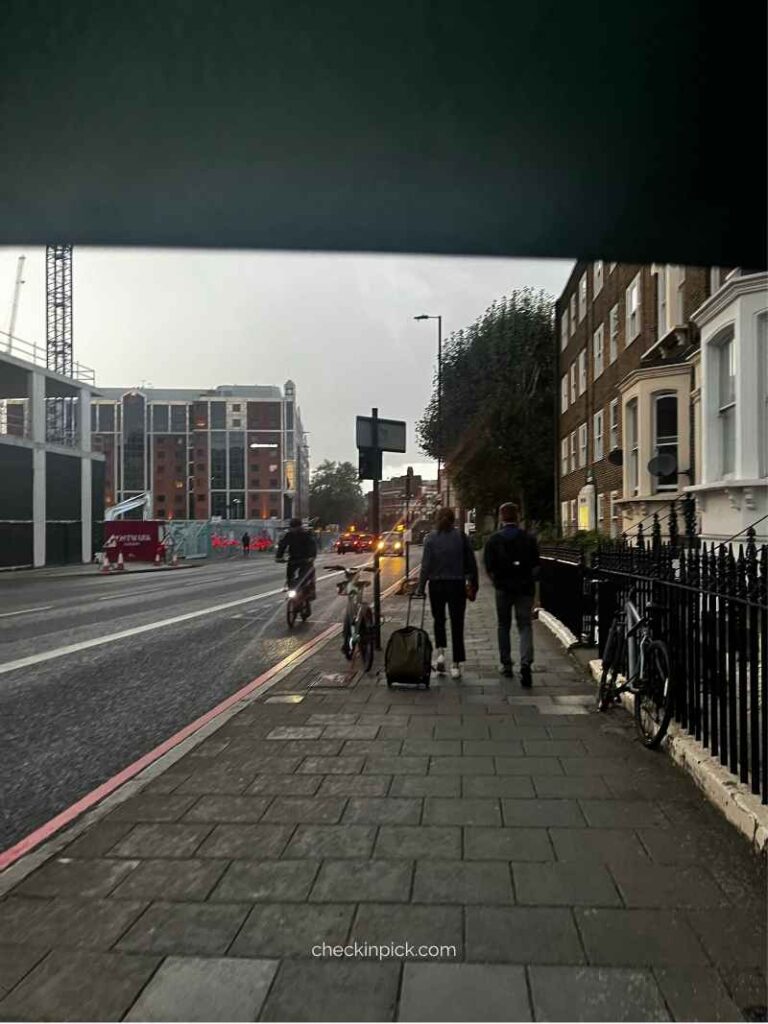
If you are staying in London for more than a few days, Islington is the kind of neighborhood that starts making more sense after the excitement of arrival wears off.
It is not trying to be a postcard version of London, and that is part of its appeal. Around Angel and Upper Street, you get a busy high street, independent shops, restaurants, pubs, cafés, and plenty of ordinary places that become useful once London stops feeling like a holiday and starts feeling like somewhere you are temporarily living.
I particularly like Islington for travelers who want a neighborhood they can actually use. You can have breakfast without planning it around a major attraction, stop at a supermarket on the way home, sit in a café with a laptop, and find somewhere for dinner without crossing half the city. None of these things sound especially exciting on paper, but they become surprisingly valuable during a longer stay.
What Islington feels like day to day
The character changes noticeably as you move away from the busiest parts of Upper Street.
Near Angel, things feel more energetic. There are plenty of places to eat and drink, and the streets can stay lively well into the evening. Walk farther into the residential streets and the mood becomes quieter, with converted Georgian houses, small gardens, and streets that feel much less commercial.
That contrast is one reason I would not judge Islington from a single walk around Angel station. The area has several different personalities packed fairly close together.
Upper Street is useful when you want options. It is the sort of road where you can leave the house without a fixed plan and still end up finding somewhere for coffee, dinner, a drink, or a little shopping. For a visitor staying three nights, that might simply be convenient. For someone staying a month, it can become part of the daily rhythm.
The part that can catch you out
Islington is not quiet everywhere.
Upper Street and the streets around Angel can get noticeably busy, particularly later in the day. If you are sensitive to noise, the exact position of your accommodation matters much more than simply seeing “Islington” on a booking site.
I would also pay attention to what is directly outside the bedroom rather than just checking the distance to the station. A flat can be perfectly located for restaurants and transport while still being less comfortable at night because of street noise.
And although Islington feels more residential than some central areas, it is not necessarily a budget neighborhood. You are paying for the location, the local amenities, and the fact that Central London is still within easy reach.
Who will enjoy staying here?
Islington works particularly well for couples, solo travelers, remote workers, and longer stay visitors who want their accommodation to feel like a temporary home rather than a hotel base.
It is also a good fit if your ideal London day has a mixture of plans. You might spend the afternoon somewhere in Central London, come back for a break, then walk out for dinner without needing to turn the evening into another sightseeing expedition.
That is really the appeal of Islington.
It gives you enough going on outside your front door to keep everyday life interesting, but it does not require every evening to be an event.
Best for: Longer stays, couples, solo travelers, remote workers, and anyone who wants a lively neighborhood with a distinctly residential side.
Covent Garden — For Those Who Want London at Their Doorstep
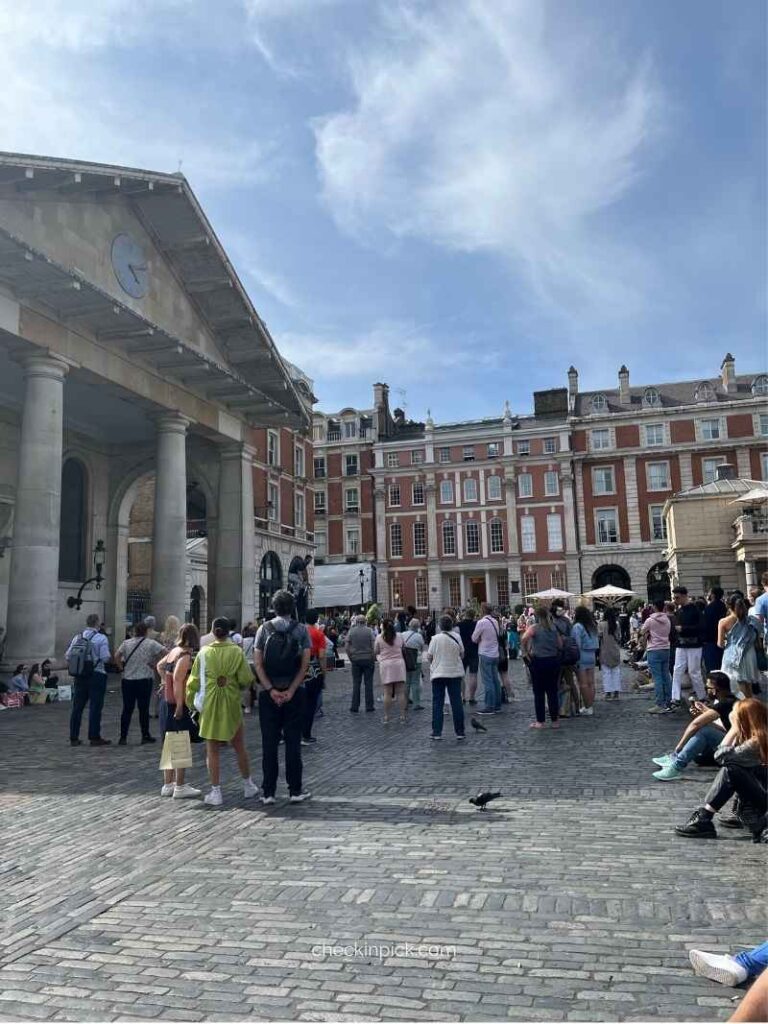
There are London neighborhoods where you need to think about how to get to the sights.
Covent Garden is the opposite. You walk outside, and London is already happening.
The Royal Opera House is around the corner. The West End is practically on your doorstep. Trafalgar Square, the Strand, Leicester Square, and the South Bank are all within a comfortable walk, depending on where you are staying. Even when you have no particular plan for the day, it is difficult to feel disconnected from the city here.
That makes Covent Garden particularly interesting for a longer stay. You are not just choosing a place to sleep near the attractions. You are choosing to have a large part of central London become your immediate neighborhood.
What everyday life feels like here
The best thing about Covent Garden is how little transport you sometimes need.
You can walk to the theatre, stop for coffee, browse a bookshop, have dinner, and still find yourself close to several different routes home. On a pleasant evening, you might cross through the Piazza, wander toward the Strand, continue toward Trafalgar Square, and never once think about which Tube line you should take.
That changes the way you experience London.
Instead of planning sightseeing around stations, you can connect places naturally on foot. One attraction becomes a restaurant stop, which becomes a theatre evening, which turns into a late walk through the West End. For a first extended stay in London, that kind of convenience can make the city feel unusually easy to understand.
The trade off is that you are living in one of the busiest parts of it.
The tourist factor is real
Covent Garden is beautiful, central, and extremely popular. Those things are connected.
The Piazza can feel packed during the middle of the day, particularly when visitors gather around the market and street performers. Weekend afternoons can be especially busy, and the atmosphere is very different from what you might experience early in the morning.
If you are staying for several weeks, this can become either part of the fun or something you start avoiding.
There is a useful trick here. Learn the quieter side streets around the main pedestrian areas. You do not have to leave Covent Garden to escape the crowds completely. A few turns away from the busiest routes, the pace can change surprisingly quickly.
One small transport detail worth knowing
Covent Garden Station is convenient, but it has a reputation for being awkward when the station is busy.
The lift is often the sensible choice, especially with luggage. The alternative is a long spiral staircase that feels considerably longer once you are carrying a suitcase.
When the station is crowded, walking to Leicester Square can sometimes be easier. It is only a short distance away, and for a long stay, knowing a couple of alternative stations is one of those small things that makes the area much easier to live in.
Why choose Covent Garden?
Covent Garden makes the most sense if you want the city itself to be part of your accommodation.
It suits first time visitors who want easy access to the classic London experience, couples who enjoy evenings out, theatre fans, and travelers who would rather walk between several plans than organize every day around public transport.
It is less appealing if you are looking for silence, large living spaces, or the feeling of living far away from tourist London.
But if your idea of a good evening is stepping outside after dinner and finding yourself surrounded by theatre lights, old streets, restaurants, music, and people heading somewhere, Covent Garden is hard to beat.
Best for: visitors staying in London for the first time, couples, theatre lovers, walkers, and travelers who want the West End and central London to feel like an extension of their doorstep.
Mayfair — When Comfort and Location Matter More Than Budget
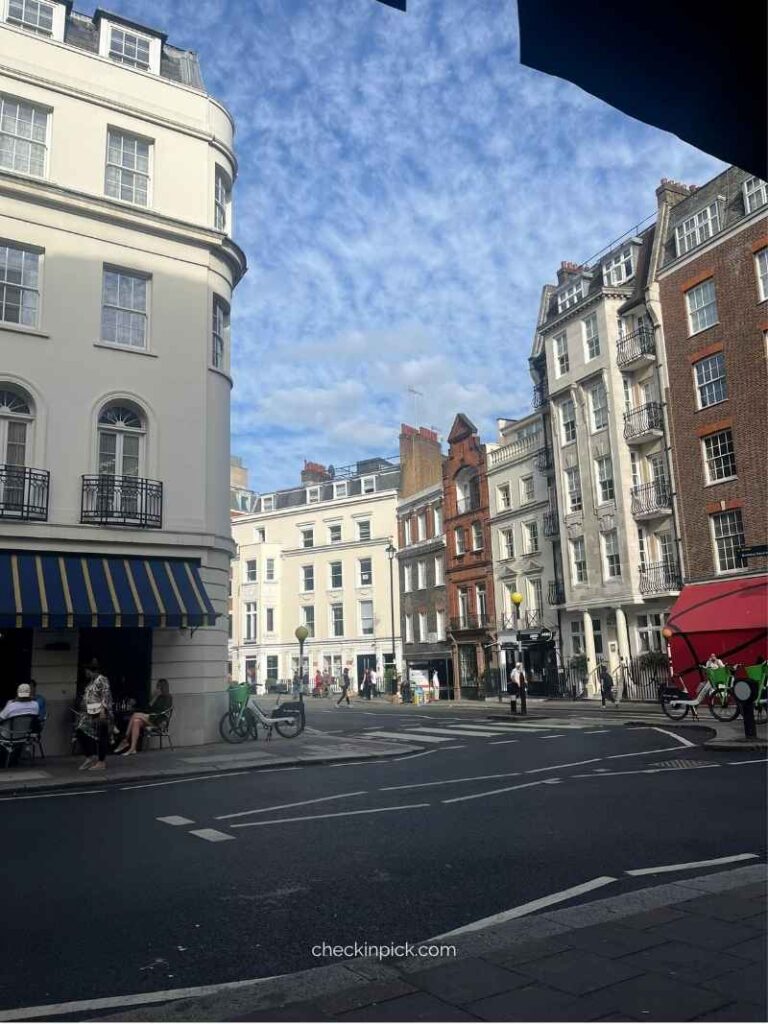
Mayfair is the kind of London neighborhood where the price tag is part of the experience.
This is not the area I would recommend simply because it is expensive or famous. The real appeal is convenience wrapped in comfort. You are close to Hyde Park, Bond Street, Oxford Street, Piccadilly, and some of London’s most polished restaurants and hotels, yet many of the smaller streets feel surprisingly composed once you step away from the busiest roads.
For a longer stay, that sense of order can be more valuable than it sounds.
What you are really paying for
The obvious answer is luxury. But the more interesting answer is location.
From Mayfair, a large part of central London sits within a manageable walk. You can have breakfast near the hotel, spend the afternoon shopping around Bond Street, walk through Hyde Park, and have dinner without turning the day into a series of Tube journeys.
The neighborhood also has a particular visual consistency. Elegant façades, private garden squares, old hotels, galleries, designer stores, and discreet entrances create an atmosphere that feels very different from the theatrical energy of places like Covent Garden.
It is polished rather than exciting.
That distinction matters.
Mayfair after the shopping crowds disappear
One of the more surprising things about Mayfair is how much the mood changes outside the busiest shopping hours.
During the day, Bond Street and the surrounding streets can feel highly polished and commercial. Later in the evening, parts of Mayfair become considerably quieter. Some streets almost feel detached from the intensity of the West End, despite being only a short distance away.
For travelers who want to return to somewhere calm after a busy day, that can be a genuine advantage.
The downside is that Mayfair does not offer the same spontaneous neighborhood energy as Soho or Islington. You will find excellent restaurants and bars, but the area is not built around casual late night entertainment in quite the same way.
Is it worth staying here?
That depends heavily on what you value.
If your priority is having a beautiful hotel, excellent service, high end dining, and a central address, Mayfair makes practical sense. If you are spending most of your day outside and simply need somewhere to sleep, the premium may be harder to justify.
For a longer stay, I would also look beyond the room itself. A luxurious hotel can feel wonderful for a few nights, but after several weeks, the things you notice are often the surroundings. How easy is it to get breakfast? Is there somewhere pleasant to walk in the evening? Can you reach a park without crossing busy roads? Are the restaurants nearby places you would actually return to?
Mayfair performs particularly well on those quieter details.
It is less about having London at full volume outside your door and more about having the city within easy reach while your immediate surroundings remain calm and polished.
Best for: Luxury stays, special occasions, couples who value comfort, travelers who prefer refined surroundings, and anyone willing to spend more for a central location and a quieter base.
Soho — For Those Who Want London Life Right Outside the Door

Soho is one of those places where the neighborhood itself can become part of your itinerary.
You do not have to search for something to do here. Step outside and there is usually a restaurant you have not tried, a bar you have walked past three times, a tiny shop you did not notice yesterday, or a theatre crowd spilling onto the pavement.
For a short visit, that energy is exciting. For a longer stay, it becomes a question of whether you actually enjoy having that much life happening outside your window.
Soho is more than nightlife
It is easy to reduce Soho to bars and late nights, but that misses much of what makes the area interesting.
The food scene is one of its biggest strengths. Chinatown sits immediately to the south, while restaurants, cafés, bakeries, cocktail bars, and small food spots fill the surrounding streets. You can eat very well without planning an entire evening around a reservation.
There is also a strong LGBTQ+ identity that is deeply tied to the neighborhood. Around Old Compton Street and beyond, LGBTQ+ bars and venues are part of the everyday streetscape rather than something separated into a specific entertainment zone.
That history gives Soho a character you cannot really reproduce by simply putting a collection of fashionable restaurants and bars in the same place.
The best part of staying here
For me, the appeal of Soho is the freedom to be spontaneous.
You can start with coffee, wander into Chinatown for lunch, browse around Carnaby Street, meet friends for drinks, and decide on dinner when you are already hungry. Nothing needs to be perfectly scheduled.
That works particularly well for travelers who dislike spending their holiday checking maps every few hours.
Soho also sits in a useful position between several different parts of central London. Oxford Street is nearby, the West End is around you, and other central neighborhoods are close enough to reach on foot.
The downside is that this convenience comes with very little separation from city life.
Living above a busy street
This is where I would be more careful if you are staying for several weeks.
Soho has plenty of older buildings, and some boutique hotels occupy properties that were never designed around modern hotel expectations. Stairs can be narrow. Lifts may be tiny or absent. Rooms can be compact, and street noise can become part of the experience.
That is not necessarily a deal breaker. In fact, some travelers will consider it part of Soho’s charm.
But there is a difference between finding an atmospheric little room for a weekend and living with the same quirks for a month.
Before booking, I would check the exact room location, whether there is a lift, and what the hotel says about nighttime noise. A room facing a lively street can feel completely different from one tucked toward the back of the building.
Who should stay in Soho?
Soho makes the most sense for people who want London to feel active rather than restful.
It suits friends traveling together, couples who plan to eat out frequently, nightlife lovers, theatre fans, and travelers who would rather walk out of the hotel into a busy evening than return to a quiet residential street.
It is less convincing for light sleepers, anyone who needs a lot of room, or travelers hoping their accommodation will feel peaceful at the end of every day.
But if you like the idea of deciding what to do after you have already stepped outside, Soho has a rare advantage.
You are not staying near the action.
You are staying inside it.
Best for: Friends, couples, food lovers, nightlife travelers, theatre fans, and anyone who wants restaurants, bars, LGBTQ+ nightlife, and central London energy immediately outside the door.
South Kensington — Where Museums, Parks, and Everyday Life Come Together

South Kensington is one of those London neighborhoods that becomes more useful the longer you stay.
At first glance, it is easy to think of the area simply as the place where London’s famous museums happen to be. The Natural History Museum, Science Museum, and V&A are the obvious draw, but the real advantage for a longer stay is what surrounds them.
You can spend the morning looking at dinosaur skeletons, scientific inventions, or design history, then walk a few streets away and find yourself on a quiet residential road with cafés, small shops, supermarkets, and places to stop for lunch.
That combination is particularly valuable with children.
A neighborhood built around short journeys
One thing I like about South Kensington is that many days can be broken into manageable little walks.
You do not necessarily need to turn a museum day into a major expedition. A family can visit one museum, grab something to eat, return to the accommodation for a break, and head out again later without crossing London each time.
That flexibility becomes useful when traveling with children because plans rarely survive exactly as expected.
Someone gets hungry earlier than planned. Someone needs a toilet. Someone has had enough of museums. A rainy afternoon suddenly changes the schedule.
South Kensington gives you plenty of nearby alternatives.
The museums are only half the story
The cultural institutions are obviously important, but staying here for longer changes how you use them.
You do not have to treat every museum visit as a major event. When the museums are nearby, you can drop in for a particular gallery or collection and leave without feeling that you have wasted the day.
That is a completely different experience from traveling across London specifically to visit a museum.
The area also sits close to Kensington Gardens and Hyde Park, which gives families somewhere to reset between indoor activities. After a morning surrounded by exhibits and crowds, having open space nearby can make the afternoon feel much easier.
What the neighborhood feels like outside the museums
Walk away from Exhibition Road and the atmosphere becomes noticeably more residential.
There are elegant terraces, quieter streets, local businesses, and the sort of small conveniences that matter when you are staying for several weeks. It feels polished without being entirely devoted to luxury tourism.
This is also why South Kensington can work well for travelers who want a more structured base. Your days can be busy without your accommodation being surrounded by constant nightlife.
That said, the quieter evenings may feel a little too calm if you want bars, live music, or late night restaurants immediately outside the door.
A practical point for families
The biggest advantage here is not that everything is close in a straight line. It is that you can build a day without relying on one long journey.
That matters more than it sounds.
A family staying in South Kensington can combine museums, parks, lunch, shopping, and a break at the accommodation without constantly checking the Tube map.
The trade off is cost. South Kensington is not generally where you go to find the cheapest accommodation in London. You are paying for the location, the quality of the surroundings, and the convenience of having so many useful places nearby.
For families staying a week or longer, though, that convenience can be worth considering.
Best for: Families, first time visitors with children, museum lovers, travelers who prefer a calm residential base, and anyone who wants culture and everyday amenities within the same neighborhood.
Paddington — When Getting Around Easily Matters Every Day
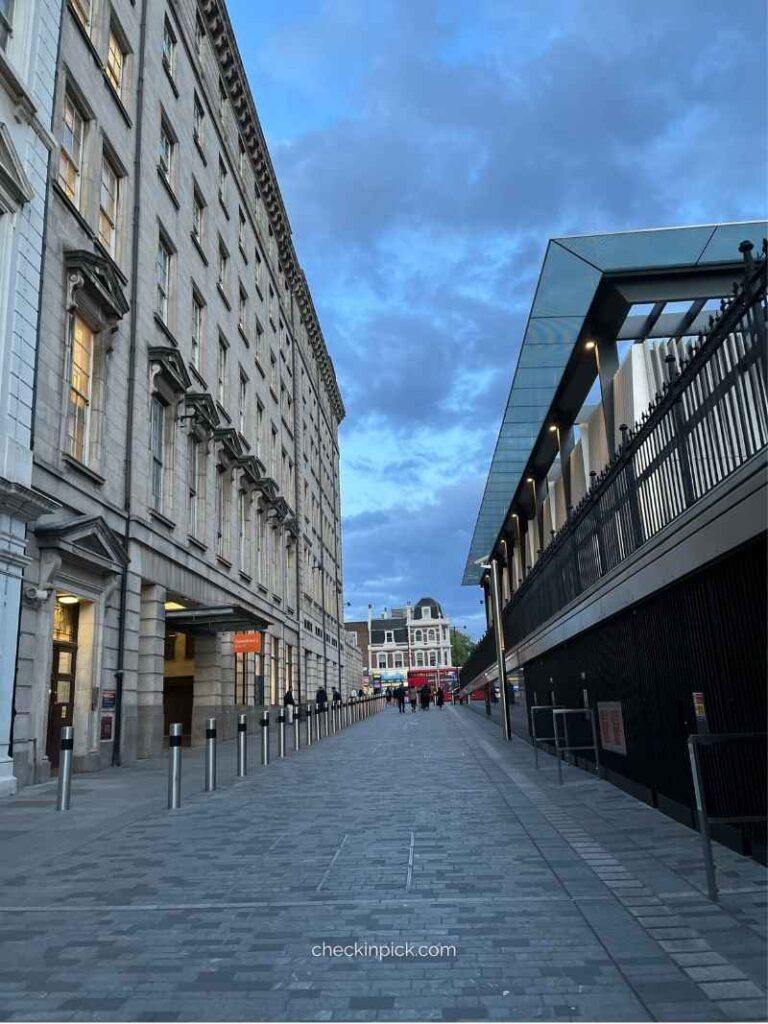
Paddington is not the London neighborhood that usually makes people fall in love with the city at first sight. Its appeal is more practical than romantic.
But that can be exactly what makes it work for a longer stay.
When you are in London for a week or more, getting from one part of the city to another becomes part of your daily routine. You start noticing how much time is spent changing trains, walking between stations, waiting for buses, or deciding whether a taxi is worth the money.
Paddington can take some of that friction out of the equation.
The real advantage is what happens between destinations
Paddington Station is the obvious reason to stay here, but the bigger benefit is how often that connection can save you time.
The Elizabeth Line makes it easy to reach other parts of London without treating every journey as a major commute. Heathrow is also unusually straightforward from Paddington, which can be a major advantage if your trip begins or ends with an early flight.
For a short holiday, that convenience might only matter once or twice.
For a long stay, it can matter every few days.
You might spend one day in central London, another visiting friends across the city, and another heading out of London entirely. Having a strong transport base means you can choose your plans based on what you actually want to see rather than how complicated the journey looks.
Particularly useful for day trips
Paddington also makes sense if London is going to be your base rather than your entire trip.
Rail connections from Paddington make it useful for excursions beyond the city, including popular destinations such as Oxford and Bath. You can have breakfast in London, spend most of the day somewhere completely different, and return to the same accommodation in the evening.
That kind of flexibility is easy to underestimate when booking a room.
A central neighborhood may look more exciting on a map, but if you are planning several day trips, the convenience of your home station can become more valuable than being a few streets closer to the main tourist sights.
The neighborhood itself is more functional
This is where Paddington differs from places such as Soho or Covent Garden.
The area around the station can feel busy and functional, with people arriving, leaving, changing trains, working, and carrying luggage. It does not have the same historic atmosphere or concentrated nightlife that some of London’s more famous neighborhoods offer.
That is not necessarily a problem.
For a longer stay, you may actually appreciate having a neighborhood that does not demand your attention every evening. You can spend the day somewhere lively and come back to a place that feels more straightforward.
The key is choosing your accommodation carefully. Paddington covers a fairly broad area, and the atmosphere can change considerably depending on which side of the station you are staying on.
When the convenience starts to matter
I would especially consider Paddington if you are staying for two weeks or more, traveling with luggage, planning several trips outside London, or simply dislike wasting time on complicated transfers.
It can also make sense for travelers who arrive late or leave early. Being able to make the airport journey without arranging a car can remove one more thing from the final day of your trip.
The trade off is that Paddington may not give you the strongest sense of London immediately outside your door. You are choosing convenience over atmosphere.
For some travelers, that is exactly the point.
Best for: budget conscious travelers on longer stays, travelers with early or late flights, frequent day trippers, visitors who expect to move around London often, and anyone who values an easy transport base more than a postcard perfect neighborhood.
Richmond — A Slower Pace for Longer Stays
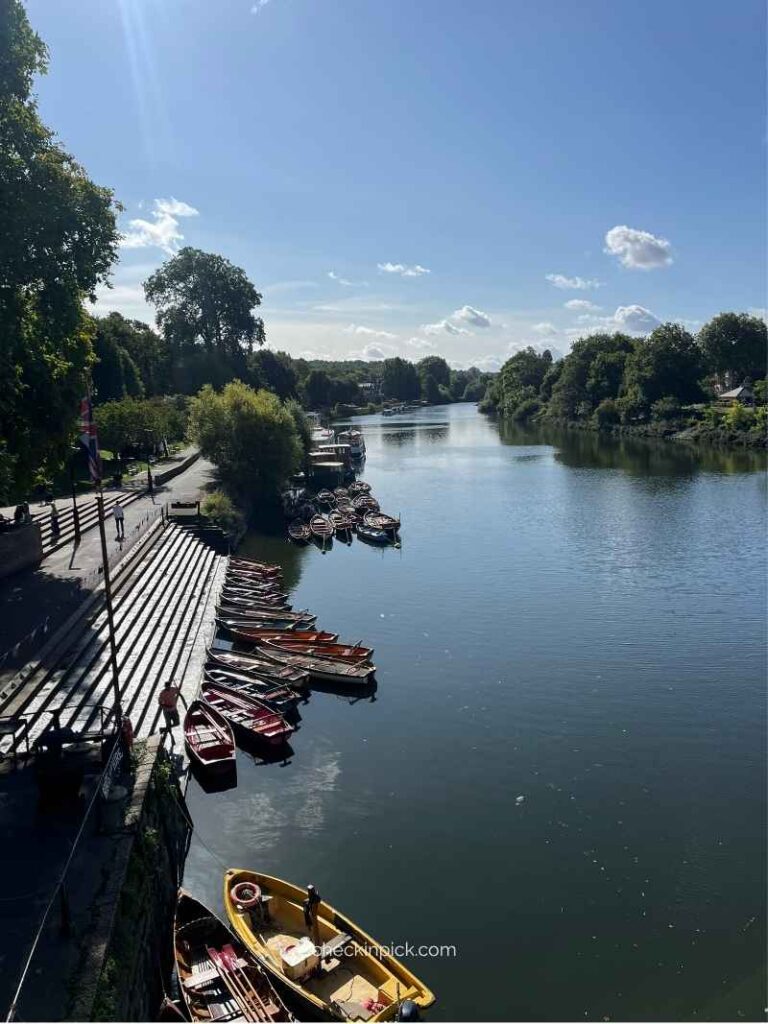
Richmond is the kind of place that starts making more sense the longer you stay in London.
For a three day visit, being farther from the center can feel like a compromise. For a month long stay, it can feel like exactly what you needed.
Richmond sits southwest of central London, but the atmosphere is quite different from the busy neighborhoods closer to the main tourist sights. It has the feel of a small town that happens to have London on its doorstep.
There are local cafés, pubs, supermarkets, restaurants, independent shops, and everyday services woven into the neighborhood. You can spend a morning here without feeling that you should be somewhere else seeing another attraction.
When London starts feeling like home
The biggest difference with Richmond is the rhythm.
Instead of planning every day around what to see, you can start planning around how you want to spend the day.
A slow breakfast can turn into a walk beside the Thames. An afternoon can disappear inside Richmond Park. You can meet someone for coffee, pick up groceries on the way home, and have dinner without ever needing to go into central London.
That may sound ordinary, but ordinary is exactly what becomes valuable during a long stay.
After two or three weeks of museums, landmarks, crowded stations, and busy shopping streets, having somewhere that feels easy and familiar can change the way you experience the rest of the city.
Richmond Park changes the equation
Richmond Park is a major reason this area feels different from most central neighborhoods.
It gives you a genuine sense of space, rather than simply another small urban park squeezed between buildings. You can walk for a while without feeling surrounded by traffic and city noise.
The Thames adds another kind of escape. Riverside walks are easy to fit into an ordinary day, especially when you do not have a packed sightseeing schedule.
For families, couples, or anyone working remotely, this matters because the neighborhood offers things to do that do not require spending money or making a reservation.
The cost of being farther out
The trade off is straightforward.
Richmond is not the place I would choose if I wanted to spend every morning in central London and come back late every night. The distance becomes noticeable when you are making repeated trips into the center.
But if you are staying for several weeks and only going into central London a few times each week, the calculation changes.
You are not necessarily giving up London. You are choosing where you want to spend most of your time.
That distinction is important.
A lot of long stay accommodation advice focuses on being as central as possible. Richmond is a useful reminder that being central and being convenient are not always the same thing.
What staying here actually feels like
Richmond works particularly well if you want your accommodation to feel like a place where you live temporarily rather than somewhere you return to between sightseeing trips.
You can develop small routines. The same café in the morning. A regular supermarket. A walk after dinner. A favorite stretch along the river.
Those details rarely make it into a London itinerary, but they are often what make a month long stay memorable.
The downside is that accommodation can feel more residential than hotel focused, and your options may be less concentrated than in central London.
For a short visit, that may be inconvenient.
For a longer one, it can be part of the appeal.
Best for: stays of a month or more, couples, families, remote workers, travelers who enjoy walking and green space, and anyone who wants to experience London as a place to live for a while rather than simply a city to visit.
Which London Neighborhood Fits Your Longer Stay Lifestyle?
There is no single London neighborhood that works for every long stay. After a few days, priorities can change quickly. A location that looks perfect on a map may feel very different once you are using it for breakfast, groceries, evening walks, and everyday travel.
The easiest way to choose is to think about what you want your London routine to feel like.
- Covent Garden → Walk to major sights, theatres, restaurants, and central London without relying heavily on public transport
- Mayfair → Choose comfort, polished surroundings, and a premium central location
- Soho → Stay in the middle of London’s food, nightlife, and social energy
- South Kensington → Combine museums, parks, and a comfortable residential setting
- Paddington → Make frequent travel, airport connections, and day trips easier
- Richmond → Slow down and enjoy a more spacious, residential side of London
- Islington → Settle into local cafés, restaurants, shops, and a more everyday London routine
Think about your ordinary day, not just your sightseeing list
One useful way to make the decision is to imagine a completely ordinary day.
Where would you want to have breakfast?
Would you rather walk to a museum, step outside into a busy restaurant district, or have a quiet morning beside the river?
How often will you need to cross London?
Are you planning several day trips?
Will you be traveling with children?
These questions can be more useful than simply asking which neighborhood is most central.
For a long stay, the neighborhood around your accommodation becomes part of the trip itself. You will notice the supermarket you use, the café you return to, the walk you take after dinner, and how easy it is to get home when you are tired.
That is why the best area for your trip is not necessarily the one with the most famous attractions. It is the one whose everyday rhythm matches the way you actually want to experience London.
If you are staying for less than a week, you may want to prioritize central sightseeing and minimize travel time. For shorter trips, see our guide to Where to Stay in London for a Short Trip: Top Picks for First Time Travelers for more area recommendations and practical tips.
How to Choose a London Neighborhood When You’re Staying Longer
Choosing a London neighborhood for a few nights is fairly simple. Choosing one for several weeks is different.
For a longer stay, the things that seem minor when booking can become the things you notice every day. A five minute walk to the Tube can feel very different from a fifteen minute walk when you are carrying groceries. A neighborhood with plenty of restaurants sounds convenient, but having a supermarket nearby may matter more once you are no longer eating out every night.
Before booking, I would look at these six things.
1. How far is the Tube station?
Check the actual walking route, not just the distance shown on a booking site.
Five minutes on a map can feel very different if the route involves a busy road, stairs, or a long walk from your accommodation to the station entrance.
For a long stay, a convenient station can save you a surprising amount of time and effort.
2. Can you easily buy groceries?
This becomes much more important after the first few days.
You may not cook every meal, but having a supermarket, convenience shop, bakery, or market nearby gives you more flexibility. Being able to pick up breakfast, fruit, water, or something simple for dinner can make a long stay feel much more like normal life.
3. Are there cafés and restaurants nearby?
Look beyond the number of restaurants on Google Maps.
What matters is whether there are places you would actually want to visit repeatedly. A good neighborhood gives you options for a quick coffee, an easy lunch, a casual dinner, and the occasional nicer meal without requiring a long journey every time.
4. Is there green space?
You do not need a huge park outside your door, but having somewhere pleasant to walk can make a noticeable difference.
After spending hours in museums, shopping streets, or crowded stations, a park, garden, canal, or riverside path gives you somewhere to go without needing another destination.
5. How long will your daily commute be?
Think about your actual itinerary rather than simply looking at the Tube map.
If you expect to visit central London every day, saving twenty minutes each way can add up quickly. But if you only plan to go into the center a few times a week, a quieter neighborhood farther out may make more sense.
The right question is not simply, “How central is it?”
It is, “How often will I need to go there?”
6. Does the neighborhood feel comfortable after the tourist crowds leave?
Try looking at the area at different times of day if possible.
A street can feel perfect at lunchtime and completely different late in the evening. For a longer stay, you are not just choosing somewhere to visit. You are choosing the streets you will walk through when you are tired, carrying shopping, or coming home after dinner.
That is why I would always look beyond the attractions.
For a long stay, the best neighborhood is usually the one that works well on an ordinary Tuesday, not just the one that looks impressive on your first afternoon.
Questions to Ask Before Choosing Your London Base
Which areas are good for a long stay in London of one month or more?
For a stay of a month or longer, I would look beyond the main tourist attractions. What matters after the first week is how easy the neighborhood is to live in.
Check the transport connections, grocery options, cafés and restaurants, green space, everyday services, and accommodation costs before making a decision.
South Kensington can work particularly well for longer stays because it combines a pleasant residential atmosphere with easy access to central London. Richmond offers a much slower pace and more space, but its Zone 3 location can feel far away if you expect to visit central London almost every day.
The type of housing also differs. Richmond has many traditional homes, so it may appeal to travelers who want a more residential experience but feel less suitable if you specifically want a modern apartment building.
What is the most important thing to consider when looking for a place to live in London for a month or more?
Start with the journey you will make most often.
For many long stay visitors, that means checking the walking distance from the property to the nearest Tube station and working out what the actual journey to your regular destinations looks like.
A property may appear close to a station on a map, but the practical route can be different. Check the walking time, station entrances, available lines, and whether you will need several changes to get where you usually want to go.
Then look at the things you will need several times a week rather than once during your trip.
Is there a supermarket nearby? A pharmacy? A laundrette? A café where you can work or have breakfast? Somewhere easy to pick up dinner?
These details can matter more after a few weeks than being five minutes closer to a famous landmark.
Is Central London a good choice if you’re staying for a month or more?
It can be, especially if you value convenience and expect to spend a lot of time in central London.
The downside is straightforward: accommodation in central areas can be expensive. Before deciding, compare the rent with your expected transport costs and the time you will spend commuting.
Moving farther out can reduce accommodation costs, particularly if you find a well connected neighborhood. But the cheapest rent does not always mean the lowest overall cost.
If you are using public transport almost every day, regular travel expenses can add up. You should also consider the time involved. Saving money on rent may mean spending more time commuting several days a week.
Personally, I have found that paying a little more for a Zone 1 location can sometimes be worthwhile if it significantly reduces daily travel time. That is not a rule for everyone, but it is worth calculating before choosing a cheaper property farther out.
The important point is to compare the total cost of living and commuting, not rent alone.
What should I check when choosing an area for a long term stay?
Before signing a rental agreement, check the property and the neighborhood together.
At a minimum, look at:
- Walking time to the nearest Tube or rail station
- Which Tube and rail lines are available
- Your typical journey time to the places you will visit most
- Monthly rent and any additional costs
- Supermarkets and other everyday shops nearby
- Pharmacies, laundrettes, cafés, and restaurants
- Parks or other places where you can take a break from busy streets
- What the area feels like during the evening
One detail that can easily be missed is the supermarket situation.
London has plenty of small convenience shops, but that does not mean every neighborhood has a large supermarket within an easy walk. If you prefer buying groceries for several days at once, check the location of the nearest major supermarket before booking.
I would also look at the neighborhood after dark.
You do not need a lively nightlife district, but you should feel comfortable walking from the station or bus stop to your accommodation in the evening. If possible, check the surrounding streets at more than one time of day rather than judging the area only from daytime photos.
For a month or longer, you are not simply choosing a convenient place to visit London from.
You are choosing somewhere you will actually live for a while.
That changes what makes a neighborhood feel like the right choice.
The Best London Neighborhood Is the One You Can Live With
There is no single best neighborhood in London for a long stay.
The right choice depends on what you want your everyday life to look like. You might care most about being close to the places you want to visit, having a quieter residential setting, keeping accommodation costs under control, or making airport and train connections as simple as possible.
For a longer stay, I would put particular weight on transport.
A beautiful neighborhood can be wonderful to explore, but if you spend a large part of every day commuting, the charm can wear off quickly. Saving even twenty minutes on a regular journey can give you more time for breakfast, a slow coffee, an extra museum visit, or simply getting back home before you are exhausted.
At the same time, transport should not be the only thing you consider.
The neighborhood around your accommodation will become part of your routine. You will buy groceries there, look for dinner there, walk through the same streets, find places you like, and eventually recognize the route home without checking a map.
That is why the best London neighborhood is often not the one that looks most impressive on your first visit.
It is the one that still feels convenient after your tenth ordinary day.
Before booking, think about what matters most for your particular trip: location, transport, local atmosphere, budget, access to green space, or airport convenience. Then choose the area that supports those priorities rather than trying to find a neighborhood that has everything.
Get that part right, and London becomes much easier to settle into.
You spend less time worrying about how to get somewhere and more time simply enjoying being there. And for a long stay, that difference can matter more than being close to one more famous attraction.

Welcome to CheckinPick. We create practical travel guides for visitors planning trips to London and other destinations.
Our editorial team focuses on useful, up-to-date information about transportation, accommodation, attractions, fares and travel planning. We research information using official sources and reputable travel resources, and we update our guides when important details change.
Our goal is to make travel information easier to understand and more useful for real-world trip planning.