
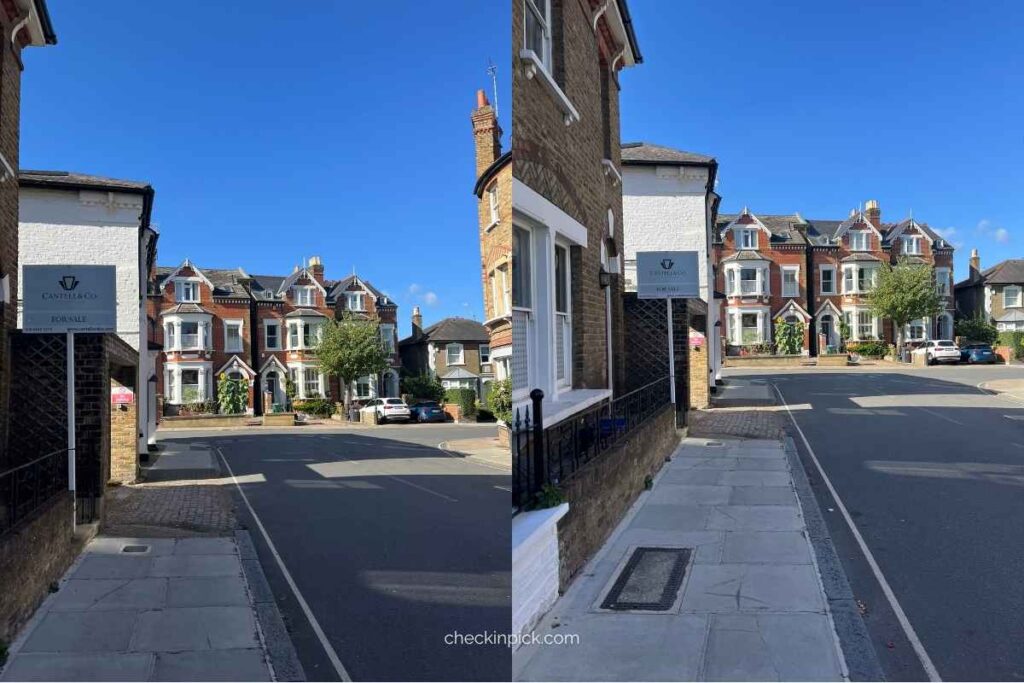
Richmond is a peaceful and attractive area, but its distance from central London may be less convenient for travelers on a short trip.
There is a particular kind of tiredness you get in London that has nothing to do with walking.
It happens when you spend forty minutes getting somewhere, change trains twice, climb a staircase that seems to have been designed as a punishment, and finally come out of the Underground only to realise you still have another ten minutes to walk. Do that a few times a day and suddenly your carefully planned London trip starts feeling less like a holiday and more like a series of transfers.
That is why choosing where to stay in London deserves more thought than simply finding a nice hotel in a central postcode.
London is huge, but the more interesting thing is how differently its neighbourhoods feel once you actually use one as your base. Two places can look equally central on a map and give you completely different days. One might put you near the places you genuinely want to see. Another might look perfect online, yet leave you spending a surprising amount of time underground.
And there is something maps never really show you.
Your hotel area becomes part of the trip.
Stay around Covent Garden and an ordinary evening can easily turn into a walk through the West End, a last minute dinner, or a drink somewhere you noticed earlier that day. South Kensington has a quieter rhythm, with grand residential streets and some of London’s best museums close by. Around Clerkenwell, the city feels more lived in, with old pubs, restaurants and small streets that are easy to overlook when your entire itinerary is built around famous landmarks.
This is where I think a lot of London guides miss the point.
They tell you which areas are “best,” but the better question is what you actually want from the hours when you are not sightseeing.
Maybe you want to step outside your hotel and find somewhere good for dinner without planning it three days ahead. Maybe you would rather wake up near a museum than spend your first coffee of the morning underground. Around South Kensington, the city feels quieter and more residential, while Soho gives you restaurants, bars and theatres right outside your door.
Those small preferences can change which neighbourhood makes sense.
So this guide is not simply a list of London’s most popular places to stay. I am looking at the practical differences that are easy to miss when you are comparing hotels from home: what the area feels like after dark, how naturally it fits into a sightseeing day, what kind of evenings it gives you, and whether its location actually suits the way you travel.
Because the right place to stay is not necessarily the most famous neighbourhood or the one closest to the biggest landmark.
It is the one that makes the version of London you want to experience feel easy to reach.
And that can make a short trip feel surprisingly different.
Where I’d Actually Stay in London, Depending on the Trip
If you want the short version, here is how I would think about London’s main areas.
| Area | Best fit | What stands out |
|---|---|---|
| Covent Garden | First time in London | Theatre, restaurants, classic London atmosphere |
| Mayfair | Luxury stays | Elegant streets, high end shopping, polished evenings |
| Soho | Food and nightlife | Restaurants, bars, theatres and a lively late night scene |
| South Kensington | Families and museums | Museums, residential streets, cafés and green spaces |
| Paddington | Value and convenience | Good rail connections and a quieter base |
| Westminster | Major landmarks | Palace, Parliament, river views and classic sights |
| King’s Cross | Rail connections | Excellent links for arrivals, departures and day trips |
| Notting Hill | Neighbourhood feel | Pretty streets, independent shops and a slower pace |
| Shoreditch | Cafés and creative London | Street art, bars, design shops and late nights |
These labels are useful, but they only tell half the story. A neighbourhood that looks perfect on a list can feel completely wrong once you are actually staying there. The real difference often comes down to what you want waiting for you when you get back from sightseeing.
Covent Garden: The Easy Choice That Still Has a Personality
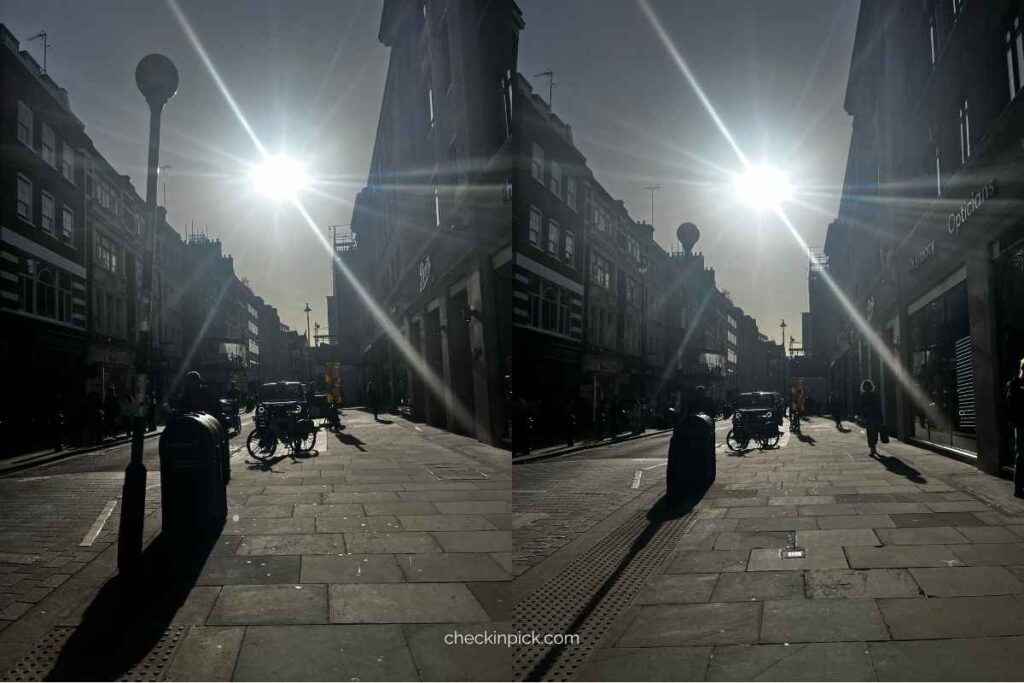
Covent Garden is probably the area I would show a first time visitor who wants the classic London experience without spending their trip figuring out the city from scratch.
What I like about it is not simply the location. It is the fact that the neighbourhood gives you somewhere to go after the day’s sightseeing. You can walk through the piazza, drift towards Seven Dials, catch a show in the West End, or sit down for dinner without turning the evening into another logistical exercise.
There is a particular pleasure in staying somewhere where you can leave your hotel with no real plan.
You might start with coffee, end up looking at theatre posters, notice a tiny restaurant you had not heard of, and suddenly realise you have been wandering for an hour. That sort of accidental evening is a big part of why Covent Garden works so well for a first London trip.
It is also a useful base if the places on your list are scattered across the traditional sightseeing core. Trafalgar Square, Leicester Square, the Royal Opera House and much of the West End are all close enough to make the area feel connected rather than isolated around one particular attraction.
There is a trade off, though.
Covent Garden is popular because it is genuinely enjoyable, which means it can feel crowded, especially around the busiest parts of the piazza. Hotels here can also command a premium. I would not pay extra simply because a booking site says “Central London.” I would pay it if I knew I was going to use the neighbourhood itself.
That distinction matters.
If you are the kind of traveller who spends breakfast out, returns to the hotel only briefly, and wants dinner, drinks or a theatre nearby, Covent Garden earns its price more easily. If you plan to spend most of your time in areas far east or far west of the centre, the extra cost becomes harder to justify.
One small detail I would pay attention to when booking is the exact street, not just the neighbourhood name. Covent Garden changes character within a surprisingly short walk. A room on a busy restaurant or nightlife street can feel very different from one tucked into a quieter corner. Check the immediate surroundings before booking, especially if you are a light sleeper.
Best for: first time visitors, couples, theatre lovers, weekend trips and anyone who wants the classic London experience right outside the door.
Think twice if: you want a quiet residential atmosphere, are travelling on a tight hotel budget, or expect to spend most of your trip well outside central London.
Mayfair: If You Want London to Feel a Bit More Special
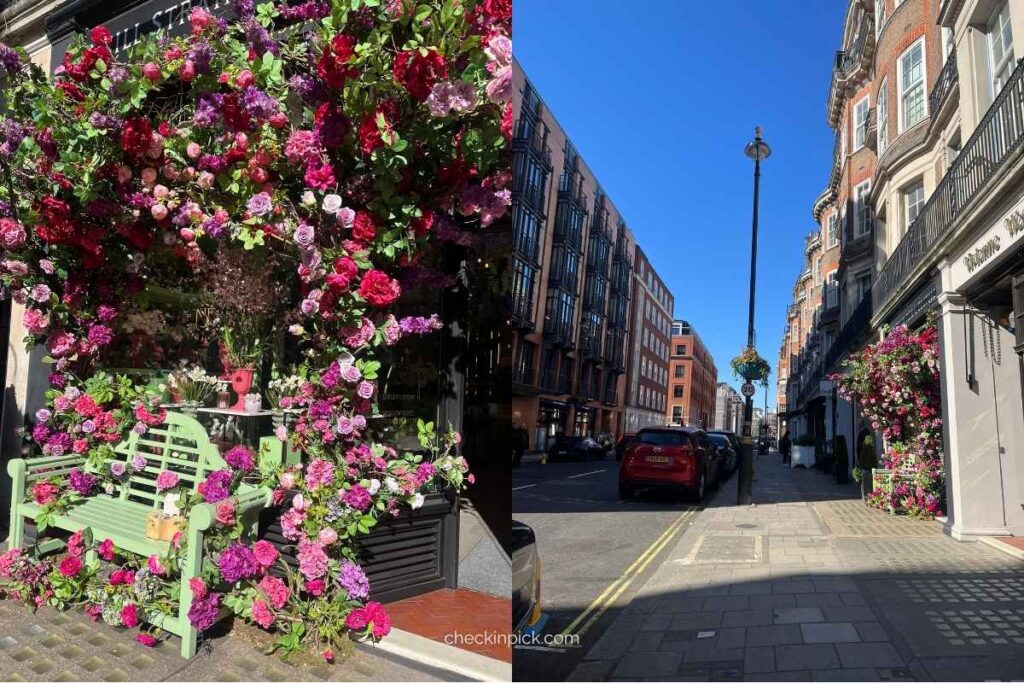
Mayfair is expensive, there is no getting around that. But if you are already considering a really good hotel, this is one of the few parts of London where the location can genuinely add something to the stay.
What makes Mayfair different is the mix of things you find within a relatively small area. Green Park is right there, Hyde Park is close by, Bond Street brings the designer shops, and Buckingham Palace is within easy reach. You also have some of London’s better restaurants and a remarkable collection of luxury hotels around the neighbourhood.
The shopping is an obvious part of Mayfair’s appeal, but you do not have to be interested in designer brands to enjoy being here.
Some of the pleasure is simply in walking around. The streets are quieter than you might expect for such a central part of London, with grand Georgian buildings, small garden squares and beautifully kept façades appearing between the more familiar shopping streets. It feels polished without being completely removed from the rest of the city.
The hotels are another reason people choose Mayfair.
This is home to some of London’s best known luxury addresses, including The Ritz London. If the hotel itself matters to you, Mayfair gives you plenty of choice. It works particularly well for a special occasion, a romantic trip, or simply a London stay where you want the accommodation to feel like part of the experience rather than somewhere you happen to sleep.
But this is also where I would look closely at your budget.
If you are spending most of your days out sightseeing and mainly need somewhere comfortable to come back to, Mayfair can be difficult to justify. You are paying a premium for the neighbourhood, the hotel selection and the overall level of the area. If those things are not especially important to you, another central neighbourhood may give you more for your money.
For me, that is the real question with Mayfair.
Are you choosing it because you genuinely want this kind of London, or simply because it looks impressive on a hotel map?
If it is the first one, Mayfair can be a very satisfying place to stay. You have luxury shopping along Bond Street, green space around Green Park and Hyde Park, and some of London’s most recognisable sights close enough to fit naturally into the trip.
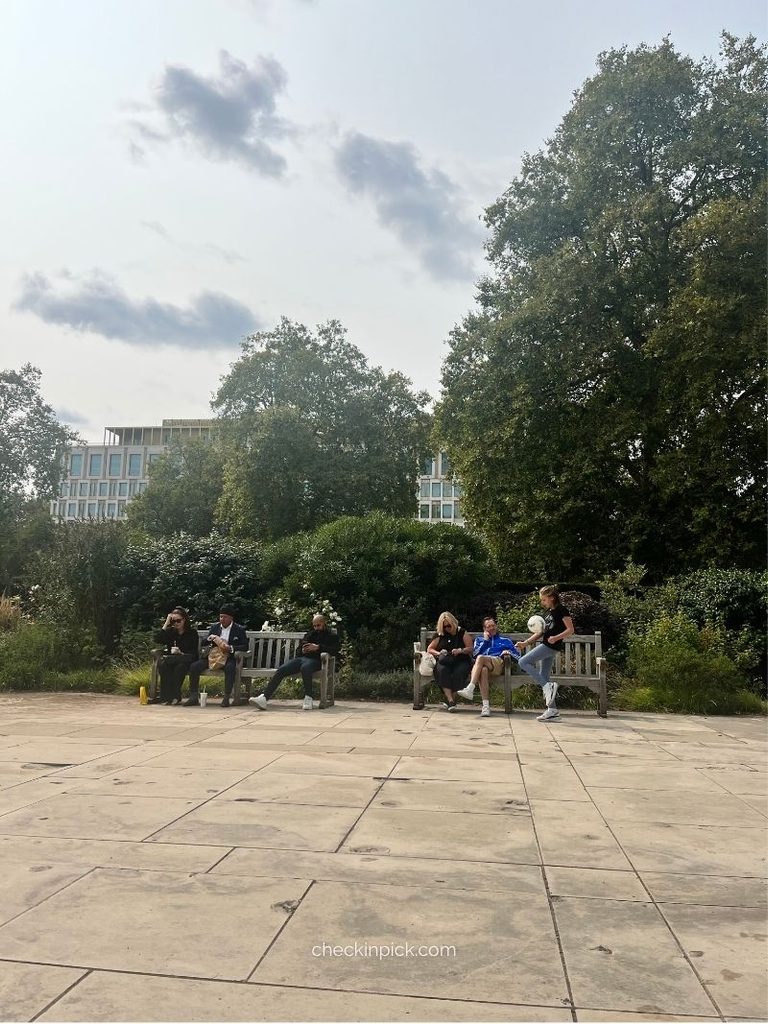
And one small detail is easy to miss. Do not judge Mayfair only by Bond Street and its famous shops. Take a little detour to Grosvenor Square as well. The square has a much quieter feel, with its open green space and elegant buildings around it, and it gives you a better sense of the neighbourhood beyond the luxury shops and five star hotels.
It is the kind of place I would add to a walk rather than make a special trip for. You can wander through the square, continue towards the quieter residential streets, and see a side of Mayfair that is easy to miss if you stay around the main shopping streets.
Best for: luxury travellers, couples, special occasions, fine dining, designer shopping and anyone who wants a more refined hotel experience.
Think twice if: you are travelling on a tighter budget or mainly need somewhere practical to sleep.
Soho: The Place to Stay When Eating Is Part of the Trip
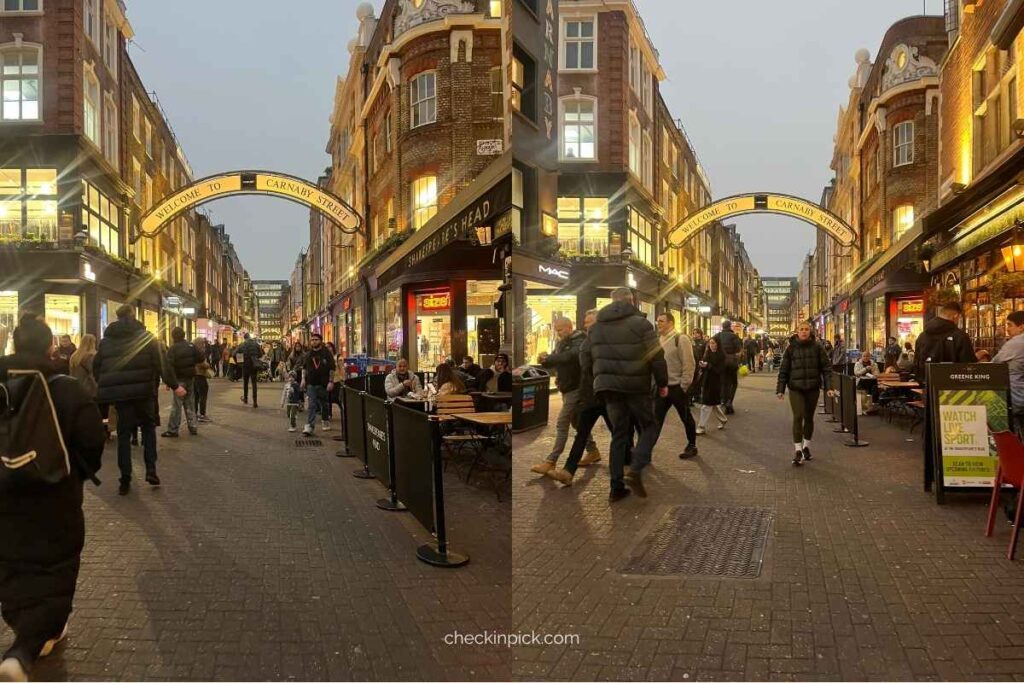
Soho is one of those London neighbourhoods where you can make very little effort and still end up having a full evening.
That is a big part of its appeal.
You might leave your hotel looking for dinner and end up in Chinatown. You might walk towards Carnaby Street, stop for a drink, notice a theatre you had not considered, and suddenly the evening has taken care of itself. Leicester Square, Piccadilly Circus and the West End are all close enough that you can move between them without making the night feel like a series of separate plans.
But I would not choose Soho simply because it is central.
I would choose it if food, drinks and going out are a meaningful part of why you are visiting London.
The restaurant scene is one of the strongest reasons to stay here. Soho is compact, but the range of food is anything but. Chinatown sits right on its edge, while the surrounding streets are filled with restaurants, cafés, bars and places that stay busy long after the traditional dinner hour. You can have a fairly casual meal one night and make a reservation somewhere more ambitious the next without changing neighbourhoods.
There is also a social side to Soho that is difficult to separate from the place itself. It has long been an important centre of LGBTQ+ life in London, and that history is still visible in the bars, venues and streets around the area. It gives Soho a character that goes beyond the usual list of restaurants and nightlife spots.
During the day, the neighbourhood feels quite different.
The streets around Carnaby are busy with shoppers, visitors and people working in the area, while the West End pulls in theatre crowds as the afternoon turns into evening. You can also wander towards Chinatown for food or explore the smaller streets around Soho rather than treating the neighbourhood as one big nightlife district.
There is one catch, and it is a fairly obvious one once you are there.
Soho does not suddenly become quiet because you have gone to bed.
Noise can be part of the deal, particularly if your hotel is on a busy street surrounded by bars, restaurants or late night venues. If you are a light sleeper, the exact street matters much more here than the neighbourhood name on the booking page. A hotel described as being in Soho can be only a few minutes from a lively nightlife street, yet feel noticeably different depending on where the room faces.
That is also why I would be cautious about recommending Soho to families with young children. It is not that families cannot stay here. It is simply that the neighbourhood’s natural rhythm is geared more towards adults going out, eating late and staying out after dinner.
For a short city break with friends, though, Soho can be remarkably easy.
You have restaurants when you are hungry, bars when you want one more drink, theatres when you feel like seeing a show, and Chinatown when you cannot decide what to eat. Even shopping has its own corner of the neighbourhood around Carnaby Street.
And that is really what you are paying for when you stay here.
Not silence. Not luxury.
Choice.
Best for: friends, couples who enjoy food and nightlife, theatre lovers, LGBTQ+ travellers, short city breaks and anyone who likes having plenty of options within a few streets.
Think twice if: you are a light sleeper, travelling with very young children, or would rather come back to a quiet residential neighbourhood at night.
South Kensington: A Calmer Base for Museums and Family Days
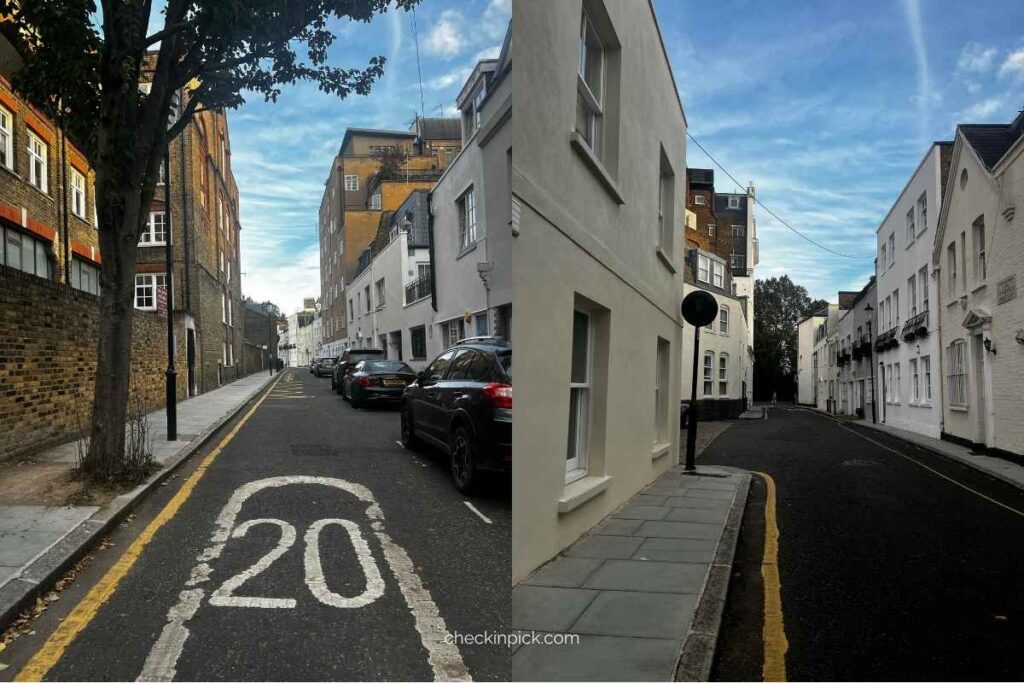
South Kensington is the kind of London neighbourhood that makes sense once you picture what an actual day with children looks like.
You wake up, get everyone dressed, find breakfast, and head out for the day. Someone gets hungry earlier than expected. Someone else has suddenly had enough of museums. And if the weather turns typically London halfway through the afternoon, you really do appreciate having somewhere familiar to return to.
That is where South Kensington has an advantage.
The Natural History Museum, Science Museum and Victoria and Albert Museum are all clustered around the same part of the neighbourhood, so you are not constantly packing everyone up and moving across London between visits. For families, that changes more than you might expect. A museum can be followed by lunch nearby, a break at the hotel, or a walk towards Kensington Gardens without turning the whole afternoon into another transport decision.
The museums themselves also make South Kensington feel different from other parts of central London.
The Natural History Museum is the obvious favourite for many children, particularly because the building itself feels like part of the visit. The Science Museum has a more hands on feel, while the Victoria and Albert Museum gives older children and adults something quite different, with rooms full of design, fashion and objects from around the world.
And you do not have to choose between museums and a bit of fresh air.
Hyde Park and Kensington Gardens are close enough to change the pace of the day. That can be surprisingly useful with children. After a museum, they can run around instead of being asked to stand quietly in another room, while adults get a chance to enjoy the surroundings without feeling as though the sightseeing has completely stopped.
There is also a practical bonus that is easy to overlook: Knightsbridge is right next door.
Harrods and Harvey Nichols are close by, so South Kensington works particularly well if one person in the family wants museums while another is more interested in shopping. Harrods is also useful at the end of a London trip when you still need presents to take home. The food halls and beautifully packaged sweets, teas and other gifts make it an easier place to find something polished without spending an afternoon searching for souvenir shops.
What I would not expect from South Kensington is a big nightlife scene.
That is partly the point. After dinner, the neighbourhood tends to feel much more residential than Soho or the West End. If your ideal London evening involves cocktails, live music and somewhere new every few streets, you may find it a little too quiet.
For families, though, that quieter rhythm can be a real advantage.
There is another thing worth knowing before you book. South Kensington is not just one uniform hotel area. The streets around the museums have a different feel from those closer to Knightsbridge, and the farther you move towards the residential side of the neighbourhood, the more local the atmosphere becomes.
So if your London plans revolve around museums, parks and family friendly days rather than late nights, South Kensington is one of the areas I would put high on the list.
Not because it has the most exciting nightlife or the most fashionable address.
Because sometimes the best London base is the one that makes an ordinary family day feel manageable.
Best for: families, museum lovers, parents travelling with children, relaxed sightseeing and travellers who want easy access to Hyde Park and Kensington Gardens.
Think twice if: nightlife, late dinners and a lively evening atmosphere are important parts of your London trip.
Paddington: The Smart Base When Your Trip Starts at Heathrow
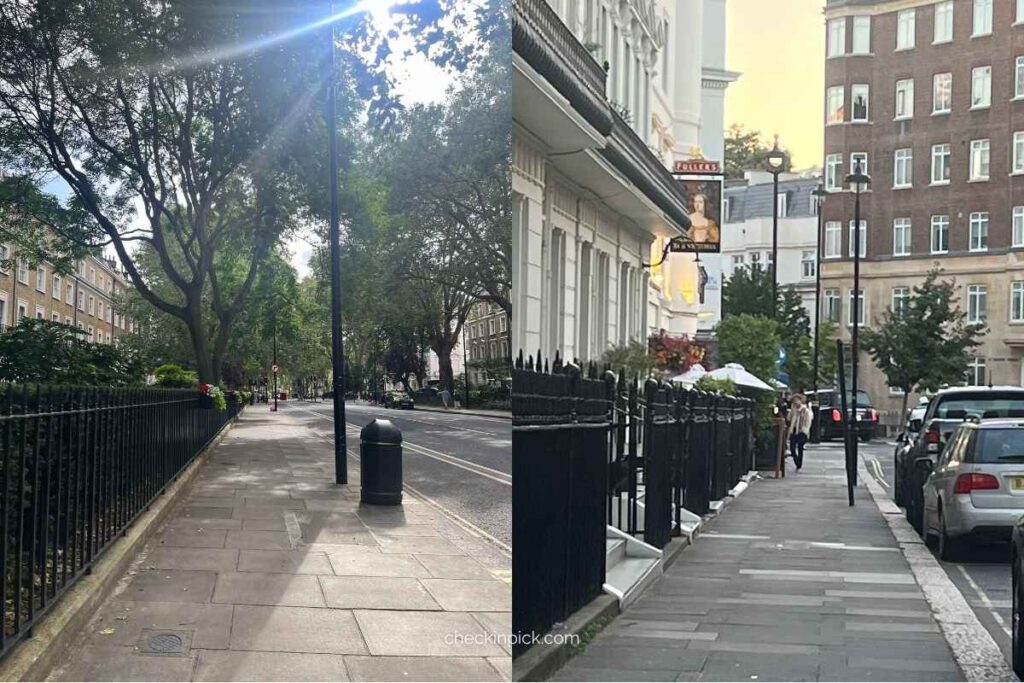
Paddington is not the neighbourhood I would choose because I wanted to wake up and feel like I had landed in the most romantic part of London.
That is not really its job.
Paddington is the place I would look at when the practical details of a trip matter more than having a famous neighbourhood on my doorstep. If you are flying into Heathrow, arriving with luggage, or planning to leave London by train for a day trip, the station changes the calculation completely.
There is something strangely satisfying about getting off a train at Paddington and knowing that a big chunk of the day’s logistics is already sorted.
You are not dragging a suitcase through three Underground changes. You are not standing on a platform wondering whether the next train will have enough space for your luggage. And when it is time to leave London, the same simplicity works in reverse.
That makes Paddington particularly interesting for shorter trips.
A lot of people compare hotels by nightly price and stop there. I would also look at what the journey to and from the hotel actually involves. A room that costs a little more but saves you a complicated airport transfer can sometimes be the better deal, especially when you arrive tired, have luggage with you, or have an early flight home.
Paddington is also useful if London is only one part of a bigger itinerary.
The station is an important rail departure point, so it can make sense for travellers who want to combine London with places outside the capital. Instead of treating your hotel as somewhere you return to after sightseeing, you can use it almost like a base camp between different parts of the trip.
And there is a quieter side to Paddington that gets missed in discussions about transport.
Walk away from the station and the neighbourhood changes fairly quickly. Around the residential streets, you get a much more ordinary version of London, with local cafés, pubs and streets that feel removed from the tourist centre. Little Venice is another reason to explore beyond the station. The canals give this part of London a completely different texture, particularly when you want a break from busy roads and Underground platforms.
Hyde Park and Kensington Gardens are also within reach, which gives you another easy way to change the mood of a day without travelling across the city.
The downside is that Paddington does not give you the same immediate sense of occasion as Soho, Covent Garden or Mayfair. You may step outside your hotel and find yourself thinking, “Right, where is everything?” rather than feeling as though London has already started around you.
For some travellers, that will matter.
For others, especially those arriving from Heathrow, it may be exactly the trade off worth making.
I would pay particular attention to the hotel’s distance from Paddington Station rather than simply searching for “Paddington hotels.” The difference between being genuinely close to the station and being somewhere that only uses Paddington as a neighbourhood label can become very noticeable when you have luggage.
So Paddington is not really about chasing atmosphere.
It is about making the awkward parts of a London trip less awkward, while still giving you parks, canals and a few quieter streets to wander when you feel like getting away from the transport hub.
Best for: travellers arriving through Heathrow, budget conscious visitors, short stays, travellers with luggage, and anyone planning rail trips beyond London.
Think twice if: the character of the neighbourhood itself is one of the main reasons you choose where to stay.
Westminster: Stay Where London’s History Is Right Outside
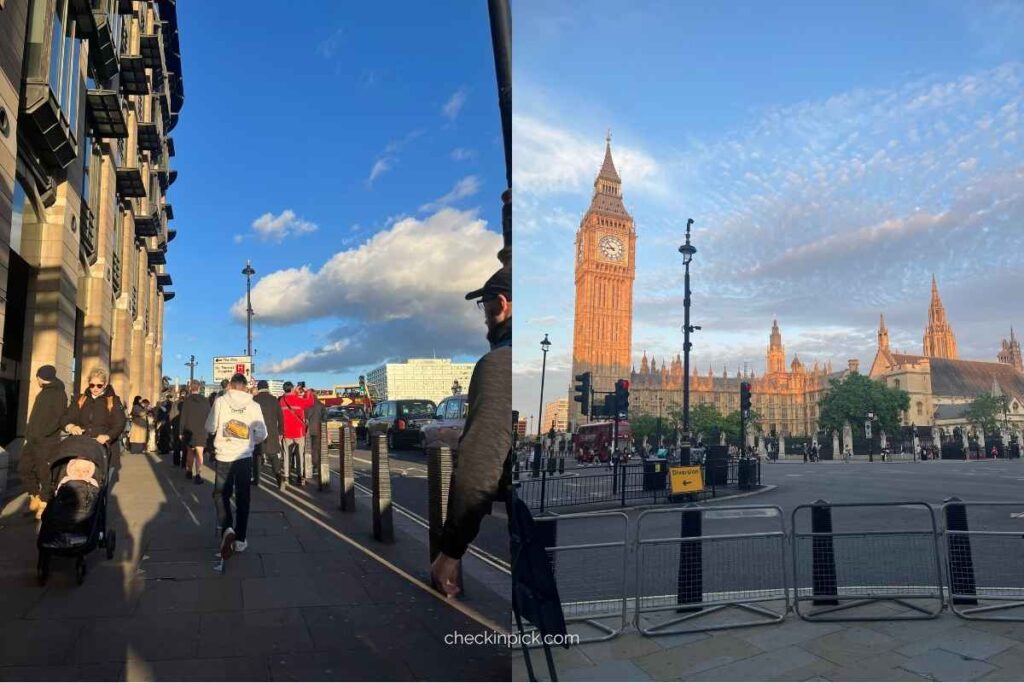
Westminster is one of those places where the map almost feels too obvious.
Big Ben, the Houses of Parliament, Westminster Abbey, Buckingham Palace and St James’s Park are all packed into the same part of London. On paper, it looks like the kind of area you choose simply because you want to tick off the famous sights.
But stay here for a couple of nights and you notice something different.
This is not just a sightseeing district. It is the part of London where the city’s history, politics and ceremony are still part of the everyday landscape.
You can walk past Parliament in the morning, cross Westminster Bridge with the Thames beside you, and continue towards St James’s Park without ever needing to open Google Maps. The landmarks are so large and so familiar that they become useful points of reference rather than places you have to navigate towards.
That changes the way the area feels.
Instead of constantly checking where the next attraction is, you start recognising London by its buildings. Big Ben becomes the thing you can see at the end of a street. Westminster Abbey sits there with centuries of royal history in its walls. Buckingham Palace feels less like a separate destination and more like another part of the same walk.
There is also something I like about seeing Westminster before the day properly gets going.
Early in the morning, the streets around the major sights can feel surprisingly different from the version you see in travel photographs at midday. You get commuters, people heading to work, joggers in St James’s Park and the occasional visitor with a camera, rather than a constant stream of sightseeing groups. It gives the grand buildings a little more space to breathe.
Then the character changes again as the day fills up.
Westminster is one of those places where the difference between a quiet morning and a busy afternoon is very noticeable. Tour groups gather around the major landmarks, coaches arrive, and the streets around Parliament and the Abbey become much more crowded. If you are staying nearby, you have the luxury of seeing the area in more than one mood rather than experiencing it only during the busiest sightseeing hours.
There is one important catch when you are working out the cost of a stay here.
Being surrounded by famous places does not mean every major attraction is free. Many of London’s major museums do not charge general admission, but Westminster Abbey is different. If you want to go inside rather than simply admire it from the street, adult admission is around £31, so that cost is worth remembering when you are putting together your sightseeing budget.
And honestly, the Abbey is one of the places where the distinction between seeing London and understanding it becomes quite clear.
From outside, it is an impressive Gothic building. Inside, the history becomes much more specific. Monarchs have been crowned here for centuries, and the building is filled with memorials, tombs and connections to people who shaped British history. Even if you are not particularly interested in royal history, it gives the surrounding streets a context that you simply do not get from taking a photograph outside.
Westminster also has a slightly unusual relationship with evenings.
It is not the kind of neighbourhood where the streets are packed with restaurants and bars at every turn. Once the main sightseeing crowds disappear, parts of the area become noticeably quieter. Some travellers will love that. Others may find themselves wondering where the lively evening has gone.
That is why I would choose Westminster for the London you want to see during the day, rather than for the nightlife you want after dinner.
There is also a useful distinction between staying near the river and staying farther inland. The streets around Parliament and the Thames give you the grandest version of Westminster, while the area towards Victoria starts to feel more like a working part of the city. When comparing hotels, that difference can matter more than the word Westminster on the booking page.
For a first visit centred on London’s most recognisable landmarks, though, Westminster has a particular strength.
You are not simply staying near attractions.
You are staying inside the part of London where many of those attractions actually make sense.
Best for: first time visitors, landmark focused trips, history lovers, short stays and travellers who want London’s most recognisable sights close at hand.
Think twice if: lively nightlife, independent shops and a neighbourhood packed with restaurants are important parts of your ideal London stay.
King’s Cross: Stay Here If London Is Only Part of the Journey
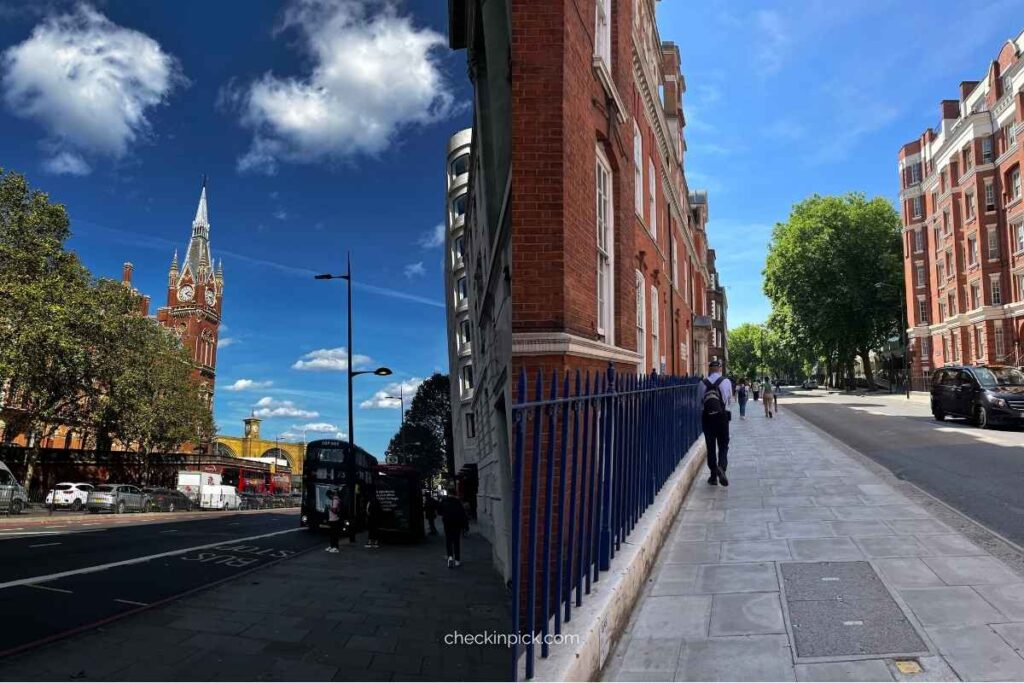
King’s Cross is one of those London areas that makes much more sense once you stop thinking of the station as just a place to arrive.
For some travellers, the station is the reason to stay here in the first place.
If you are arriving by train, heading north for a day, or finishing your London trip with an early departure from St Pancras, having the railway right there can change the shape of your itinerary. You can make plans around trains without having to build the rest of the day around getting back across London to your hotel.
That is the obvious advantage.
The more interesting part is what happened to the neighbourhood around it.
King’s Cross used to have a much rougher reputation than it does now. The area around the old railway lands has been transformed, and places such as Granary Square and Coal Drops Yard have given the neighbourhood a very different public face. Old industrial buildings sit alongside modern architecture, restaurants and shops, while Regent’s Canal cuts through the middle of it all.
It does not feel like a perfectly polished London postcard.
And I actually like that.
There is enough new development to make the area feel contemporary, but enough of the railway history remains to stop it feeling interchangeable with a new shopping district somewhere else. You can spend an afternoon around the canal, sit near the water at Granary Square, then wander through Coal Drops Yard and suddenly find yourself looking at a completely different piece of London architecture.
The British Library adds another layer.
It is close enough to make an easy stop if you have an interest in books, maps, manuscripts or the slightly quieter side of London’s cultural life. And if the British Museum is on your list, you can reach it on foot in roughly twenty minutes, depending on exactly where you start and how you walk.
What gives King’s Cross its character, though, is not just the attractions.
There are several universities around this part of London, so students from Britain and overseas are part of the everyday crowd. That changes the feel of the streets. You get people rushing for trains, students heading to class, office workers grabbing lunch and visitors pulling suitcases towards the station. It is a much more mixed crowd than you might expect from an area that is so strongly associated with rail travel.
That can be a pleasant change after spending a day around London’s most heavily photographed landmarks.
There is also a small practical detail I would take seriously when choosing a hotel here: look at the actual station you will be using.
King’s Cross and St Pancras International sit beside each other, but they are not the same station. One handles national rail services, while the other is the major international rail terminal for Eurostar. If your itinerary includes a train departure, knowing exactly which station you need can save you from an unnecessarily frantic start to the morning.
And this is where hotel prices can be slightly misleading.
A room advertised as being “near King’s Cross” can sound like an obvious bargain until you realise that the cheaper option is a longer walk with luggage, or that you are paying for a location beside the station when you do not actually need it. During commuter hours, the immediate station area can also feel busy and functional rather than particularly pleasant.
I would choose King’s Cross when the railway is genuinely part of my trip, not simply because a booking site tells me it has excellent transport.
That distinction makes all the difference.
If you are planning to see London and then take a train to another part of Britain, King’s Cross can feel almost perfectly logical. If you are staying entirely within central London and care more about restaurants, historic streets or a strong evening atmosphere, another neighbourhood may suit you better.
King’s Cross is at its best when London is not the only place on your itinerary.
It lets the city and the railway become part of the same trip, which is a surprisingly useful way to think about where to stay.
Best for: rail travellers, day trips outside London, visitors arriving or departing by train, students, culture lovers and travellers who enjoy seeing how an old part of the city has been reshaped.
Think twice if: you want a traditionally picturesque neighbourhood, a quiet hotel entrance during rush hour, or a lively restaurant scene right outside your door every night.
Notting Hill: Stay Here for the London You See Between the Sights
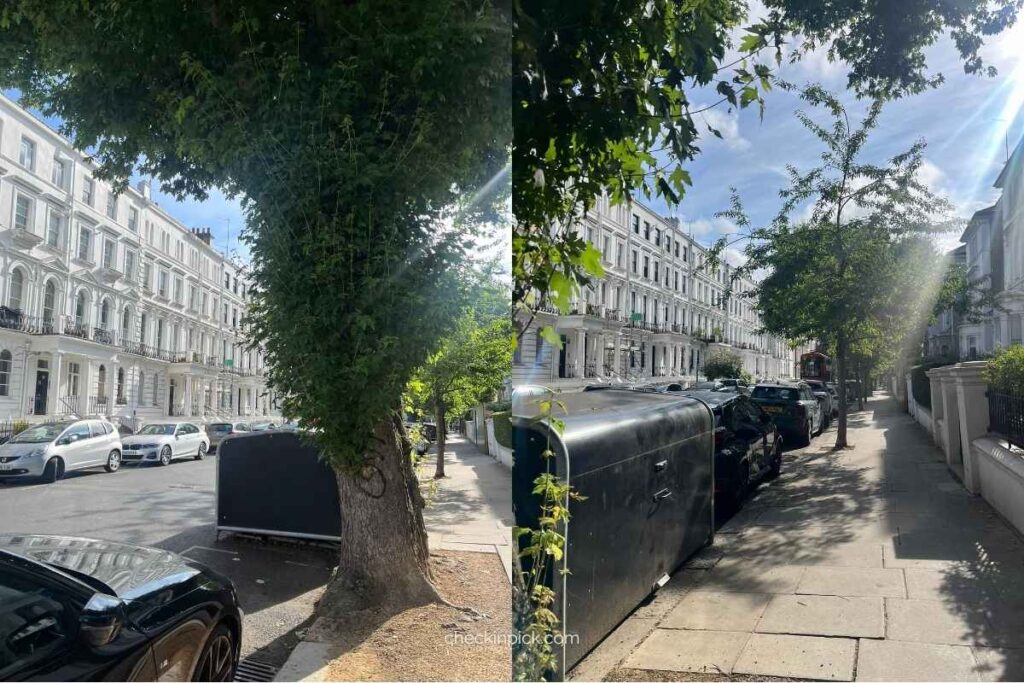
Notting Hill is probably one of the easiest London neighbourhoods to recognise from a photograph.
White stucco houses. Brightly painted doors. Flower shops, little cafés, pretty streets that seem to have been arranged with a camera in mind.
But the reason I would consider staying here has surprisingly little to do with taking photographs.
It is about what happens when you stop sightseeing for a while.
Notting Hill gives you a version of London that feels more residential and lived in than the big sightseeing districts. You can go out for coffee, wander into a small shop, pick up something for breakfast, and spend part of the morning walking without having a particular attraction in mind.
That sounds like a small thing.
On a city break, it really is not.
Some London neighbourhoods are designed around things you go to see. Notting Hill is more enjoyable when you let the neighbourhood itself become part of the day.
Portobello Road is the obvious starting point, but I would not treat the market as one single experience. Its character changes depending on when you visit. Friday and Saturday are the big days for antiques, vintage clothing and the full market atmosphere, which can be exactly what you want if shopping is part of the trip. But the quieter parts of the week show you a different side of the area, when you are less focused on browsing stalls and more aware of the shops, cafés and residents around them.
That distinction is worth knowing before you book a hotel.
If your idea of Notting Hill is a lively Saturday wandering around Portobello Road, stay close enough to enjoy it. If what attracts you is the quieter residential side, I would look beyond the busiest stretch of the market rather than assuming the most famous address will give you the best experience.
There is another reason I like the area on paper: Notting Hill is visually interesting without needing a checklist.
The architecture does much of the work.
Rows of Victorian and early twentieth century houses change colour from street to street, and the details are often more interesting than the famous postcard views. A painted doorway, an old shopfront or a small garden can make an ordinary walk feel distinctly different from the grander parts of central London.
That makes the neighbourhood particularly appealing if you enjoy photography, but there is a catch.
The prettiest streets are not necessarily the most convenient ones for getting around.
Notting Hill is a proper neighbourhood, not a compact tourist zone. A hotel can have a Notting Hill address and still leave you with a fair walk before you reach the part of the area you actually wanted to explore. I would look at the exact location on a map rather than choosing purely because the hotel name says Notting Hill.
The same goes for prices.
You are partly paying for the neighbourhood’s reputation, and there is no shortage of attractive boutique hotels and stylish places to stay. If the area itself is going to be part of your trip, that premium can make sense. If you are going to leave every morning for Westminster, the Tower, the City or other parts of central London, you may find yourself paying for an atmosphere you barely use.
That is really the dividing line with Notting Hill.
It rewards travellers who enjoy the spaces between the major sights.
You might spend an hour around Portobello, sit down for coffee, wander through the residential streets, then continue towards Kensington Gardens or Hyde Park. None of those moments needs to be the headline of your London trip. Together, though, they create the sort of day you remember because it felt like you were actually somewhere rather than simply moving between attractions.
And if you have seen Notting Hill in photographs and are expecting every corner to look like a film set, lower that expectation slightly.
The famous colourful houses are there, but so are ordinary flats, busy roads, delivery vans and people who are simply getting on with their day.
That is exactly what makes the area worth staying in.
You get the pretty version of London, but you also get the everyday one.
Best for: couples, photographers, travellers who enjoy cafés and independent shops, market lovers, and anyone who prefers neighbourhood wandering to a packed sightseeing schedule.
Think twice if: most of your itinerary is focused on landmarks elsewhere in central London, or you want a hotel area that feels lively and busy from morning until late at night.
Shoreditch: Stay Here When You Want London to Feel Less Polished
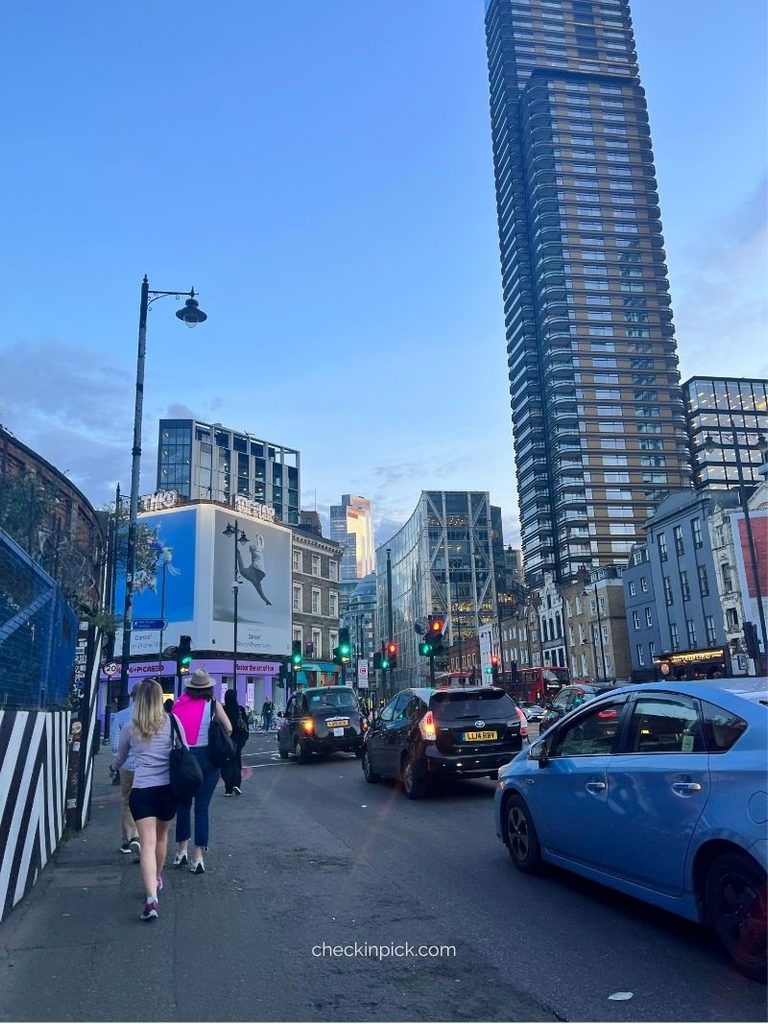
Shoreditch is not the London I would choose if I wanted everything to look neat and predictable.
And that is exactly why it can be such a good place to stay.
The first thing you notice is the street art, but I would not make the mistake of treating it like a collection of outdoor attractions. Around Shoreditch, walls change, shopfronts change, and something that caught your eye yesterday may be painted over a few weeks later. The neighbourhood feels more interesting when you see the artwork as part of the street rather than something you are simply there to photograph.
That slightly unfinished quality is part of the appeal.
You have old brick buildings beside newer developments, small cafés next to businesses that have been around for years, and streets that can look completely different from one block to the next. It is a part of London where you can tell the city is still changing.
For me, the real reason to stay here is the shopping.
Not because everything is cheap. It is not.
Shoreditch has become popular enough that some vintage shops charge prices that would make you question the meaning of the word vintage. A good jacket, designer piece or unusual pair of shoes can cost considerably more than you expect. The fun is in the hunting, and that means looking through several shops rather than assuming the first interesting thing you find is the bargain of the day.
Brick Lane is especially good for this kind of wandering.
The street has a long history of independent businesses and changing immigrant communities, and that history still shows up in the food, shops and atmosphere. You can move from vintage clothing to records, food stalls and small independent stores without feeling as though you are walking through a conventional shopping centre.
Then there is Spitalfields Market, which gives you a different version of the same area.
It feels more organised and easier to browse, with a mixture of shops, food and market stalls under one roof. I like having both nearby because they serve different moods. Brick Lane feels more scattered and unpredictable, while Spitalfields is easier when you want to browse without constantly crossing busy streets.
Boxpark Shoreditch sits somewhere in between shopping and eating. Its converted shipping container design has become part of the neighbourhood’s visual identity, and it is an easy place to stop when everyone in your group wants something different to eat.
The food is another strong reason to base yourself here.
You get a remarkable range within a relatively small area, but the more interesting part is that Shoreditch does not feel like one particular cuisine district. You can eat very casually, spend more on dinner, grab something from a market or disappear into a small café without needing to plan the entire day around food.
The evenings are where the personality becomes more obvious.
Bars and clubs draw a different crowd as the night goes on, and some streets can be properly noisy. If you are staying close to the busiest nightlife spots, you may hear the neighbourhood continuing long after dinner. I would check the exact street and room location rather than assuming every part of Shoreditch has the same atmosphere.
There is also a trade off that is easy to overlook when you are comparing areas on a London map.
Shoreditch is not especially useful if your sightseeing list is dominated by Westminster, Buckingham Palace and the West End. You can certainly get there, but you are choosing to stay in the east of central London because you want what is here, not because it is the most efficient base for every famous landmark.
That is the key difference.
Shoreditch makes more sense when you want part of your London trip to happen without a plan.
You might leave for coffee and come back with a vintage shirt. You might set out looking for one shop and end up following a trail of murals down a street you had never heard of. You might spend far more than you intended on something that is absolutely not a bargain, then find a tiny place for dinner that becomes one of the meals you talk about later.
That unpredictability is the point.
Shoreditch is not polished London, and it is not trying very hard to be.
It is a good choice if you want to stay somewhere that feels like it has its own opinions.
Best for: vintage shoppers, younger travellers, food lovers, photographers, independent shop fans and anyone drawn to London’s creative side.
Think twice if: your trip is built mainly around traditional landmarks, you want quiet nights, or you are choosing a neighbourhood primarily for the cheapest possible vintage finds.
The London Hotel Mistakes That Look Fine Until You’re Actually There
Choosing a London hotel can be surprisingly deceptive.
A room can look like a bargain until you add the little things you did not think about when you booked it: a long walk to the station, extra Tube journeys, taxis after a late night, or the simple annoyance of crossing the city every time you want to change plans.
I made this mistake in my own planning once. A hotel looked cheaper on the map, so the decision seemed easy. Then I started tracing the actual days of the trip and realised the saving was not really much of a saving. The cheaper room had simply moved the cost somewhere else.
That is the first mistake I would avoid.
Looking at the room price instead of the trip price
The nightly rate is only one part of what you are buying.
Suppose one hotel costs £30 more per night but puts you close to the places you actually want to visit. Another costs less but means several extra journeys every day. The second hotel may still be the better choice, especially on a short trip, but you need to compare the two based on your real itinerary rather than the price shown in the search results.
There is no universal rule that says paying more for a central hotel is worth it.
Sometimes it is. Sometimes you are simply paying for a postcode.
Trusting the map too much
This is another London trap.
A booking site might show that a hotel is close to an attraction, but “close” can mean very different things once you are carrying a bag, crossing large roads, looking for the correct entrance to a station, or walking through an area that is much busier than it appeared on the screen.
I always prefer checking the actual walking route rather than relying on the little circle around a map pin.
Five hundred metres on a map sounds trivial.
Five hundred metres after dinner, in the rain, with tired feet and a bag, can feel like a completely different distance.
Assuming the station name tells you everything
London’s railway stations can make an area sound more straightforward than it really is.
King’s Cross and St Pancras are a good example. They sit next to each other, but they serve different railway purposes. Paddington is another case where the station itself can be a major advantage if you are arriving from Heathrow or continuing by train.
The useful question is not simply, “Is there a station nearby?”
It is, “Will I actually use this station?”
If the answer is no, paying extra for a hotel beside a major transport hub may not buy you much.
Choosing a neighbourhood that fights your itinerary
This one is easy to miss because London has so many attractive areas.
You might love the idea of staying in Notting Hill, then realise that nearly every place you want to visit is east of the city centre. Or you might choose Shoreditch because you like the atmosphere, only to spend your days travelling elsewhere.
There is nothing wrong with that.
Sometimes the neighbourhood is worth the extra movement.
The important thing is to know that you are making that choice deliberately.
Before booking, I would take the places you genuinely care about and roughly group them by direction. You do not need a perfectly optimised spreadsheet. You just want to notice whether your hotel sits naturally within the shape of your trip or whether you are going to keep pulling yourself back and forth across London.
Forgetting what happens after the sightseeing
People spend a lot of time researching where to stay for the daytime and almost none deciding what they want when the day is over.
That can be a mistake.
Maybe you are happy eating near the hotel and going to bed early. Maybe you want a proper dinner, a pub, a theatre or somewhere to have a drink without planning another journey. Those are very different requirements, even if both travellers spend the day visiting exactly the same attractions.
Your hotel area does not need to entertain you every night.
But it should not regularly force you into another decision when you are already tired.
Booking by neighbourhood name alone
London neighbourhoods are not neat little boxes.
The atmosphere can change within a few streets, and a hotel can technically belong to one area while feeling much more connected to another. This is particularly noticeable in places such as Soho, Notting Hill, Paddington and King’s Cross.
So before you press the booking button, zoom in.
Look at the actual street. Check what surrounds the hotel. Notice where the nearest entrance to the station is, not just where the station symbol appears on the map. Look at the route you would take back after dinner.
That extra bit of research is boring.
It is also the sort of boring research that can make the hotel choice feel completely different once you are actually in London.
And perhaps that is the biggest mistake to avoid.
Do not ask only, “Which hotel is cheapest?”
Ask, “Which hotel makes the way I want to spend my days in London feel natural?”
That question usually leads to a much better answer.
A good London hotel choice should be judged by: the total cost of the trip, the actual walking route, the transport you will genuinely use, the geography of your itinerary, and what you want your evenings to look like.
The goal is not to find the hotel with the most impressive location on a map. It is to find the location that makes sense once your real trip is laid over it.
Questions I’d Ask Before Booking a London Hotel
There are a few London hotel questions that sound simple until you actually try to answer them.
Which area is right for a first visit? Is a cheaper room really cheaper once you factor in getting around? And does staying near the airport make sense if your flight is not until tomorrow?
Here are the questions I would use to make the decision a little less abstract.
Where is a good area to stay in London for a first visit?
If this is your first London trip and you want the city to feel recognisable from the moment you step outside, Covent Garden is one of the easiest places to start.
What makes it useful is not just its position on the map. You are surrounded by the West End, theatres, restaurants and some of the streets that give central London its familiar character. It is also the sort of area where you can finish sightseeing and still have somewhere interesting to wander without turning the evening into a separate expedition.
That said, I would not automatically book Covent Garden just because it is your first trip.
If your itinerary is heavily focused on museums, a quieter residential area may suit you better. If food and nightlife are the main event, Soho could make more sense. If you are arriving from Heathrow with luggage, Paddington deserves a closer look.
Your first London trip does not need the “correct” neighbourhood.
It needs a neighbourhood that matches the version of London you are actually coming to see.
What is the safest area to stay in London?
I would be careful with lists that declare one London neighbourhood the safest and leave it at that.
London is a huge city, and how comfortable a place feels can change from one street to the next and from afternoon to late evening. For most visitors, the more useful question is whether the hotel is on a sensible street, whether you feel comfortable coming back at night, and whether there are people around when you are walking home.
Areas such as South Kensington, Mayfair and Covent Garden are popular with visitors and tend to feel comfortable for many travellers, but that does not mean you can switch off your normal city awareness.
I would also pay attention to the hotel itself.
A beautifully photographed room in an awkward location is not necessarily a better choice than a simpler hotel on a street where you feel comfortable arriving late. When I compare places to stay, I care about that final walk back to the hotel more than a generic safety label attached to the neighbourhood.
Where should I stay in London if I want to keep costs down?
This is where London hotel shopping can get slightly misleading.
The cheapest room is not always the cheapest place to stay.
A hotel outside the main sightseeing areas can look like a bargain, but if you spend money on extra transport and lose a chunk of each day getting back and forth, the difference starts to shrink. On the other hand, you do not need to pay a fortune for a fashionable central postcode either.
Paddington can be worth looking at, particularly if you are arriving through Heathrow or have a train journey at either end of the trip. You are paying for more than a room in that situation. You are also buying a simpler arrival and departure.
Another approach is to look slightly beyond the neighbourhoods that dominate hotel searches. London has plenty of perfectly good areas that do not have the same tourist reputation, and sometimes the better value is simply a few streets outside the area everyone else is searching for.
The trick is to compare the whole trip, not just the nightly number.
Is Soho a good place to stay in London?
It is, especially if you consider eating and going out part of the reason you are visiting.
Soho is unusually dense. Restaurants, bars, theatres, Chinatown, Carnaby and the West End all sit within a relatively small area, which means a night out can stay spontaneous. You can change your mind halfway through dinner without having to reorganise the entire evening.
There is also a deeper side to Soho that gets lost in generic hotel descriptions. Its LGBTQ+ history is an important part of the neighbourhood’s identity, and you can still see that influence in the businesses and nightlife around the area.
The thing I would check carefully is your tolerance for noise.
Some streets are lively well into the night. If you sleep lightly, look at where the actual hotel entrance and your room are located rather than assuming every Soho address will feel the same.
How many days should I stay in London?
There is no magic number.
Three days can make a satisfying first visit if you choose your priorities carefully. Five days gives you more freedom to move beyond the obvious central sights and spend time in different neighbourhoods. A week starts to feel less like a checklist and more like you have room for the city to surprise you.
But the more useful question is what kind of trip you want.
If you are coming mainly for famous landmarks, a shorter stay can work surprisingly well. If you want museums, markets, neighbourhoods, shopping and evenings out, adding extra days changes the trip because you are no longer forcing every part of London into the same schedule.
I would also think about your arrival and departure days.
A Friday evening arrival followed by a Sunday afternoon flight is not really the same as having three full days in London. Hotel nights and usable sightseeing days are two different things, and that distinction is easy to miss when you are planning from a calendar.
Should I stay near Heathrow Airport or in Central London?
Unless your flight schedule makes an airport hotel genuinely useful, I would usually stay in London itself.
Heathrow can make sense when you have a very early departure, a long overnight connection, or a trip where being close to the terminal is more important than seeing the city.
For a normal city break, though, staying near the airport creates an odd problem: you wake up in London without really being in London.
That may sound obvious, but it matters more on a short trip. Your hotel is not just where you sleep. It determines where your morning begins and where your evening ends.
If your flight leaves early enough that you would need to abandon your hotel before dawn, that calculation changes. In that case, an airport stay for the final night can be perfectly sensible.
Otherwise, I would rather spend the night somewhere that still feels like part of the London trip.
Is it better to stay near a Tube station?
Usually, yes, but I would not treat proximity as the whole story.
A hotel being five minutes from a Tube station sounds great until you discover that the station is on a line you rarely need, or that the journey requires several changes for the places on your itinerary.
What matters is the usefulness of the connection, not simply the distance to the entrance.
There is another small detail people forget: stations have multiple exits. A hotel that looks close to a station on a map may be much less convenient depending on which exit you naturally use.
So when comparing hotels, look at the journeys you are actually likely to make.
The best location is not necessarily the one with the shortest walk to a Tube station.
It is the one where the transport available to you actually fits the way you plan to spend your days.
How I’d Narrow Down Where to Stay in London
There is a slightly annoying truth about choosing a London hotel: there is no single list of the “right” areas.
A neighbourhood that makes perfect sense for one trip can feel completely unnecessary on another. That is why I would not rank these places from number one to number nine. I would look at what each one gives you, and just as importantly, what it asks you to give up.
That means looking beyond the usual hotel search filters.
I considered where each area sits in relation to the parts of London people are most likely to visit, but I also looked at how the neighbourhood behaves once the sightseeing is over. Is it somewhere you would actually enjoy getting back to at night? Does it suit an early start, a late dinner, a family day, a museum heavy itinerary, or a trip that includes trains beyond London?
Hotel prices matter too, but I would treat them as part of the picture rather than the answer.
London has a habit of making a cheap room look expensive after you add everything around it. Equally, an expensive hotel can sometimes make sense if its location removes a lot of unnecessary movement from your day. The interesting comparison is not simply £150 versus £220 a night. It is what those two choices do to the rest of your trip.
I also paid attention to something hotel websites are not very good at explaining: how a place feels between the attractions.
That is often where a London neighbourhood earns its keep.
A beautiful street can be worth staying on even when there is no major landmark outside the door. A busy food district can completely change the way you spend an evening. A railway station can be invaluable for one itinerary and almost irrelevant for another.
So the areas in this guide are not here because they all fit some universal definition of “best.”
They are here because each one solves a different London problem.
If you are planning a short first visit, the question is how much central London you want to have immediately around you. If you are travelling with children, the calculation changes again. If you are arriving with luggage, catching a train out of the city, chasing restaurants, or simply want somewhere that feels residential after a day of sightseeing, a different neighbourhood starts to make more sense.
That is also why I would not choose your hotel from a map alone.
Before booking, I would take the actual places on my itinerary and look at how they sit around the neighbourhood. Not because every journey needs to be perfectly efficient, but because the shape of your days tells you much more than a hotel listing ever will.
Think of these areas less as a ranking and more as different versions of London.
The useful question is not, “Which neighbourhood is the best?”
It is, “Which one makes sense for the trip I am actually taking?”
Once you answer that, choosing where to stay in London becomes a lot less mysterious.
Where I’d Stay in London When the Trip Is Short
With a short London trip, I would not start by asking which neighbourhood has the nicest hotels.
I would start with a much less glamorous question:
Where do I want my day to begin?
That sounds like a small distinction, but it changes the choice quite a bit.
If your first morning is likely to begin with the West End, Covent Garden makes a lot of sense. If the trip revolves around museums and you are travelling with children, South Kensington gives the day a completely different rhythm. Someone arriving through Heathrow with luggage may look at Paddington and see a practical decision. A traveller planning dinners, drinks and late nights may look at Soho and see the obvious choice.
Mayfair, Westminster and King’s Cross make sense for very different reasons again.
The point is not that one of these areas wins.
It is that a short trip leaves less room for a hotel location that keeps pulling your days in the wrong direction.
There is also a useful way to think about hotel prices that gets missed in most comparisons.
Ask yourself what you are buying with the extra money.
Sometimes it buys a better room. Sometimes it buys a nicer street. And sometimes, more usefully, it buys a different start to the day. Being able to walk outside and immediately find yourself in the part of London you came to experience can be worth more than having a larger room that you will barely use.
I would also pay attention to the shape of your itinerary, rather than counting Tube stops.
A day that moves naturally from Westminster to the South Bank is very different from one that sends you from Notting Hill to the Tower of London and then back across the city for dinner. Looking at your plans this way often reveals the sensible hotel choice before you even start comparing room photos.
And there is one final test I like.
Imagine it is your last night in London.
You have already walked a ridiculous number of steps, your phone battery is nearly gone, and you have one good dinner left before the trip ends. Where would you rather be when the evening is over?
That answer tells you something a hotel search page cannot.
For a short London trip, I would choose the neighbourhood that supports the kind of days I actually want to have, rather than the hotel that looks most impressive in isolation.
Sometimes that means spending more.
Sometimes it means doing the opposite.
The clever choice is not always the most central address. It is the one that makes the rest of the trip feel like it belongs together.
A Few London Guides Worth Keeping Open
Once you have decided where to stay, the next questions tend to become much more practical.
How do you get from Heathrow without turning your arrival into a small adventure? How does the Tube actually work when you are standing in front of a ticket machine at 8am? And how much should you expect London to cost once hotel bills are no longer the only thing on your mind?
I would keep these three guides handy for exactly those moments:
Heathrow to Paddington Train Guide
For the first part of the journey, when you have just landed, have luggage in tow, and mostly want to know what happens next.
London Underground Guide
Useful once the sightseeing starts and you need to make sense of the Tube beyond simply following the coloured lines on a map.
London Travel Budget
Worth looking at before the trip gets expensive in ways you did not anticipate. Meals, transport, attractions and the occasional coffee all have a habit of quietly adding up.
The hotel is only the beginning of the equation.
Once you know where you are sleeping, these are the details that help turn that choice into an actual London trip.

Welcome to CheckinPick. We create practical travel guides for visitors planning trips to London and other destinations.
Our editorial team focuses on useful, up-to-date information about transportation, accommodation, attractions, fares and travel planning. We research information using official sources and reputable travel resources, and we update our guides when important details change.
Our goal is to make travel information easier to understand and more useful for real-world trip planning.
1 thought on “Where to Stay in London When You Don’t Want to Waste Half Your Trip on the Tube”